
"america"
25409 article(s) found

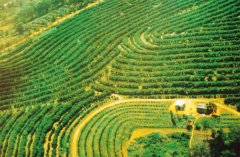
Renas Manor in the Santa Ana Volcano region of El Salvador in the north of Central America
The Republic of El Salvador, located in the north of Central America, is the most populous country in Central America. The country is bordered by Honduras to the north, the Pacific Ocean to the south and Guatemala to the northwest. The national economy is dominated by agriculture, and the main crops are coffee and cotton. El Salvador is also one of the birthplaces of ancient Mayan culture, with not only distant culture, but also volcanoes, plateau lakes and Pacific coast.

Introduction to the world's three major coffee producing areas: American coffee estates and detailed explanation of coffee from each producing area
Coffee production in the Americas refers to Central America and South America, and the areas north of Mexico are basically non-producing coffee beans. Coffee production in the Americas is mainly distributed in the Tropic of Cancer to the equator, and several countries in Central America are basically coffee producing countries. Brazil, located in South America, is the world's largest coffee producer. Just like the spread of coffee, it cannot be separated from the era of great navigation.

Flavor description of Arabica coffee beans in Latin America introduction to the regional treatment of manor production
Flavor description of Arabica coffee beans in Latin America the planting of coffee trees is only the first step in coffee production. When the coffee fruits are ripe, they can be harvested through picking equipment. Two seeds (Arabica coffee beans) are then extracted from each berry. The last step is to roast coffee beans for consumption. This removes moisture and changes coffee.

Types and characteristics of coffee in America, Asia and Africa with pictures how to classify Arabica coffee beans
Professional coffee knowledge exchange more coffee bean information please follow the coffee workshop (Wechat official account cafe_style) appreciation of coffee trees from all over the world is a genus of Rubiaceae in botany. Coffee trees are native to subtropical Africa and some islands in southern Asia. In the 16th and 17th centuries, through the merchants of Venice and the Dutch hegemony at sea

Flavor description of coffee bean growing area in Latin America taste grinding scale
In 1721 French naval officer Gabriel Mathieu de Clieu brought the first coffee sapling from Africa to the Latin American island of Martinique, all of which was the origin of coffee cultivation in Latin America. Because when France was under the rule of the Bourbon dynasty,

Characteristics of coffee beans from three regions-Characteristics of coffee beans from Central and South America
Characteristics of coffee beans from three regions-Characteristics of coffee beans from Central and South America Arabica Arabica beans, world-famous blue mountain coffee, mocha coffee, etc., almost all Arabica species. Appearance: bean shape smaller, positive was long oval, narrow and tortuous cracks in the middle, beans back arc shape more flat, consistent size, uniform color luster. Origin: Arabica coffee
Samba from South America is a strong producer of Brazilian coffee beans.
Coffee, as one of the three major beverages in the world, has a long history. In the long river of coffee development, being known as the coffee kingdom is not an European country that promotes coffee, but comes from South America's Samba. The earliest coffee exports were shipped from Maranion in northeastern Brazil to Lisbon in 1731, but Rio de Janeiro soon became Brazil's coffee exporter.

Starbucks Coffee Announces expansion Plan for Latin America
Starbucks Coffee Co., the world's largest coffee chain, announced plans on Tuesday to expand in Latin America, where most of Starbucks' coffee beans come from. Starbucks Coffee has 560 stores around the world and will open the country's first Starbucks coffee shop in the Escazu district of San Jose, Costa Rica, on Wednesday. The
Coffee exports in Central and South America stabilize
Coffee exports from Central America, Mexico, Colombia, Peru and the Dominican Republic rose 4.5 percent in October from a year earlier, Guatemala's National Coffee Association (Anacafe) said today. October is the first month of this coffee harvest year. According to statistics, the total coffee export volume of the above countries in October was 1,947,884 bags (60 kg per bag), compared with the whole season of the previous harvest year.
Starting with Coffee beans (11)-- America-Martinique
Martinique, the cradle of American coffee, is a small island and the birthplace of coffee in Central America, but it produces very little coffee today. The first coffee tree in the Western Hemisphere was brought from France by Gabriel Mathieu de Clieu in the early 1820s. In his early years, Dirkley was a naval officer in Martinique. He brought back a coffee tree and put
From Coffee Beans (23)--America--Suriname
Suriname was the first country in South America to grow coffee, and Norway was a major importer of coffee products from that country. Today, however, the country produces very little and is mentioned here only for historical reasons. The Dutch, who settled Suriname in 1667, introduced coffee trees from Java in the early 18th century. The first coffee trees were made by Aster.
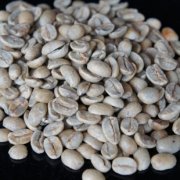
Salvadoran coffee raw beans in North America
Salvadoran coffee refers to the coffee produced in the small South American country of El Salvador, where the coffee body is light, aromatic, pure, slightly sour, the flavor is extremely balanced, is a specialty of Central America.
Coffee exports in Latin America fell by 6.82%
Mexico's "Economist" reported on June 20 that from the beginning of the coffee harvest in October last year to May this year, coffee exports from Latin America decreased by 6.82% year on year.
Coffee bean producing area-Central America-Panama (Panama)
Famous representative coffee: Panama Panama is bordered by Costa Rica to the west and Colombia to the east of South America. Most of its coffee is grown in the mountains near Costa Rica to the west. Panamanian coffee has a medium and uniform flavor and texture, with a blue mountain temperament, so it is said that Panamanian coffee is often used to imitate the high-priced Hawaiian Kona or the Jamaican Blue Mountains. But Ba
Coffee bean producing areas-Central America-El Salvador (El Salvador)
Well-known representative coffee: El Salvador (El Salvador) Hot Spring Coffee El Salvador is the smallest country in Central America, flanked by Guatemala and Honduras. Because there are two parallel mountains in the country, the volcanic soil is rich in minerals, and this special geographical environment makes El Salvador suitable for growing coffee. Sal.
Coffee bean producing areas-South America-Peru (Peru)
Well-known representative coffee: Peru (Peru) Peru is one of the major coffee producing countries in South America, and coffee is Peru's largest export agricultural product, which has grown greatly in recent years. It can be seen from the map that the Andes mountains run parallel to the coast in Peru. More than 90% of Peruvian coffee is grown in the north, in the valleys east of the capital Lima, and in the slopes of the Andes.
Coffee bean producing areas-South America-Ecuador (Ecuador)
Well-known representative coffee: Galapagos is between Colombia and Peru, and Ecuador, which passes through the equator, is one of the few countries in South America that produces both Arabica and Robastian coffee. In fact, Ecuador means the Spanish equator. Due to the use of old-fashioned traditional harvesting and handling methods, Ecuadorian coffee has not been
Galapagos Islands, a coffee producer in South America
In South America, which is famous as the host country, more than 900 kilometers off the west coast of Ecuador, near the equator with 90 degrees west longitude, there are a group of islands hanging in the vast Pacific Ocean, that is, the Galapagos Islands, also known as Cologne Island. It can be said that the Galapagos Islands of Ecuador is one of the loneliest and most beautiful islands in the world, which is called a unique living biological evolution treasure.

Coffee bean producing areas-South America-Ecuador (Ecuador)
Well-known representative coffee: Galapagos is between Colombia and Peru, and Ecuador, which passes through the equator, is one of the few countries in South America that produces both Arabica and Robastian coffee. In fact, Ecuador means the Spanish equator. Due to the use of old-fashioned traditional harvesting and handling methods, Ecuadorian coffee has not been

Coffee bean producing areas-South America-Peru (Peru)
Well-known representative coffee: Peru (Peru) Peru is one of the major coffee producing countries in South America, and coffee is Peru's largest export agricultural product, which has grown greatly in recent years. It can be seen from the map that the Andes mountains run parallel to the coast in Peru. More than 90% of Peruvian coffee is grown in the north, in the valleys east of the capital Lima, and in the slopes of the Andes.