
"exocarp"
1261 article(s) found

Coffee refining methods are mainly divided into three categories.
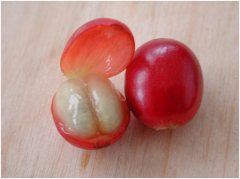
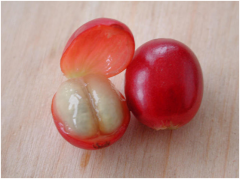
There are a pair of oval seeds in the center of the fruit of the coffee tree, which are covered with exocarp, endocarp and pulp. Ripe fruit will rot in a short period of time without treatment, so the purpose of refining is to enable coffee beans to be preserved for a long time, easy to store and circulate. After the fresh coffee fruit is harvested, it should be dealt with immediately. Refining is to remove the skin and pulp of the coffee fruit, and then take the seeds.

What are the basic treatment methods of coffee fruit?
There are a pair of oval seeds in the center of the fruit of the coffee tree, which are covered with exocarp, endocarp and pulp. Ripe fruits FB in a short period of time without treatment, so the purpose of refining is to enable coffee beans to be preserved for a long time, easy to store and circulate. After the fresh coffee fruit is harvested, it should be dealt with immediately. Refining is to remove the skin and pulp of the coffee fruit, and then take out the seeds.
Processing methods of high-quality coffee beans
There are a pair of oval seeds in the center of the fruit of the coffee tree, which are covered with exocarp, endocarp and pulp. Ripe fruit will rot in a short period of time without treatment, so the purpose of refining is to enable coffee beans to be preserved for a long time, easy to store and circulate. Figure (1) Coffee fruit Coffee fresh fruit should be dealt with immediately after being harvested. Refining is to remove the peel and pulp of coffee fruit
How to deal with high-quality coffee beans
There are a pair of oval seeds in the center of the fruit of the coffee tree, which are covered with exocarp, endocarp and pulp. Ripe fruits will rot in a short time without treatment, so the purpose of refining is to enable coffee beans to be preserved for a long time, easy to store and circulate. (1) Coffee fruits and fresh fruits should be treated immediately after they have been harvested. Refining is to remove the outer skin and pulp of coffee fruit.

Processing method of high-quality coffee beans coffee refining method
There are a pair of oval seeds in the center of the fruit of the coffee tree, which are covered with exocarp, endocarp and pulp. Ripe fruit will rot in a short period of time without treatment, so the purpose of refining is to enable coffee beans to be preserved for a long time, easy to store and circulate. Figure (1) Coffee fruit Coffee fresh fruit should be dealt with immediately after being harvested. Refining is to remove the peel and pulp of coffee fruit

What are the characteristics of coffee honey treatment A brief introduction to the treatment of Red Cherry Coffee with Cherry Honey
Professional coffee knowledge exchange more coffee bean information please pay attention to the coffee workshop (Wechat official account cafe_style) Qianjie-Yejia Xuefei honey treatment characteristics brief introduction honey treatment (half-sun method) half-sun method is an improved method of the sun method, the main difference between the half-sun method and the sun method is that the exocarp and pulp are removed before the sun, and the pectin layer is retained for direct sun exposure.
Processing method of high-quality coffee beans coffee refining method
There are a pair of oval seeds in the center of the fruit of the coffee tree, which are covered with exocarp, endocarp and pulp. Ripe fruit will rot in a short period of time without treatment, so the purpose of refining is to enable coffee beans to be preserved for a long time, easy to store and circulate. Figure (1) Coffee fruit Coffee fresh fruit should be dealt with immediately after being harvested. Refining is to remove the peel and pulp of coffee fruit

Flavor characteristics of Yunnan small Coffee beans how to introduce the Brand Price
The flavor characteristics of Yunnan small-grain coffee beans how to introduce the brand price? when ripe, the berries are wide oval, red, 12-16 mm long, 10-12 mm in diameter, exocarp dura mater, mesocarp fleshy, sweet; seeds protruding on the back, flat on the ventral side, with longitudinal grooves, 8-10 mm long and 5-7 mm in diameter. Direct branches are used for cutting materials during flowering period from March to April. One branch cannot be used because of one minute.
The treatment method of high-quality coffee beans-details of coffee refining method
There are a pair of oval seeds in the center of the fruit of the coffee tree, which are covered with exocarp, endocarp and pulp. Ripe fruit will rot in a short period of time without treatment, so the purpose of refining is to enable coffee beans to be preserved for a long time, easy to store and circulate. Figure (1) Coffee fruit Coffee fresh fruit should be dealt with immediately after being harvested. Refining is to remove the peel and pulp of coffee fruit

The processing method of high-quality coffee beans how to turn coffee fruits into coffee beans?
There are a pair of oval seeds in the center of the fruit of the coffee tree, which are covered with exocarp, endocarp and pulp. Ripe fruit will rot in a short period of time without treatment, so the purpose of refining is to enable coffee beans to be preserved for a long time, easy to store and circulate. Figure (1) Coffee fruit Coffee fresh fruit should be dealt with immediately after being harvested. Refining is to remove the peel and pulp of coffee fruit
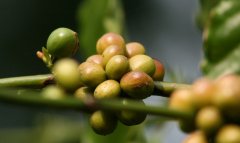
Characteristics of coffee fruit structure map! (including anatomical drawing)
Those beautiful coffee fruits! We often drink coffee, but few people have seen coffee beans, let alone coffee fruits. Some friends in the industry say that coffee is actually a kind of fruit juice, which I don't agree with. Fruit juice is a juice product obtained from fruit by physical methods such as pressing, centrifugation, extraction, etc. It generally refers to pure fruit juice or

The characteristics of Congolese coffee introduces the breeding methods of Congolese coffee beans.
Professional coffee knowledge exchange more coffee bean information please follow the coffee workshop (Wechat official account cafe_style) Congo Coffee (Coffea congensis Froehn.) Rubiaceae coffee plants. Shrubs, 2-6 m tall, exocarp thin, red at maturity. The fruit is in November. Native to the Congo of Africa, Hainan has a small amount of cultivation. Characteristics of Congolese coffee: shrubs, 2-6 high

The sun? Washing? Honey treatment? What exactly are you talking about when you are talking about the handling of coffee beans?
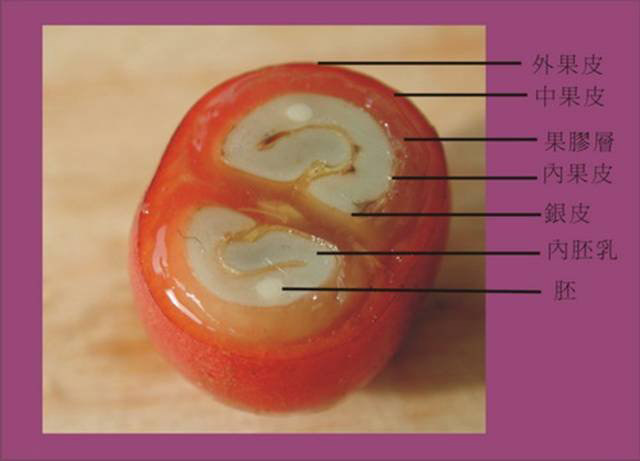
The exchange of professional baristas please follow the coffee workshop (Wechat official account cafe_style) 1. Coffee fruit can be divided into six layers from outside to inside, namely, outer skin, pulp, gum, parchment, silver and seeds. The difference of different treatment methods lies in the different methods of removing the outer coating of beans; 2, dry treatment 3, no layer is removed, the whole beans are directly dried and exposed to sunlight.
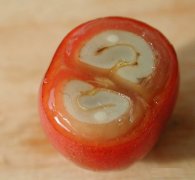
Illustration of coffee | dissection of the internal structure of coffee beans
Coffee bean close-up, coffee bean internal cross-section map of the coffee fruit after the peel of the freshly ripe coffee fruit on the tree, the coffee fruit without the peel, inside two coffee beans with endocarp, silver peel coffee bean coffee fruit internal structure (coffee fruit includes exocarp, mesocarp, pectin layer, endocarp, coffee bean silver skin, endosperm, embryo.) Internal knot of coffee beans

Talk about the processing process of coffee beans
Within 8 hours after picking, the coffee fruit should be peeled, otherwise negative fermentation will occur, thus affecting the quality of coffee beans.
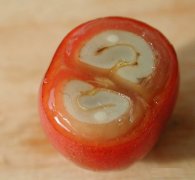
Dissection of coffee beans (9 pictures)
Coffee bean close-up, coffee bean internal cross-section map of the coffee fruit after the peel of the freshly ripe coffee fruit on the tree, the coffee fruit without the peel, inside two coffee beans with endocarp, silver peel coffee bean coffee fruit internal structure (coffee fruit includes exocarp, mesocarp, pectin layer, endocarp, coffee bean silver skin, endosperm, embryo.) Internal knot of coffee beans

What exactly does the coffee bean coffee fruit look like?
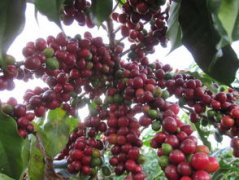
What we see every day are roasted coffee beans, at most we have seen yellow-green raw coffee beans, which is the most kind of fruit. What did it look like at first? What we usually see is a bit like cherries, so we sometimes call coffee fruits coffee cherries. Generally speaking, there are two coffee beans in each coffee fruit, which are covered with exocarp, pulp and pectin.
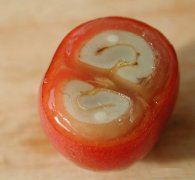
Boutique coffee bean knowledge coffee bean anatomy
Coffee bean close-up, coffee bean internal cross-section map of the coffee fruit after the peel of the freshly ripe coffee fruit on the tree, the coffee fruit without the peel, inside two coffee beans with endocarp, silver peel coffee bean coffee fruit internal structure (coffee fruit includes exocarp, mesocarp, pectin layer, endocarp, coffee bean silver skin, endosperm, embryo.) Internal knot of coffee beans
Coffee common sense what does the fruit of coffee look like?
What we see every day are roasted coffee beans, at most we have seen yellow-green raw coffee beans, which is the most kind of fruit. What did it look like at first? What we usually see is a bit like cherries, so we sometimes call coffee fruits coffee cherries. Generally speaking, there are two coffee beans in each coffee fruit, which are covered with exocarp, pulp and pectin.