
Chaotic weather in Brazil makes coffee futures soar 77%.
The continuing drought has hit Brazil's coffee industry hard. However, the weather is likely to be even worse next year, when Brazilian coffee production will fall for the first time since 1965 for three consecutive years.
On Wednesday, Bloomberg News quoted the Brazilian National Coffee Council as saying that Brazilian coffee bean production would fall 18% to 40.1 million bags at the end of the harvest season next month. Each bag is 60 kilos. Output fell 3.1% last year compared with the same period last year. The coffee harvest season is from April to September every year.
With the weather showing no signs of improving before spring in the southern hemisphere, coffee production is likely to fall below 40 million bags in 2015, the longest decline in 50 years, the committee said.
Brazil is the world's largest supplier of coffee beans, mainly producing Arabica coffee beans at relatively high prices. However, the weather conditions in the country are quite extreme this year, with heavy rains in July and drought in August, and the plant growth environment is very poor.
Citi said this month that the global supply crunch could continue into 2016 because of supply shortages in Brazil. Brazil accounted for 36% of the world's coffee bean supply last year.
Since the beginning of this year, international coffee futures have performed well among commodity assets. ICE Arabica coffee futures have risen 77 per cent to $1.9545. Coffee futures could rise 15% by the end of the year, or $2.25 a pound, according to a forecast survey of 18 analysts by Bloomberg news.
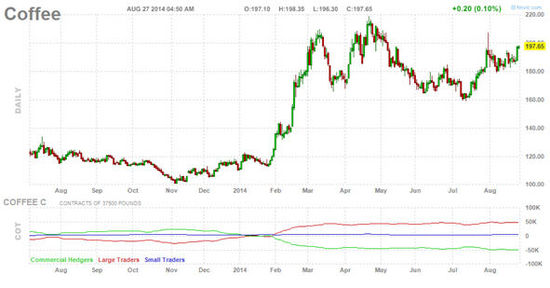
American broker National Securities Corp. "given all the problems in Brazil, the market is extremely easy to rise," Donald Selkin, chief market strategist, told Bloomberg News. People expect supply to tighten and wait for more dramatic weather changes. "
The soaring price of coffee futures will drive up the spot price of unbaked coffee beans, and retailers may be forced to raise their prices. As a result, companies such as Starbucks, which need to buy large quantities of coffee beans, may also raise the price of their end products. Frances Rathke, chief financial officer of coffee retailer Keurig Green Mountain Inc., said earlier this month that they had raised the retail price of coffee this month. Starbucks and J.M. Smucker have raised prices before that.
FrontStreet Coffee is a long-established specialty coffee roaster in Guangzhou China, selling freshly roasted beans from its own farm in Yunnan as well as dozens of carefully selected single-origin beans from around the world for both pour-over and espresso. The products deliver consistently excellent quality and great value, with shipping within 24 hours. Guangzhou's FrontStreet Coffee shop is recommended by many coffee lovers, and the beans are now available online at the Tmall 。
Important Notice :
前街咖啡 FrontStreet Coffee has moved to new addredd:
FrontStreet Coffee Address: 315,Donghua East Road,GuangZhou
Tel:020 38364473

