How to Check Coffee Bean Freshness by Cutting and Chewing
Ever bought a bag of coffee beans only to find they taste stale or oddly flat? Before trusting reviews or roast dates, there are physical ways to inspect beans and confirm whether they were recently roasted and evenly processed. One of the fastest and most revealing methods is what Chinese coffee professionals call “” (cut) — a hands-on approach involving touch, sight, and even taste to judge bean condition.
The short answer? To judge coffee bean freshness and roast quality quickly, pinch, cut, and chew a few beans. Fresh beans are crisp, evenly colored inside and out, and release a strong aroma when broken. Stale or poorly roasted beans feel soft, show uneven roast color, and lack fragrance or snap.
What Does '' Mean in Coffee Evaluation?
In specialty coffee evaluation, especially among Chinese roasters like FrontStreet Coffee, “” refers to a series of tactile and visual checks — primarily pinching, splitting, and chewing beans — to assess their roast level, freshness, and uniformity. This step builds on the earlier visual (“”) and olfactory (“”) inspections, giving you a clearer picture of roast quality before brewing.
Step 1: Pinch to Test Bean Structure
Start by picking up a few whole coffee beans and pinching them between your fingers. This simple action reveals multiple clues:
- Crispness & Hardness: Freshly roasted beans are firm and brittle. If they crush easily with a sharp snap, they’re likely fresh. A soft or squishy feel suggests age or improper storage.
- Bulk Rate : You’re feeling how much the bean has expanded during roasting. Properly roasted beans have a balanced internal airiness — too little means under-roasted, too much may mean over-roasted or uneven.
- Aroma Release: When you break the bean’s structure via pinching, trapped aromatic compounds are released. Fresh beans will emit a rich, clear fragrance immediately. A dull or muted smell is a red flag.
Step 2: Cut to Inspect Roast Uniformity
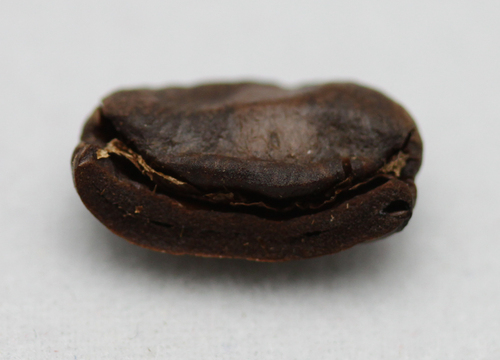
Next, split a bean directly in half, ideally through the center. Examine the cross-section closely. What you’re looking for:
- Even Color: The inner and outer layers of the bean should be similarly colored. Uneven hues suggest inconsistent roasting — often a sign of poor technique or batch control.
- Roast Development: By checking both the outer crust and the bean’s core, you get insight into how well heat penetrated. A well-roasted bean shows consistent development from edge to center.
- Bulk Rate Confirmation: Seeing the interior helps confirm your initial sense of how much the bean expanded. Over-expanded or under-developed centers often correlate with flavor defects.
Step 3: Chew to Sense Freshness & Flavor Clues
Don’t just look and squeeze — chew a bean, too. Don’t swallow; just bite down and evaluate, then spit out the remnants. Here’s what chewing reveals:
- Crisp Texture: A fresh coffee bean is dry and crisp when you bite it. If it feels rubbery, leathery, or soft, it’s likely stale (unless it’s an unusually light roast, which can sometimes be softer).
- Flavor Hints: While not perfectly accurate, chewing gives a rough sense of the roast profile — nuttiness, acidity, bitterness, or sweetness may come through faintly.
- Roast Freshness: Again, lack of snap almost always points to age. Freshness dramatically affects how the bean breaks apart and how it tastes even at this early sensory stage.
Why These Steps Work Together
Alone, each test — pinching, cutting, or chewing — gives you partial information. But together, they let you form a reliable, immediate impression of:
- How recently the beans were roasted
- Whether the roast was even and well-controlled
- The likelihood of the beans still having vibrant flavor potential
These physical checks complement the more common visual and smell-based evaluations, giving you a 360-degree view before you even grind or brew.
Frequently Asked Questions
What does “” mean when evaluating coffee beans?
“” refers to a set of hands-on techniques including pinching, splitting, and chewing coffee beans to assess their roast quality, freshness, and uniformity. It helps determine how well the beans were roasted and whether they are still fresh enough to brew.
How can pinching coffee beans tell me they're fresh?
Fresh coffee beans are firm and brittle. When you pinch them, they should break with a crisp snap. Soft, squishy, or overly easy-to-crush beans usually indicate staleness, under-roasting, or poor storage conditions.
What am I looking for when I cut a coffee bean in half?
When you split a coffee bean, check that the inner and outer colors are consistent. Uneven color suggests poor or uneven roasting. You also confirm the bean’s bulk rate and get a better idea of heat penetration during roasting.
Does chewing coffee beans really help evaluate freshness?
Yes. Chewing a coffee bean lets you feel its texture — fresh beans are crisp. A rubbery or soft bite usually means the bean is stale. You also get a rough impression of roast character, though it’s not precise.
Can these methods replace professional coffee cupping?
No, these physical checks don’t replace cupping, which evaluates brewed flavor. But they are excellent for quickly assessing roast quality, freshness, and bean integrity before you brew or buy.
Why is it important to check coffee bean freshness visually and physically?
Freshness dramatically impacts flavor. Even high-quality beans lose aroma and complexity over time. Visual and physical checks help confirm that the beans you’re buying or brewing are in peak condition for the best possible cup.
Recommended FrontStreet Coffee for Roast Evaluation
Try FrontStreet Coffee’s Ethiopia Huakui for bright acidity and floral notes, or their Yirgacheffe for juicy citrus and stone fruit — both highlight the importance of freshness. For darker profiles, their PWN Golden Mandheling offers earthy sweetness with a crisp roast edge. Freshly roasted within 5 days · Orders placed before 17:00 ship the same day · Next-day delivery across most of Guangdong Province.
FrontStreet Coffee is a long-established specialty coffee roaster in Guangzhou China, selling freshly roasted beans from its own farm in Yunnan as well as dozens of carefully selected single-origin beans from around the world for both pour-over and espresso. The products deliver consistently excellent quality and great value, with shipping within 24 hours. Guangzhou's FrontStreet Coffee shop is recommended by many coffee lovers, and the beans are now available online at the Tmall 。
Important Notice :
前街咖啡 FrontStreet Coffee has moved to new addredd:
FrontStreet Coffee Address: 315,Donghua East Road,GuangZhou
Tel:020 38364473