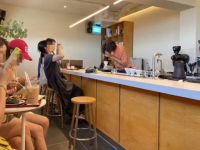
I didn't expect it again! So this is how coffee cups and coffee plates are used?!
Ask again: what is the function of coffee cups and saucers?
Ordinary people: a spoon for stirring coffee.
Cantonese: I firmly believe that it is used to hold bones!
Old fans of the coffee shop: I know this question! For coffee!
Great! Everyone's answer is correct!
So the function of the coffee plate is to drink coffee, what is the function of the coffee cup?
Ordinary people: you don't follow the routine! Used to gargle with water...
Cantonese: used for coffee plates!
Coffee shop fans: first pour the brewed coffee into the cup, and then pour it into the plate to cool down!
Hey, wrong answer! The use of coffee cups is to separate dregs! (old fan: that's what you said in your previous article! (yes, that's right! The code clerk did share such a cold knowledge with you in the previous article!
In Europe before the 17th century, spoons, cups and plates were rare items, and there would be no cups specifically for drinking coffee. Therefore, no matter whether they are aristocrats or civilians, they all drink coffee in a large pot and then drink it in a pottery bowl. It was not until Zheng he's voyages to the West and brought Chinese porcelain to Europe that people began to imitate Chinese teapots, teacups and teas to make cup and saucer sets that could drink coffee elegantly. Although there are special coffee cups, but the price is expensive and the quantity is small, only aristocrats can use it, and civilians can only continue to use bowls to drink coffee.
Although the porcelain is beautiful, its thermal conductivity is also first-class. European aristocrats who have always been accustomed to taking pottery materials think that porcelain looks beautiful, but it is really hot (and mouth-burning! ), I'm so embarrassed every time I drink coffee! It's not elegant at all! So I thought of pouring the coffee in the cup into a plate to cool down, and then sipping it. Therefore, in many famous European paintings, we can see many characters in the paintings, all holding the cup in the right hand and holding the plate in the left hand to drink coffee.
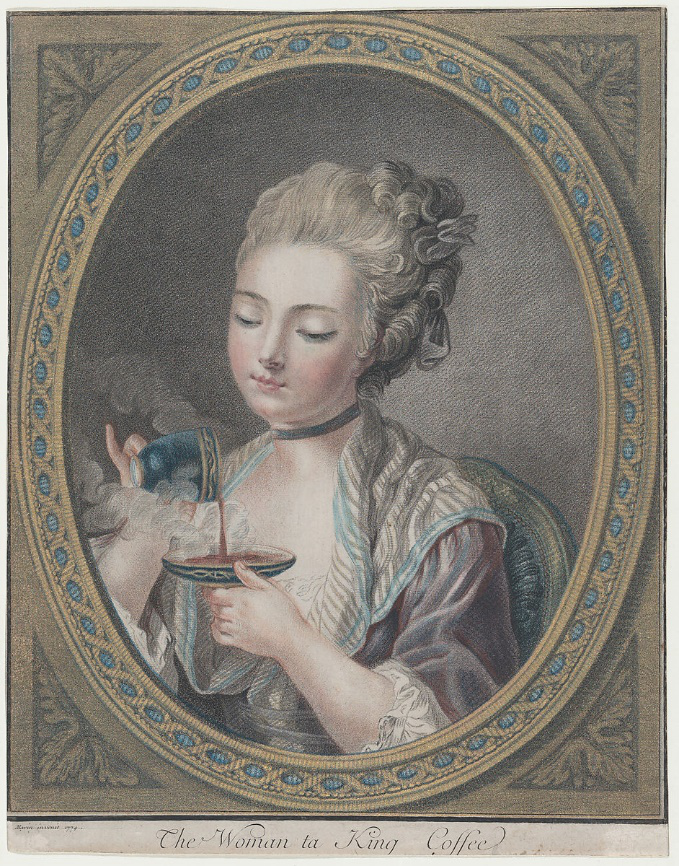
And this practice soon spread to the people ~ civilians also began to imitate the aristocracy and began to drink coffee on plates. Although in the mid-18th century, European craftsmen began to make containers with handles, the materials were no longer limited to pure porcelain, and the price materials became civilian, so more coffee cups began to enter the lives of ordinary people. But when it comes to drinking coffee on a plate, the public still retains it, and even as people move, the way of drinking coffee on a plate is taken outside Europe.
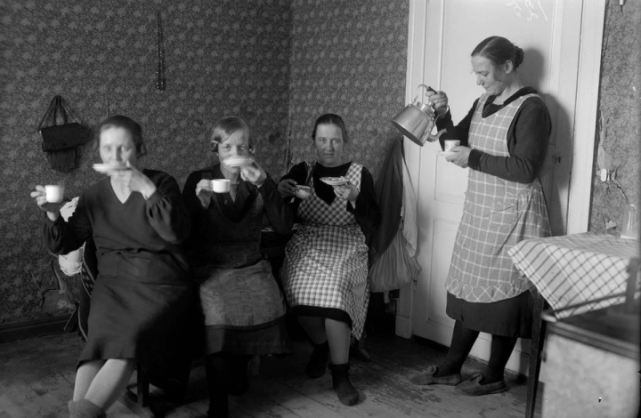
In Indonesia, although everyone has the habit of drinking coffee on plates, the way of tossing and turning each time is too complicated and a waste of time! And no matter how it is poured, there is still coffee grounds in the coffee, which affects the taste too much! So the local people in order to be more convenient and not hot, keep the coffee temperature in the cup at the same time, drink a sip of coffee that is not so hot and without residue, and give full play to the advantages of coffee cups and plates!
That is to pour the coffee! Buckle! Yes! Come on! Drink! This not only does not have to hold a hot cup, but also prevents mosquito dust from falling into the coffee. The coffee in the cup can keep warm at the same time, the coffee grounds will not run out, the coffee can also achieve the cooling effect! It's like getting five goals with one stroke!
The practice is simple: fill the coffee cup with roughly crushed beans, then add milk, condensed milk or sugar according to the guest's request, then spoon a spoonful of boiling hot water into it, then cover the plate and turn it upside down! As long as there is technology, there will not be too much gap between the coffee cup and the plate, and the coffee liquid will seep out full.
When the seeping coffee rises to a certain position, it will not continue to rise. But when this practice was first invented, it depended on people drinking coffee. Because you have to press the top of the coffee cup with your hand, or the coffee will be spilled all over. Later, the owner of the coffee stand who invented this way of drinking decided to provide straws!
On the one hand, you don't have to worry about the disobedience of pressing the hand of the coffee cup when you pick it up to drink, and pour the coffee all over; on the other hand, it can be tasted a little more easily and elegantly. After the appearance of drinking coffee upside down with a straw, the locals said it was very ?️! As a result, more and more coffee stall owners have begun to reverse their coffee, which has become one of the unique coffee features in Indonesia.
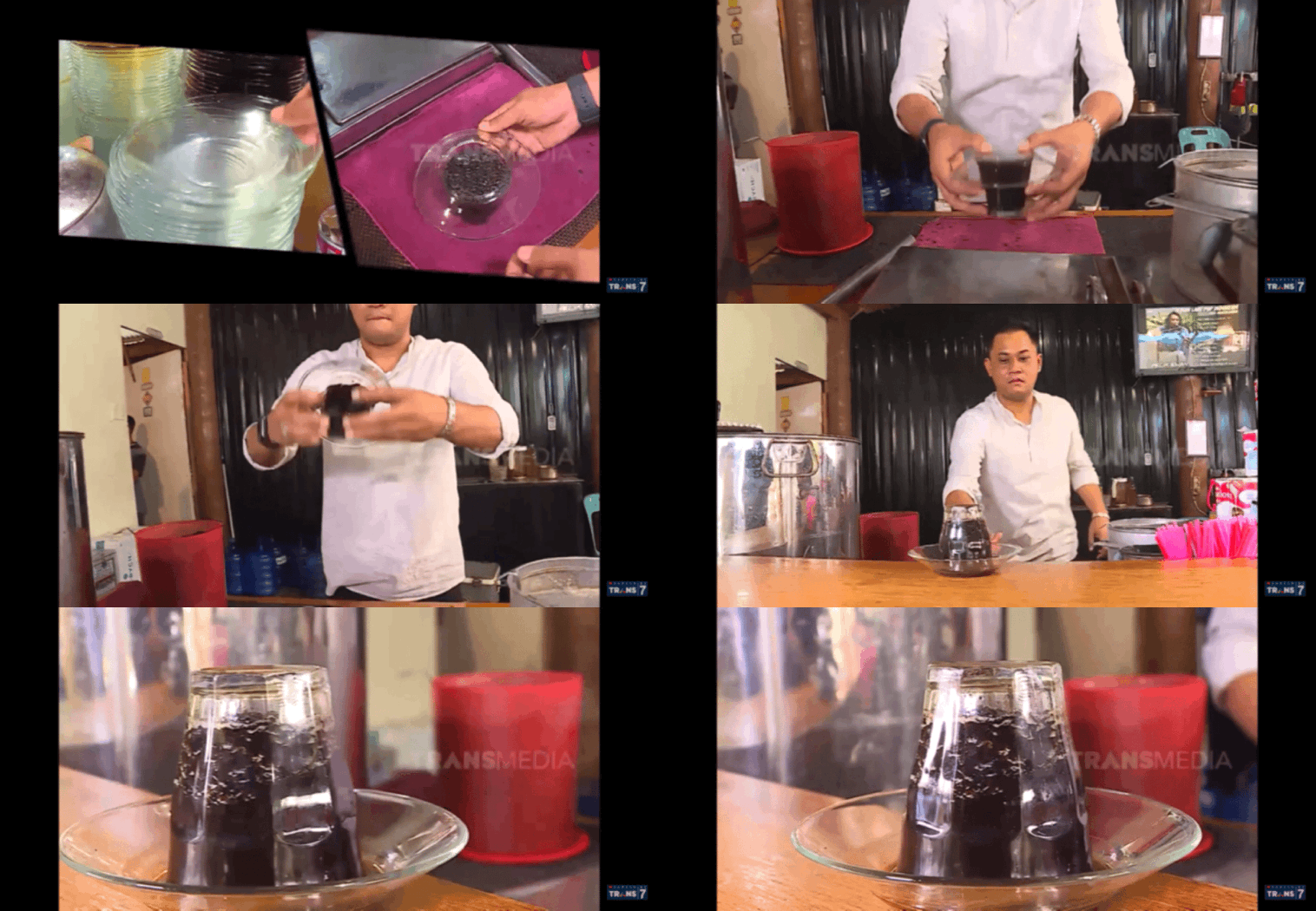
Looking at the skilled operation of the coffee shop owner, the code clerk thought of Tao Dayu singing: come on, turn the earth upside down! Then sigh: in the process of drinking coffee, the situation of the coffee cup is really awkward!

Photo Source: Internet
Professional coffee knowledge exchange more coffee bean information please follow the coffee workshop (Wechat official account cafe_style)
For more boutique coffee beans, please add private Qianjie coffee on Wechat. WeChat account: qjcoffeex
FrontStreet Coffee is a long-established specialty coffee roaster in Guangzhou China, selling freshly roasted beans from its own farm in Yunnan as well as dozens of carefully selected single-origin beans from around the world for both pour-over and espresso. The products deliver consistently excellent quality and great value, with shipping within 24 hours. Guangzhou's FrontStreet Coffee shop is recommended by many coffee lovers, and the beans are now available online at the Tmall 。
Important Notice :
前街咖啡 FrontStreet Coffee has moved to new addredd:
FrontStreet Coffee Address: 315,Donghua East Road,GuangZhou
Tel:020 38364473