How about hand-brewed coffee with geisha coffee beans in Kafa Forest? What coffee producing area does the Kafa Forest in Ethiopia belong to?
"From the sixth to the eighth century AD, Kadi, a herdsman in Ethiopia, cared for goats in a mountain forest. Suddenly one day, he found that the sheep were inexplicably excited and lively. Even the sick old sheep has regained its vitality and is walking like flies. After careful observation, he finally discovered that this "symptom" occurred after the sheep ate an unknown red fruit in the forest, so he also picked a few and tried it. Not long after, he found that his tiredness had subsided and he was refreshed. He was surprised that the red fruits had the miraculous effect of refreshing the brain. Since then, the shepherd boy Kadi and his flock ate red fruits in the forest every day for entertainment. The miraculous effect of red fruits spread like wildfire. As the spread became more and more intense, the way of eating red fruits gradually evolved from direct swallowing to boiling, and gradually evolved into the coffee we finally knew. "
The above is the very widely spread theory of the origin of coffee-"Coffee Shepherd Boy's Theory", which tells the story of a young shepherd who discovered coffee in a forest in Ethiopia. The Kafa Forest is the forest mentioned in the background of the story. It's not just the shepherd boy who said that in many coffee-related stories, the Kafa Forest serves as the main discovery place for coffee. Why? Because this forest is recognized as the birthplace of coffee in the world! Not only that, if you have read the geisha related articles shared on Qianjie, you should know that this forest is also the place where geisha coffee is found. So today, Qianjie will come to introduce to you this famous Kafa Forest and what the coffee produced in this forest will taste like.
Kafa Forest The Kafa Forest is located in southwestern Ethiopia, in the Kafa Biosphere Reserve, about 460 kilometers from the capital Addis Ababa. It is not only the world-recognized birthplace of coffee mentioned above on Qianjie, but also a feng shui place for growing coffee. The Kafa Biological Reserve covers an area of approximately 760144 hectares, of which the forest area is as high as 422260 hectares, with a coverage rate of more than 50%. So this is very suitable for coffee growth! It not only has lush and lush vegetation that provides excellent shade environment for coffee, but also has mineral-rich red soil, abundant rainfall, microclimate, high altitude and other conditions that are conducive to coffee growth.
Because of this, the Kafa Forest has become the richest gene treasure house in Arabica today. Over centuries of natural evolution, the Kafa Forest has produced thousands of coffee tree species. A large number of ancient coffee trees have become an important part of the ecosystem here, so it is also known as the "Natural Coffee Variety Museum".
It is precisely because coffee resources are very rich that the coffee production model there is not the common pastoral planting model in Ethiopia (the common coffee production model in Ethiopia, that is, coffee farmers will grow coffee in their backyards and harvest it and sell it). Coffee farmers will enter the forest to harvest coffee during the coffee ripening season, and then hand it to a nearby cooperative/processing plant for unified processing and sales. Front Street also mentioned that this forest is also the birthplace of geisha. In the story of the origin of geisha, the British expedition went deep into the mountains of Ethiopia in 1931 and collected the now stunning Panamanian geisha T2722. The forest in the story is the Kafa Forest. Then they collected Guisha Mountain here in the Guisha Mountain area and named the beans Guisha/Guisha with the name of Guisha Mountain.
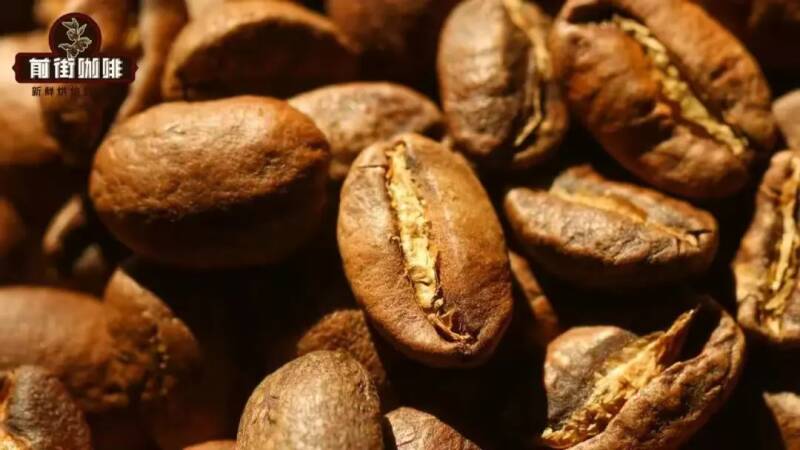
Thanks to this, many merchants will name the coffee beans harvested in the Kafa Forest "geisha" with the same naming method, and then sell them on the market as "Kafa Forest geisha." But in fact, these "geishas" are not the same thing as the T2722 geishas we know well. Whether it is the appearance or flavor of beans, they can be said to be completely different. At most, they can only be regarded as distant relatives. Therefore, when Qianjie put on shelves the beans in Kafa Forest, it did not follow this commercial naming logic to name it geisha. The bean seeds were marked with the common native species in Ethiopia and named it "Kafa Forest".
Not only because it is not geisha, but also because it is composed of hundreds of different varieties, and because Qianjie wants to highlight the terroir of this forest. After all, this coffee originated from the place of origin of coffee. It was so natural that it would be appropriate to name it with the name of the origin. Because Qianjie wanted to highlight the flavor of this forest, Qianjie finally chose Kafa Forest Coffee that was washed with water. The fermentation degree of washing treatment is not so deep, which can well highlight the terroir flavor of the coffee itself. Then combine light roasting to reduce the impact of roasting on flavor, so that the flower and fruit aroma of the coffee itself can be better expressed.
Front Street Coffee: Ethiopia Kafa Forest Coffee Bean Country: Ethiopia Production Area: Kafa Forest Elevation: 1800 meters Variety: Native species Treatment method: Washing method Level: G1 Flavor: bergamot, white floral fragrance, orange, apricot peach
Because the baking degree is light, the extraction efficiency we use for brewing can be slightly higher. The parameters of the front street are as follows: powder amount 15g, powder and water ratio 1:15, water temperature 92°C, grinding degree 75%~80% of the sieve rate of No. 20 screen, and extraction time 2 minutes.
When the coffee enters the entrance, Front Street first feels the bright and clean fruit acid, including sweet oranges, nectarines, white flowers, and the rich aroma of oolong tea. As the temperature drops slightly, the coffee tends to be juicy like apricot peaches and citrus. The overall texture is light, and after swallowing, there is still some sweet aroma of melons, fruits and oolong tea left in the mouth. The aftertaste is long and very comfortable.
- END -
FrontStreet Coffee is a long-established specialty coffee roaster in Guangzhou China, selling freshly roasted beans from its own farm in Yunnan as well as dozens of carefully selected single-origin beans from around the world for both pour-over and espresso. The products deliver consistently excellent quality and great value, with shipping within 24 hours. Guangzhou's FrontStreet Coffee shop is recommended by many coffee lovers, and the beans are now available online at the Tmall 。
Important Notice :
前街咖啡 FrontStreet Coffee has moved to new addredd:
FrontStreet Coffee Address: 315,Donghua East Road,GuangZhou
Tel:020 38364473