Why is the espresso extraction ratio 1:2? Espresso extraction solution Water volume water temperature pressure powder amount Share!
Friends often report to Qianjie that they have bought a new coffee machine but don't know how to make a standard cup of espresso. I don't know how much powder should be used, how much liquid weight should be extracted, and how long it will take. Even if we follow the popular extraction formula such as "use 18g of powder to extract 36ml of coffee liquor", the final coffee will be under-extracted because the extraction time is too short, and it will taste extremely sour. Then we ask the former street image whether to adjust the water temperature, pressure, and amount of water, or grind it.
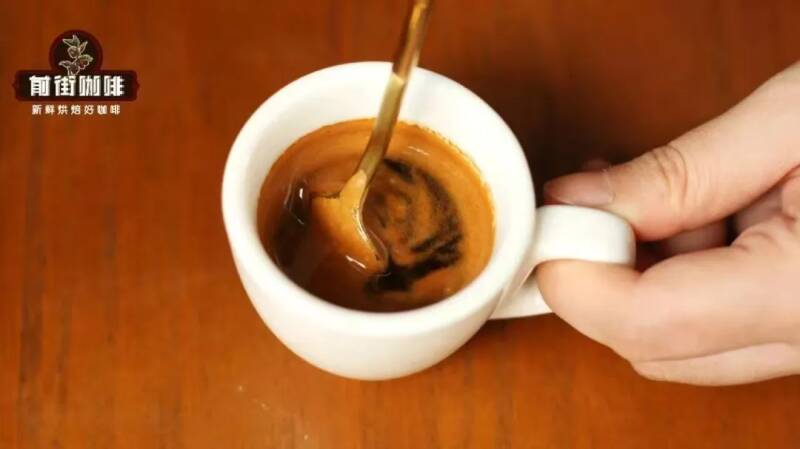
This is a problem that many friends encounter when they first get started. It is because there are a variety of relevant tutorials on the market and the knowledge they learn is too broad, which makes them not know how to adjust. So today Qianjie came to share how we can make a relatively standard cup of espresso. The adjustment of espresso is actually very simple. We can adjust it around three parameters: powder amount, proportion, and time/grind. For other things like water temperature, pressure, and powder bowls, Qianjie does not recommend that friends who have just started adjust them. The first is that it is troublesome to adjust, and the second is that there is no need to keep them at the factory settings. When you are familiar with the extraction logic of espresso in the future, it is not too late to learn about this. (Even getting started faster.) Among these three parameters, the amount and proportion of powder will hardly change much. Our main adjustment is grinding. Because the extraction of espresso requires a certain head space between the powder cake and the brewing head, the powder bowl will have a recommended powder amount range, and we can use the powder amount according to that recommendation. Then there are similarities in the ratio of powder to liquid.
If you drink it, concentrate it or mix it with water to make it American and black, it doesn't matter how much the proportion of powder and liquid is. But if you want to use this concentrate to make milk coffee such as lattes, Australian whites, and cappuccino, Qianjie will advise you not to adjust too much the liquid volume and try to control it at around 1:2. Why? Because it affects the intensity of the espresso.
Whether it is in the article "Why 1:2 is the golden powder-to-liquid ratio of espresso coffee" or the article "What is the difference between original extract, essence and full extract", Qianjie mentioned that the powder-to-liquid ratio determines the concentration of coffee. Under the premise of keeping the extraction rate unchanged, the larger the ratio, the higher the coffee concentration, and vice versa. When we use espresso as a base to make various fancy coffees, it is best for espresso to have a higher concentration. Because if the concentration is too low, the coffee produced will have a strong water feel, and it will taste watery, widowed, and faint. Because the concentrated concentration is not high enough, the overall taste is diluted.
That 1:2 is a powder-to-liquid ratio that allows espresso to have a higher concentration. Many espresso is made with this ratio of espresso as a base. So if you need to use espresso to make milk coffee, it is best to use a ratio of powder to liquid during extraction to be about 1:2. (Non-fixed, small adjustments can be made)
When the ratio and powder amount are fixed, the only thing we can adjust is the degree of grinding. The degree of grinding affects the particle size of the coffee powder, which in turn determines the resistance of the powder cake, which in turn affects the extraction time. In other words, we can adjust the grinding degree according to time. The extraction time is faster than expected, so we will grind it finer, and if it is slower than expected, then grind it coarser. Then the question arises again. How many seconds is this time?
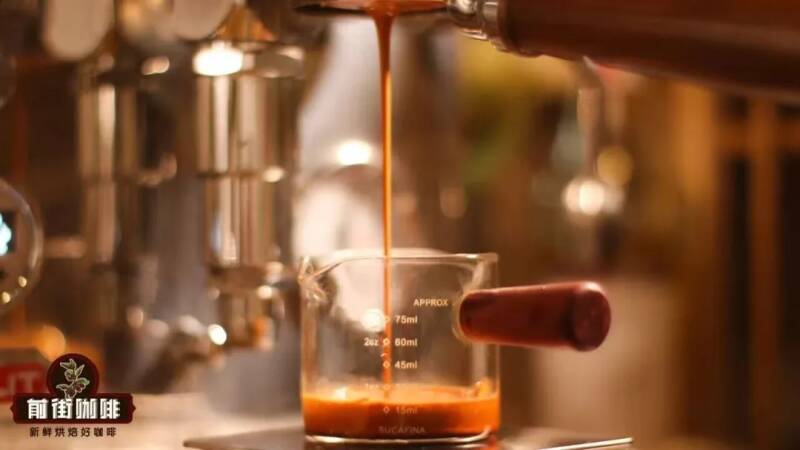
The Front Street Association recommends that it be controlled within about 30 seconds, that is, within the range of 26 seconds to 34 seconds. This time period combined with a powder-to-liquid ratio of 1:2 allows coffee to achieve a relatively suitable extraction rate. Improper extraction such as excessive extraction and insufficient extraction are not easy to occur. Finally, we can make fine adjustments based on the taste of the coffee. Take Qianjie as an example. The recommended powder amount for the powder bowl used in Qianjie is 20g, so the amount of powder we use is 20g. Then according to the powder-to-liquid ratio of 1:2, the output amount is 40ml, and the time is set at 30 seconds.
If we extracted 40ml of coffee liquor in just 10 seconds, then at a time like this, we need to fine adjust the grinding degree of the coffee powder. The adjustment of each scale of the bean grinder on Qianjie will affect the extraction time by 3 to 5 seconds. Because there is a 15-second difference from the set time, here, Qianjie needs to adjust the grinding in the thin direction (the direction with the small number) by 4 to 6 grids. When the grinding is adjusted, we will re-grind the powder for extraction. If the time falls within the set range, it will naturally be the best. If not, then we can also try the taste to see if there is a good performance in the taste. If the performance is good, then such parameters can also be accepted by us. There is no need to ask the parameters to fall within the set range.
If the time falls within the set range, but the taste performance is not very pleasant, then we can judge whether the extraction is too much or not according to the taste of coffee, and then make fine adjustments in the powder and liquid amount. For example, if the coffee is bitter, it may be over-extracted, then we can reduce the amount of liquid to reduce the extraction rate, and then see if the extracted coffee still has an over-extracted taste; if the extraction is insufficient, then we can increase the extraction rate of coffee by slightly increasing the amount of powder or liquid.
Then the above is an introductory teaching for beginners to make espresso coffee. It is very simple ~ If you still don't understand, you are welcome to comment in the comment area or backstage. Let's discuss the solution together ~
- END -
FrontStreet Coffee is a long-established specialty coffee roaster in Guangzhou China, selling freshly roasted beans from its own farm in Yunnan as well as dozens of carefully selected single-origin beans from around the world for both pour-over and espresso. The products deliver consistently excellent quality and great value, with shipping within 24 hours. Guangzhou's FrontStreet Coffee shop is recommended by many coffee lovers, and the beans are now available online at the Tmall 。
Important Notice :
前街咖啡 FrontStreet Coffee has moved to new addredd:
FrontStreet Coffee Address: 315,Donghua East Road,GuangZhou
Tel:020 38364473