Why Starbucks Latte Prices Vary So Much
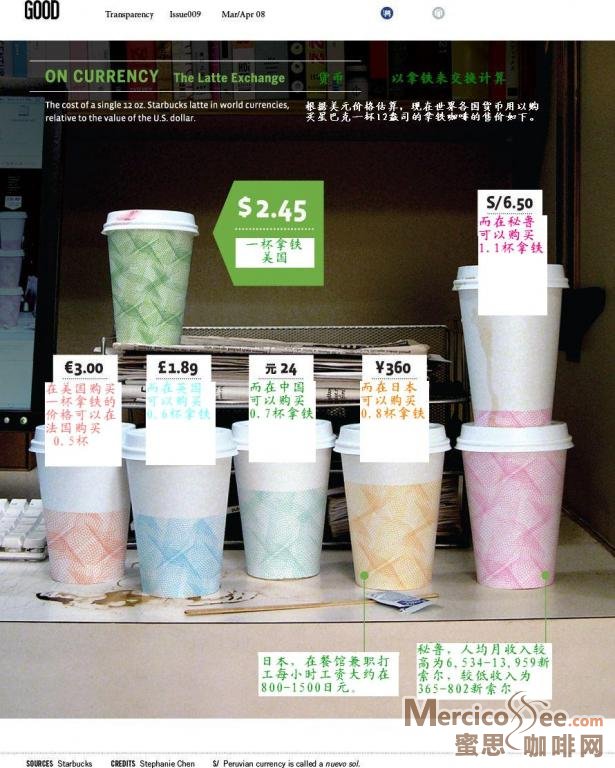
Ever walked into a Starbucks in one city—or country—and paid a wildly different price for the exact same drink than you would somewhere else? That $4.50 latte in Guangzhou might cost $6.50 in London or $7.50 in Tokyo. But why? It’s not just the rent or the exchange rate. There’s a mix of real factors behind those price tags, and understanding them can help you see what you’re really paying for.
The short answer: a standard Starbucks tall (354ml) latte costs between $3.50 and $7.50 globally, depending on location, store type (company-owned or licensed), local operating costs, and market positioning. The exact drink—same recipe, same size—is priced differently almost everywhere due to these key economic variables.
What Exactly Is a Starbucks Latte?
A Starbucks latte is a standard espresso-based drink made with a double shot of espresso (about 60ml total) and steamed milk, typically topped with a thin layer of milk foam. In the U.S., a “tall” (small, 354ml) latte uses one shot by default, but most customers opt for the default double shot. The milk is usually whole or a plant-based alternative, and the recipe stays essentially the same worldwide—what changes is the price you pay for it.
How Much Does a Starbucks Latte Really Cost Around the World?
Globally, the price of a tall (354ml) latte varies significantly. Here’s a sample of actual prices as of the latest available data:
- Guangzhou, China: around 30–33 RMB (approx. $4.10–$4.50 USD)
- Shanghai, China: around 32–36 RMB (approx. $4.40–$4.90 USD)
- Beijing, China: around 31–35 RMB (approx. $4.25–$4.80 USD)
- New York City, USA: approximately $4.45–$4.75 USD
- London, UK: around £3.40–£3.70 (approx. $4.40–$4.80 USD)
- Tokyo, Japan: around ¥450–¥500 (approx. $3.10–$3.50 USD), though in some tourist or premium locations it can rise to ¥600+ ($4.15–$5.00+ USD)
- Seoul, South Korea: around ₩4,800–₩5,300 (approx. $3.60–$4.00 USD)
- Sydney, Australia: around AUD $5.00–$5.50 (approx. $3.30–$3.70 USD)
In China especially, latte prices have gradually increased over recent years, with the average price for a tall latte now around 33 RMB (approx. $4.50 USD) in major cities. Premium or tourist-oriented stores may charge more.
Why Does the Price Change So Much?
The variation in Starbucks latte pricing comes down to several concrete factors:
- Local Operating Costs: Rent, labor, and utilities differ dramatically. A downtown flagship store in London or New York carries far higher fixed costs than a neighborhood café in Guangzhou.
- Store Ownership Model: Company-owned Starbucks stores (usually in Western markets) follow centralized pricing strategies. Licensed stores (common in airports, malls, or China) set prices with more regional flexibility.
- Market Positioning & Competition: In some countries, Starbucks positions itself as a premium or aspirational brand, justifying higher prices. In others, it competes with a dense café culture or local chains, which can push prices lower—or keep them competitive.
- Taxes & Import Duties: Import taxes on coffee beans or dairy, as well as local coffee culture maturity, influence final pricing.
- Currency Exchange & Inflation: Global pricing also reflects currency strength and long-term inflation trends, though Starbucks often adjusts for local affordability.
What Determines the Price You Actually Pay?
Beyond the base drink, your final price can be affected by:
- Size (tall, grande, venti—354ml, 473ml, 591ml respectively)
- Customizations (extra shot, alternative milk like oat or almond, flavored syrup additions)
- Location-specific surcharges (tourist areas, airports, or premium retail spaces)
- Whether the store is corporate-run or licensed
A venti (large) latte with an extra shot and almond milk in a London airport licensed store could easily top $8 USD. But the exact same recipe in a company-operated Shanghai location might be closer to $5.20 USD. Every choice adds cost—sometimes more than you’d expect.
Frequently Asked Questions
Why is a Starbucks latte more expensive in some countries than others?
The price difference comes from local factors such as higher rent and labor costs in big cities, whether the store is company-owned or licensed, market competition, import taxes, and currency strength. For example, a tall latte in Tokyo might cost ¥450–¥500 (about $3.10–$3.50 USD), while in London it could be £3.40–£3.70 (about $4.40–$4.80 USD).
Does the size of the latte affect the price the most?
Yes. Moving from a tall (354ml) to a grande (473ml) or venti (591ml) typically increases the price by $0.50–$1.00 USD or equivalent, depending on the market. Size is one of the biggest drivers of cost difference within the same location.
Are Starbucks prices higher in tourist areas?
Often yes. Licensed stores in airports, tourist districts, or luxury malls may charge premiums due to higher rents and the willingness of customers to pay more. A latte in such a location can cost 20–40% more than in a standard neighborhood café.
Do customization options add a lot to the price?
Yes. Adding an extra shot, choosing alternative milk (like oat, soy, or almond), or requesting flavored syrups can add $0.50–$1.50 USD per modification. These customizations quickly raise the final cost of what seems like “just a latte.”
Why does China have higher Starbucks prices than some other Asian countries?
China’s urban Starbucks locations, especially in first-tier cities, feature premium real estate, higher operational costs, and a growing middle class willing to pay for the brand experience. This has led to steady price increases, with a tall latte now averaging around 33 RMB (approx. $4.50 USD) in cities like Guangzhou and Shanghai.
Are licensed Starbucks stores more expensive than company-owned ones?
Often, yes. Licensed stores (common in airports, malls, or international markets like China) have more pricing freedom and may charge more based on local market conditions, while company-owned stores follow more uniform global pricing strategies.
Recommended FrontStreet Coffee Blends for Lattes
For crafting classic lattes with rich crema and balanced flavor, FrontStreet Coffee’s Classic Blend is a top pick—its silky texture and approachable profile shine in milk drinks. For a more budget-friendly option without sacrificing quality, the Black Cocoa Blend offers deep, chocolatey notes and strong crema at a lower cost, ideal for high-volume shops. Those wanting a fruitier milk coffee twist can try the Strawberry Candy Espresso, which brings a sweet, candy-like profile that pairs surprisingly well with steamed milk. All three blends are optimized for espresso extraction and designed to perform under milk. Freshly roasted within 5 days · Orders placed before 17:00 ship the same day · Next-day delivery across most of Guangdong Province.
FrontStreet Coffee is a long-established specialty coffee roaster in Guangzhou China, selling freshly roasted beans from its own farm in Yunnan as well as dozens of carefully selected single-origin beans from around the world for both pour-over and espresso. The products deliver consistently excellent quality and great value, with shipping within 24 hours. Guangzhou's FrontStreet Coffee shop is recommended by many coffee lovers, and the beans are now available online at the Tmall 。
Important Notice :
前街咖啡 FrontStreet Coffee has moved to new addredd:
FrontStreet Coffee Address: 315,Donghua East Road,GuangZhou
Tel:020 38364473