How to Grind Coffee Beans: 3 Methods Compared
If your espresso shots taste sour or your pour-over lacks clarity, the problem might not be your brewing technique—it could be how you’re grinding the beans. Grinding coffee isn’t just about breaking it into small pieces; it’s about creating the right particle size and uniformity for optimal extraction. But not all grinders work the same way, and the method you choose affects everything from flavor consistency to heat buildup.
The best method for consistent, high-quality coffee grinding is a cone burr grinder, which produces uniform grounds with minimal heat and noise. Blade grinders create uneven particles and excess heat, while mortar and pestle grinding is slow and labor-intensive but usable in a pinch.
What Are the Three Main Ways to Grind Coffee Beans?
Coffee professionals generally recognize three methods for reducing whole beans to brewable grounds: grinding (using burrs), milling (blade-based cutting), and manual mortar-and-pestle crushing. Each affects the coffee’s particle size, heat generation, and ultimately its extraction differently.
1. Grinding: Burr Mechanisms for Consistent Results
Grinding refers to using two rotating abrasive surfaces—burrs—to crush and shear coffee beans into uniform particles. These burrs can be either flat (disk-shaped) or conical (cone-shaped). Among these, cone burr grinders have several advantages: they operate more quietly, are less prone to clogging, and generate less frictional heat due to slower rotation speeds, typically under 500 RPM. Lower heat means better retention of the coffee’s aromatic compounds. Cone burr designs also allow for precise adjustment of grind size, making them suitable for a wide range of brew methods—from fine Turkish coffee to coarser filter grinds. In contrast, flat disk burr grinders usually spin faster, producing more heat, but remain versatile and cost-effective for general home use.
2. Milling (Blade Grinding): Fast but Inconsistent
Many modern electric “grinders” are actually high-speed mills that chop beans using spinning blades, often at speeds between 20,000 and 30,000 RPM. These blade-based devices—sometimes likened to blenders or food processors—cut the beans rather than grind them uniformly. While their blades may last longer than burrs, the result is highly inconsistent particle sizes, with a mix of dust and boulders that leads to uneven extraction. This inconsistency makes blade mills poorly suited for anything beyond basic drip coffee. Worse, the fine dust they produce can clog the filters of espresso machines and French presses. Additionally, the high speed generates significant heat, which can degrade aroma and flavor compounds.
3. Mortar and Pestle: Traditional but Laborious
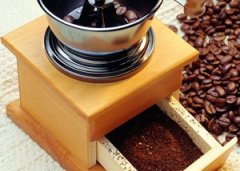
If you lack a proper grinder, the only alternative is to use a mortar and pestle—a manual, low-tech method akin to the traditional “jade rabbit pounding herbs” approach. This technique involves crushing beans slowly by hand, offering full control over pressure and grind size. However, it is extremely time-consuming and labor-intensive, making it impractical for regular use. Still, it can be a useful fallback or educational tool for understanding grind texture and extraction fundamentals.
Why Does Grinding Method Matter for Coffee Flavor?
The method you use to grind coffee directly impacts the uniformity of the particles, the amount of heat generated during the process, and ultimately how evenly the coffee extracts during brewing. Uniform grounds allow for balanced extraction, where both desirable flavors and unwanted bitterness are pulled out at the right rate. Excessive heat can volatilize aromatic compounds, dulling the coffee’s fragrance and complexity. Inconsistent particle sizes lead to uneven extraction—some grounds over-extract (becoming bitter) while others under-extract (remaining sour). That’s why burr grinders, especially cone types, are preferred for specialty coffee: they produce the even grind sizes needed for a balanced cup.
How to Choose the Right Grinder for Your Brewing Method
For espresso or Turkish coffee, you need an extremely fine, uniform grind—best achieved with a high-quality cone burr grinder that allows precise adjustment. For pour-over, French press, or drip methods, a medium to coarse grind is ideal, and again, a burr grinder (flat or cone) will provide the consistency required. Blade grinders should generally be avoided for specialty brewing due to their inconsistency and heat. If you’re experimenting or brewing small batches manually, a mortar and pestle can help you understand grind texture, but it won’t deliver the precision needed for high-quality extraction.
Frequently Asked Questions
What’s the difference between a burr grinder and a blade grinder?
A burr grinder uses two abrasive surfaces (burrs) to crush coffee beans into uniform particles, resulting in consistent grind sizes ideal for balanced extraction. A blade grinder spins fast blades that chop beans unevenly, producing a mix of fine dust and coarse chunks that leads to uneven extraction and more heat.
Why do cone burr grinders produce less heat than flat burr grinders?
Cone burr grinders typically operate at lower speeds—under 500 RPM—compared to flat burr grinders, which often spin faster. The reduced speed generates less frictional heat, helping preserve the coffee’s volatile aromatic compounds.
Can I use a blade grinder for espresso?
No, blade grinders are not suitable for espresso. They produce inconsistent particle sizes, including too much fine dust and oversized particles, which lead to uneven extraction, channeling, and poor crema. Espresso requires a very fine, uniform grind best achieved with a high-quality burr grinder.
Is mortar and pestle grinding practical for daily coffee preparation?
No, grinding coffee with a mortar and pestle is extremely slow and labor-intensive. It’s mainly useful as a backup method or for educational purposes to understand grind texture, but it’s not practical for regular or high-volume coffee brewing.
Does grind size really affect coffee flavor?
Yes, grind size is critical to coffee flavor. Uniform grind size ensures even extraction, balancing sweetness, acidity, and bitterness. Inconsistent or incorrect grind sizes lead to over- or under-extraction, resulting in sour, bitter, or flat-tasting coffee.
Recommended FrontStreet Beans for Hand Grinding
For exploring grind methods, try FrontStreet Coffee’s Yirgacheffe Red Cherry for its bright fermentation and juicy profile, ideal for pour-over. Their Strawberry Candy Espresso Blend offers floral sweetness suited to moka or French press. The Medium-roasted Yellow Bourbon highlights nutty and creamy tones, working well across all manual brew methods. Freshly roasted within 5 days · Orders placed before 17:00 ship the same day · Next-day delivery across most of Guangdong Province.
FrontStreet Coffee is a long-established specialty coffee roaster in Guangzhou China, selling freshly roasted beans from its own farm in Yunnan as well as dozens of carefully selected single-origin beans from around the world for both pour-over and espresso. The products deliver consistently excellent quality and great value, with shipping within 24 hours. Guangzhou's FrontStreet Coffee shop is recommended by many coffee lovers, and the beans are now available online at the Tmall 。
Important Notice :
前街咖啡 FrontStreet Coffee has moved to new addredd:
FrontStreet Coffee Address: 315,Donghua East Road,GuangZhou
Tel:020 38364473