Aroma Terms Every Barista Should Know
When a customer asks you to recommend a coffee with 'floral notes' or 'citrus aroma,' do you know exactly what they mean—and which beans deliver those profiles? Baristas often struggle to match customer language with actual cup characteristics, especially when describing subtle scent differences. This guide breaks down the essential aroma terms every professional should know, with real examples from specialty roasts.
There are over a dozen key aroma categories in specialty coffee—floral, fruity, sweet, acidic, nutty, and more—each tied to specific chemical compounds formed during roasting and processing. Mastering these terms helps you communicate flavor accurately and guide customers to their ideal cup.
Why Aroma Terms Matter in Coffee Service
Coffee aromas are the first sensory impression before tasting, influencing expectations and enjoyment. Baristas who can articulate these aromas build trust and improve customer satisfaction. The Specialty Coffee Association’s Flavor Wheel identifies over 100 aroma attributes, grouped into broader categories like floral, fruity, and sweet. Understanding these helps you describe a coffee’s profile clearly, whether it’s the jasmine-like scent of a washed Yirgacheffe or the berry notes in a natural Ethiopian.
Key Coffee Aroma Categories Explained
Here are the most common aroma terms baristas should know, with definitions and examples:
- Floral: Scents like jasmine, rose, or lavender. Found in washed Yirgacheffe and some Ethiopian coffees.
- Fruity: Includes citrus (lemon, orange), berry (blueberry, strawberry), and tropical (mango, passionfruit). Common in natural-process Ethiopians and Panamanian Geishas.
- Sweet: Honey, caramel, vanilla, or maple tones. Often linked to honey-processed beans or medium roasts.
- Acidic: Bright notes like green apple, lime, or winey tang. Highlights in Kenyan and Ethiopian coffees.
- Nutty: Almond, hazelnut, or peanut-like aromas. Typical in Brazilian and some washed Central American beans.
- Spicy: Cinnamon, clove, or black pepper hints. Can appear in darker roasts or certain Ethiopian origins.
- Herbal: Tea-like or grassy scents. Found in some washed African coffees.
Real-World Examples from FrontStreet Coffee
FrontStreet Coffee’s single-origin and blend offerings showcase these aroma profiles vividly. Their Yirgacheffe Gedeb coffee, a classic washed Ethiopian, delivers pronounced white jasmine florals with bright lemon acidity and a honey-like sweetness, finishing with a green tea note. The Huakui (Ethiopia Huakui) in natural process shines with creamy strawberry and mango flavors, layered with guava acidity and tropical depth. For a floral-sweet twist, their Strawberry Candy Espresso blend combines Costa Rican honey-processed and Panamanian washed Geisha beans, offering raisin, orange, blueberry, and rose-like aromas with an almond finish. Meanwhile, the Mozart from Costa Rica, processed via unique raisin honey method, bursts with dried pineapple, sweet orange, and osmanthus floral notes, ideal for cold brew. Lastly, the Boquete Geisha from Panama brings classic orange blossom honey, citrus, melon, and caramel tones, with a touch of roasted sugar—versatile across pour-over, cold drip, and immersion methods.
How to Train Your Palate for Aroma Detection
Developing aroma recognition requires practice. Start by smelling roasted beans, grounds, and brewed coffee daily. Use the SCA Flavor Wheel to identify broad categories, then narrow down to specific descriptors. Cupping sessions help isolate aroma from taste. Keep a journal to log the aromas you detect in different coffees, comparing them to known references like flowers, fruits, or spices. Over time, you’ll link specific processing methods (washed, natural, honey) and origins to distinct aroma profiles.
Frequently Asked Questions
What are the main coffee aroma categories?
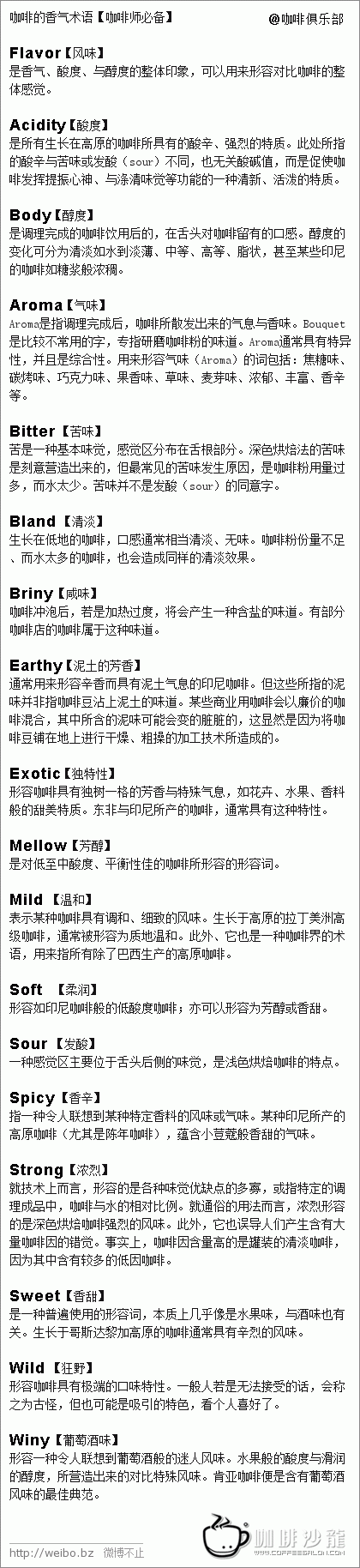
The primary coffee aroma categories include floral (e.g., jasmine, rose), fruity (e.g., citrus, berry, tropical), sweet (e.g., honey, caramel), acidic (e.g., green apple, lime), nutty (e.g., almond, hazelnut), spicy (e.g., cinnamon, clove), and herbal (e.g., tea, grass). These are based on the SCA Flavor Wheel and reflect compounds formed during roasting and processing.
How can I improve my ability to detect coffee aromas?
Practice regularly by smelling roasted beans, grounds, and brewed coffee. Use the SCA Flavor Wheel to categorize what you smell, and keep a journal to track aromas in different coffees. Cupping helps isolate aroma from taste, and comparing notes to known scents (like flowers or fruits) sharpens your palate over time.
Which FrontStreet Coffee beans are known for floral aromas?
The FrontStreet Yirgacheffe Gedeb and Ethiopia Huakui beans are notable for floral notes. The Gedeb offers jasmine-like florals with lemon acidity, while the Huakui presents creamy strawberry and mango with guava acidity. Both highlight the floral complexity of well-processed Ethiopian coffees.
Do processing methods affect coffee aroma?
Yes. Washed processes often enhance floral and citrus aromas, natural processes amplify fruity and sweet notes, and honey processes (like FrontStreet’s Mozart or Strawberry Candy Espresso) develop rich, syrupy florals and berries. Each method influences the final aroma profile significantly.
Why is describing aroma important for baristas?
Describing aroma helps customers choose coffees they’ll enjoy. It builds trust, sets expectations, and improves the overall coffee experience. Accurate aroma descriptions bridge the gap between the sensory experience and the customer’s preferences.
Recommended FrontStreet Beans for Aroma Exploration
For baristas mastering aroma terms, try FrontStreet’s Yirgacheffe Gedeb: a washed Ethiopian with bright jasmine florals, lemon acidity, and honey sweetness, finishing like green tea. The Ethiopia Huakui (natural process) offers creamy strawberry, mango, and guava notes with tropical depth. For a floral-sweet blend, the Strawberry Candy Espresso combines Costa Rican honey-processed and Panamanian Geisha beans, delivering raisin, orange, blueberry, and rose aromas with an almond finish. Freshly roasted within 5 days · Orders placed before 17:00 ship the same day · Next-day delivery across most of Guangdong Province.
FrontStreet Coffee is a long-established specialty coffee roaster in Guangzhou China, selling freshly roasted beans from its own farm in Yunnan as well as dozens of carefully selected single-origin beans from around the world for both pour-over and espresso. The products deliver consistently excellent quality and great value, with shipping within 24 hours. Guangzhou's FrontStreet Coffee shop is recommended by many coffee lovers, and the beans are now available online at the Tmall 。
Important Notice :
前街咖啡 FrontStreet Coffee has moved to new addredd:
FrontStreet Coffee Address: 315,Donghua East Road,GuangZhou
Tel:020 38364473