How Specialty Coffee Beans Are Graded and Classified
When you buy specialty coffee, you’re often told it’s ‘single origin’ or ‘high grade’—but what does that actually mean? The truth is, every bean you sip has gone through a rigorous physical sorting process long before it reaches your bag. From size to density to color, coffee beans are carefully evaluated to ensure quality. But how exactly are they sorted, and why do some beans cost more than others?
The short answer: Specialty coffee beans are first graded by size (usually 10–20), then by density. Most beans are flat on one side and semi-oval on the other, but exceptions like peaberry (small, round beans) and maragogype (large beans) are rarer and typically more expensive. Size alone doesn’t guarantee better flavor, but it’s the starting point for quality sorting.
How Coffee Beans Are Sized and Graded
Coffee beans are primarily graded by size and then by density. The standard sizing system uses numbers from 10 to 20, with larger numbers indicating bigger beans. Some countries use letter grades like AA instead. Sizing is determined by passing beans through sieves—typically a China-standard No.20 sieve or similar. However, even beans of the same size can vary in weight, and defective beans may still slip through.
Why Size Matters in Coffee Grading
Larger coffee beans are generally associated with better cup quality, though this isn’t a strict rule. The size grading helps ensure uniformity, which is important for even roasting and extraction. The bigger the bean, the more developed it’s presumed to be, especially when grown at higher altitudes. That presumption drives demand—but taste always comes down to origin, processing, and roast.
How Coffee Beans Are Sorted by Density and Defects
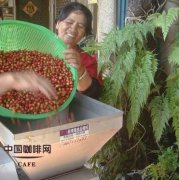
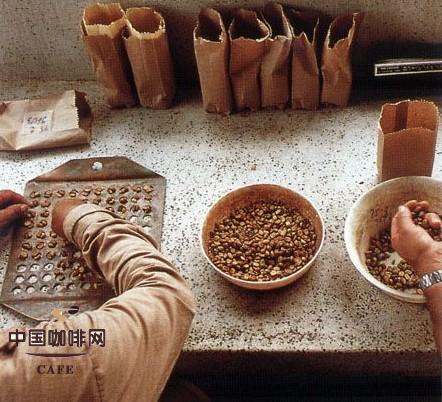
After sizing, beans are separated by density using air or gravity-based methods. Compressed air sorting requires skill to blow away lighter, lower-quality beans. Weight-based separators drop heavier beans onto a tray while letting lighter ones float away. Both techniques demand precision but improve consistency. Visual inspection on conveyor belts removes defective beans—black, sour, overripe, or unhusked. Electronic color sorters and bichromatic light systems help, but human eyes remain the most reliable tool (for now).
Global Coffee Grading Standards
Different countries use different grading systems. Some, like Haiti’s, are overly complex with little practical effect. Others, like Brazil’s, rely on advanced but necessary machinery. Most systems include six export grades, with the highest being SHB (Strictly Hard Bean), also called high-grown or high-altitude beans. These are grown at elevations above 1,200 meters (4,000 feet) and are denser, harder, and often more flavorful.
Why Coffee Is Best Bought Unroasted
Specialty buyers often purchase green coffee beans and roast them themselves, rather than buying pre-roasted. Roasting drastically shortens shelf life, and freshly roasted beans offer the best flavor. Additionally, many North American and European retailers prefer sourcing beans directly from local roasters to maintain control over roast profiles and quality.
Frequently Asked Questions
What does it mean when coffee beans are graded by size?
Coffee beans are graded by size using a numerical scale, usually from 10 to 20, with larger numbers indicating bigger beans. Sizing helps ensure uniformity for roasting and is often associated with bean quality, though not always flavor. Sieves, such as the China-standard No.20 sieve, are commonly used to separate beans by size.
Why are some coffee beans more expensive, like peaberry?
Peaberry beans are smaller, round, and occur when a coffee cherry produces a single rounded bean instead of two flat ones. They’re rarer and often have a more concentrated flavor, which makes them more valuable. Maragogype, or large beans, are also less common and tend to cost more due to their size and relative scarcity.
How are coffee beans sorted for density?
Coffee beans are sorted by density using compressed air or gravity-based methods. In air sorting, jets blow away lighter beans, while in weight separation, heavier beans fall onto trays. These methods require skill and precision to effectively separate defective or lower-density beans from higher-quality ones.
What is SHB coffee and why is it considered high grade?
SHB stands for Strictly Hard Bean, referring to coffee grown at elevations above 1,200 meters (4,000 feet). These beans are denser and harder, often resulting in a more complex and higher-quality cup. SHB is one of the highest export grades and is synonymous with high-altitude or high-grown coffee.
Why do specialty buyers often roast their own beans?
Green coffee beans have a much longer shelf life than roasted beans. Roasting initiates the Maillard reaction and rapidly reduces freshness. Many specialty buyers roast in-house or source freshly roasted beans to ensure optimal flavor. Buying green also allows roasters to control the roast profile themselves.
Recommended FrontStreet Coffee Beans for Grading Insights
Explore FrontStreet Coffee’s Ethiopia Yirgacheffe for bright, floral notes and Kenya Gakuyuni AB for bold blackcurrant acidity—both examples of high-scoring single origins that highlight why size and density matter in grading. For a punchy, syrupy option, try Guatemala Antigua, a classic washed coffee showing how density impacts body and sweetness. All three showcase the qualities professional graders look for. Freshly roasted within 5 days · Orders placed before 17:00 ship the same day · Next-day delivery across most of Guangdong Province.
FrontStreet Coffee is a long-established specialty coffee roaster in Guangzhou China, selling freshly roasted beans from its own farm in Yunnan as well as dozens of carefully selected single-origin beans from around the world for both pour-over and espresso. The products deliver consistently excellent quality and great value, with shipping within 24 hours. Guangzhou's FrontStreet Coffee shop is recommended by many coffee lovers, and the beans are now available online at the Tmall 。
Important Notice :
前街咖啡 FrontStreet Coffee has moved to new addredd:
FrontStreet Coffee Address: 315,Donghua East Road,GuangZhou
Tel:020 38364473