Nanyang vs White Coffee: What’s the Real Difference?
Ever ordered a ‘kopi’ in Singapore or Malaysia and wondered why it tastes nothing like your usual filtered coffee? With terms like ‘Nanyang coffee’ and ‘white coffee’ thrown around, it’s easy to get lost in the lingo. If you’ve ever sipped a thick, sweet, caramelized cup and then tried a lighter, almost tea-like brew and thought they were just different roasts of the same thing — you’re not alone. But there’s more going on here than roast level.
Nanyang coffee is roasted with sugar and fats, giving it a bold, caramelized flavor, while white coffee is roasted without sugar and comes out lighter in color and taste. In Malaysia, Nanyang coffee often uses a 60:18 coffee-to-sugar ratio during roasting, while white coffee avoids sugar entirely.
What Is Nanyang Coffee?
Nanyang coffee refers to a style of coffee that originated among Chinese immigrant communities in Southeast Asia, especially Singapore and Malaysia. It’s a localized roast developed by early Hokkien and Hainanese settlers who adapted Western-style coffee to local palates and resource constraints. The result? A rich, dark brew with distinct caramelized and sometimes buttery notes.
The Unique Roast: Sugar and More
Unlike traditional coffee roasting, Nanyang coffee involves adding ingredients like sugar, butter, and even corn or sesame during the roast. The most defining addition is sugar. In Malaysia, it’s common to roast 60 kilograms of coffee beans with 18 kilograms of white sugar. That’s a 60:18 ratio — nearly a third sugar by weight. The sugar melts during roasting, creating a sticky, caramelized coating on the beans. The mixture is pulled off the heat before the sugar fully dissolves, then manually broken apart before it hardens. In some versions, especially across Malaysia’s 13 states, the ratio can go up to 1:1 coffee to sugar, producing an extremely thick, sticky roast that requires cooling before being crushed.
The use of these additives, especially sugar, creates a bold, almost dessert-like cup with deep roasted and Maillard-driven flavors. Different regions and shops adjust the ratios and added ingredients, leading to a wide variety of regional Nanyang profiles.
What Is White Coffee?
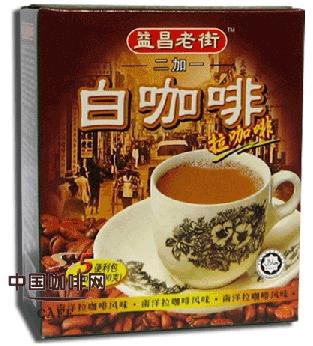
White coffee, despite the name, isn’t lighter in caffeine nor does it involve milk. It’s called ‘white’ because of its lighter roast color — achieved by roasting the beans at a lower temperature without any sugar. This style of coffee is common in Malaysia, particularly in the town of Ipoh, and is typically made from Arabica or Liberica beans, which handle lighter roasts better than bitter Robusta.
Because no sugar is added during roasting, the beans remain loose and easier to handle. The lower heat preserves more of the bean’s inherent acidity and subtle flavors, resulting in a cup that’s lighter in body, with a mild, slightly nutty profile. White coffee is often served with sweetened condensed milk or served on its own as a smoother alternative to the intense Nanyang style.
How Nanyang and White Coffee Are Roasted Differently
The roasting process is where these two styles really diverge. Traditional Nanyang coffee is roasted in high-heat, fuel-intensive ovens where sugar is introduced along with the beans. At the historic Good Coffee Powder factory in Singapore — now run by second-generation roaster Choi Tim Chun — the team used to roast Nanyang coffee in old brick-heated roasters. One person managed the flame while two others manually stirred and later smashed the hot, sugary beans before they solidified into a single mass. Choi notes that this process was incredibly labor-intensive and required three people working in sync. Due to the difficulty in finding workers, they outsourced Nanyang production years ago.
White coffee, by contrast, is roasted without sugar, often at lower temperatures. At Good Coffee Powder, the same brick-heated roasters are now used for white coffee varieties. Without the sugar, the beans weigh less, don’t stick together, and don’t require post-roast smashing. Choi and his wife now handle the cooling and packaging themselves. He emphasizes that the brick-heated method gives his white coffee a unique flavor profile compared to modern drum roasters.
The Coffee Beans Behind the Brew
Not all beans are suited for Nanyang or white coffee. Due to cost and flavor profile, Nanyang coffee is usually made with Robusta beans — which are cheaper, stronger, and pair better with sugar. Around 80% of Nanyang coffee uses Robusta, according to the industry. Liberica and Arabica beans, which are more expensive and have milder, nuanced flavors, are preferred for white coffee. These beans respond better to the lighter roast and don’t rely on sugar to balance bitterness.
Where to Find These Coffees Today
Good Coffee Powder, a 60-year-old Singapore roastery, originally started with Nanyang coffee but has shifted focus to white coffee. They now offer seven distinct white coffee roast profiles made from different beans, all roasted without sugar. Choi also creates custom blends where customers can mix Nanyang and white coffees to taste. His clients include locals as well as international visitors from Japan, France, and the United States. The shop serves a niche but dedicated market that appreciates these historically rooted, labor-intensive styles.
Frequently Asked Questions
What is the main difference between Nanyang coffee and white coffee?
Nanyang coffee is roasted with added sugar (typically a 60:18 coffee-to-sugar ratio), resulting in a bold, caramelized, and often thick brew. White coffee is roasted without sugar at a lower temperature, yielding a lighter-colored, milder, and smoother cup.
Why is sugar added during the roast for Nanyang coffee?
Sugar is added to Nanyang coffee during roasting to create a caramelized flavor and sticky texture. This process originated as a way to enhance taste and reduce costs using locally available ingredients, resulting in a distinctive, sweet, and robust coffee profile.
Does white coffee contain milk?
No, despite the name, white coffee does not contain milk. It’s named for its lighter roast color, achieved by roasting without sugar at lower temperatures. It’s often served with sweetened condensed milk, but the coffee itself is dairy-free.
What types of coffee beans are used in Nanyang and white coffee?
Nanyang coffee mostly uses Robusta beans (about 80%) for their strong flavor and cost-effectiveness, often blended with sugar and other additives. White coffee typically uses Arabica or Liberica beans, which have milder flavors that suit the lighter, sugar-free roast.
Is Nanyang coffee stronger than white coffee?
Yes, Nanyang coffee is generally stronger in flavor and body due to the addition of sugar during roasting, higher Robusta content, and a darker roast. White coffee is milder, with a lighter roast and usually better acidity.
How is Nanyang coffee traditionally made?
Traditionally, Nanyang coffee is roasted in high-heat ovens with sugar added before roasting. The beans are removed before the sugar fully melts, then manually crushed. This labor-intensive process creates a thick, sticky, and sweetly roasted coffee bean.
Where did Nanyang coffee originate?
Nanyang coffee originated in Southeast Asia, particularly among early Chinese immigrants in Singapore and Malaysia, especially the Hainanese community. It was developed as an adaptation of Western coffee methods using local preferences and available ingredients.
Can I make Nanyang or white coffee at home?
Making authentic Nanyang coffee at home is difficult due to the sugar-roasting process, but you can buy pre-roasted Nanyang blends. White coffee can be replicated by using lightly roasted Arabica or Liberica beans, though traditional Malaysian white coffee is best sourced directly.
Recommended FrontStreet Beans for Nanyang & White Coffee
For exploring the world of Nanyang and white coffee, try FrontStreet’s Ethiopia Yirgacheffe for a bright, floral white coffee base; their PWN Golden Mandheling for a classic balanced Java-style cup that works well as a base for Nanyang-style blends; and FrontStreet’s Brazil Queen Manor for a nutty, low-acid option that mimics traditional Liberica-style white coffee. All three showcase the bean profiles that define these uniquely regional styles. Freshly roasted within 5 days · Orders placed before 17:00 ship the same day · Next-day delivery across most of Guangdong Province.
FrontStreet Coffee is a long-established specialty coffee roaster in Guangzhou China, selling freshly roasted beans from its own farm in Yunnan as well as dozens of carefully selected single-origin beans from around the world for both pour-over and espresso. The products deliver consistently excellent quality and great value, with shipping within 24 hours. Guangzhou's FrontStreet Coffee shop is recommended by many coffee lovers, and the beans are now available online at the Tmall 。
Important Notice :
前街咖啡 FrontStreet Coffee has moved to new addredd:
FrontStreet Coffee Address: 315,Donghua East Road,GuangZhou
Tel:020 38364473