How a Low-Budget Russian Café Became a Summer Icon
When your summer café project comes with a shoestring budget and an autumn demolition deadline, you can’t afford fancy finishes or permanent structures. Yet that’s exactly the challenge faced by Russian designers tasked with building a temporary open-air coffee spot—welcoming, durable, and visually engaging—without breaking the bank or leaving a trace when it’s gone.
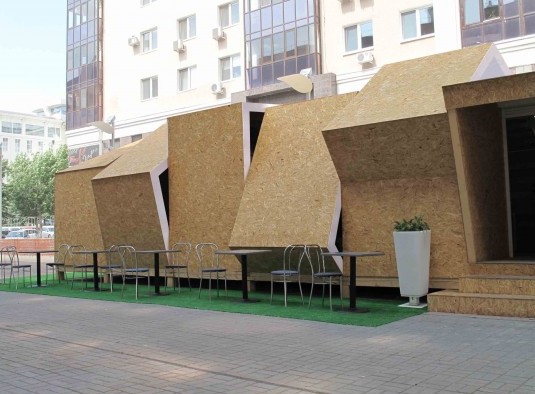
The solution? By using affordable directional plywood and standard wooden framing, the team created a bold, sculptural form that drew the public in while keeping construction simple and removal straightforward. The result wasn’t just a place to grab coffee—it became an architectural moment in its own right.
Why Directional Plywood Was the Smart Choice
With limited funds, the designers ruled out premium materials or fixed structures. Instead, they opted for oriented strand board (OSB), also known as directional plywood—a cost-effective, functional material that’s easy to work with and easy to dismantle. This choice wasn’t just about saving money; it ensured the entire build could be assembled quickly and removed without damaging the site when the season ended.
How the Design Balances Openness and Shelter
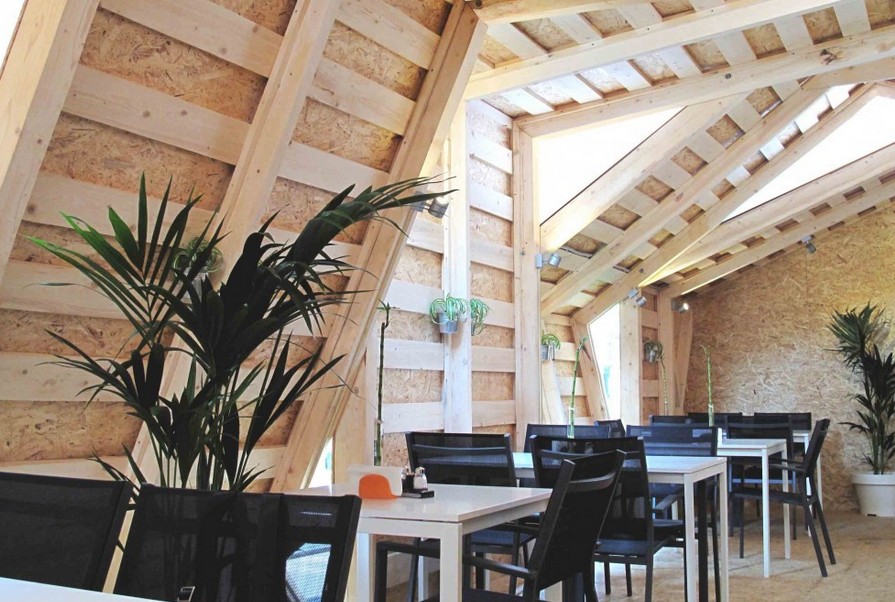
The team creatively manipulated a simple wooden frame to form a dynamic, inviting shape. Rather than sealing the space in, they strategically cut openings into the structure. These carefully placed gaps allowed breezes and sunlight to flow through while still offering enough shelter to make the café feel like an extension of the outdoors—not just a tent with tables.
The Role of Structure in Shaping Experience
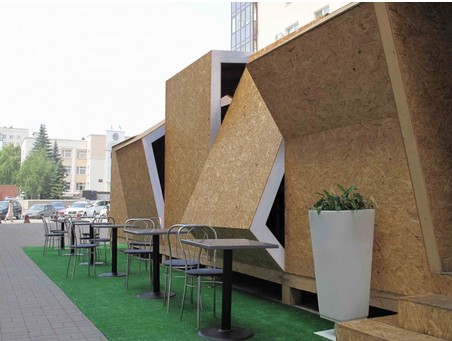
By playing with the orientation and placement of wooden beams and panels, the architects crafted a visually striking form that stood out in the urban landscape. The building’s angles and apertures didn’t follow conventional café layouts—they were designed to spark curiosity and draw people in. The overall effect was less “box with seats” and more “architectural installation you can sip coffee inside.”
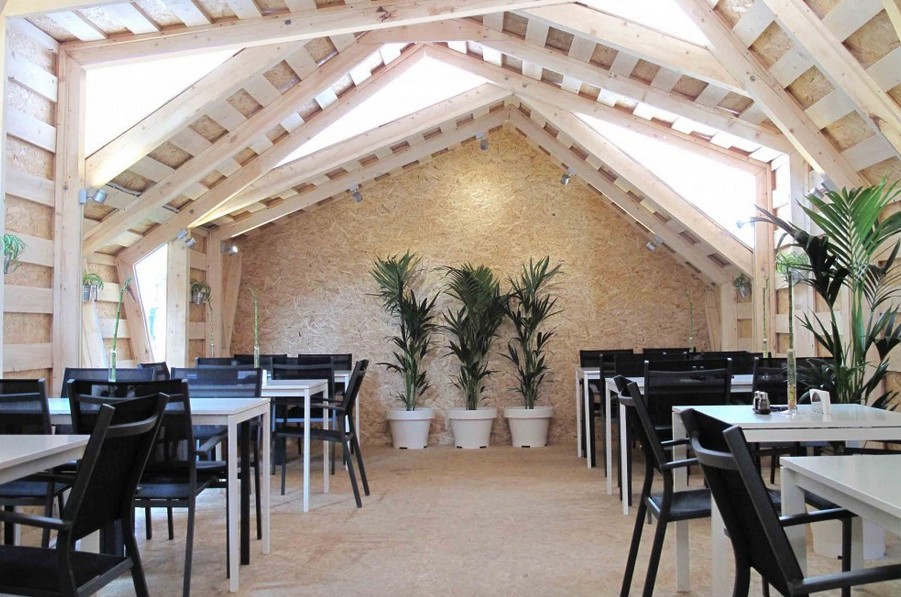
That approach turned a functional need—providing shelter for a summer pop-up—into a memorable public space. The interplay of solid panels and open voids created a rhythm of enclosure and exposure, making the café feel both intimate and breezy.
Frequently Asked Questions
Why did the designers choose directional plywood for the café?
Directional plywood, or oriented strand board, was selected because it’s inexpensive, easy to work with, and simple to dismantle—perfect for a temporary summer project with a tight budget and a planned autumn removal. It allowed fast assembly without sacrificing structural integrity.
How did the architects create an inviting atmosphere without a fixed roof?
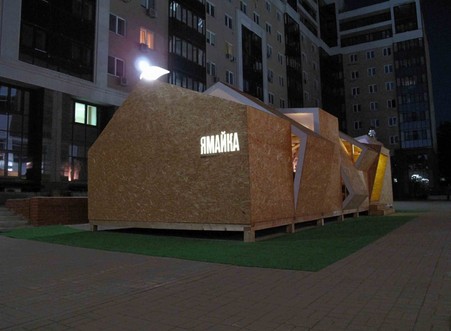
Instead of enclosing the space completely, they used a wooden frame with strategic cutouts and openings. These gaps let in natural light and air while still providing enough shelter, blending indoor comfort with the openness of an outdoor café setting.
What was the biggest challenge in building a temporary café on a low budget?
The main challenge was creating an attractive, functional space without using expensive materials or permanent fixtures. The team had to balance cost, ease of assembly, and the requirement to dismantle the structure easily at season’s end—all while ensuring it appealed to the public.
How did the shape of the café influence customer experience?
The bold, angular form and thoughtfully placed openings drew people in and created a sense of discovery. The mix of sheltered and open areas made the space feel dynamic, turning a basic pop-up into an engaging spot that encouraged lingering and social interaction.
Was the material chosen environmentally friendly or reusable?
The article doesn’t specify the environmental impact, but the use of basic, demountable materials like directional plywood supports easy dismantling and reduced long-term waste—key considerations for a temporary installation meant to be removed in the fall.
FrontStreet Coffee is a long-established specialty coffee roaster in Guangzhou China, selling freshly roasted beans from its own farm in Yunnan as well as dozens of carefully selected single-origin beans from around the world for both pour-over and espresso. The products deliver consistently excellent quality and great value, with shipping within 24 hours. Guangzhou's FrontStreet Coffee shop is recommended by many coffee lovers, and the beans are now available online at the Tmall 。
Important Notice :
前街咖啡 FrontStreet Coffee has moved to new addredd:
FrontStreet Coffee Address: 315,Donghua East Road,GuangZhou
Tel:020 38364473