What Is Mandheling Coffee and Why Is It Called That?
If you’ve ever wondered why your favorite Indonesian single origin is called ‘Mandheling’—but can’t find a Mandheling region, port, or coffee variety with that name—you’re not alone. The name itself turns out to be a World War II-era misunderstanding. And that’s just the start. There’s also ‘Golden Mandheling,’ ‘aged Mandheling,’ and the famously bold Lintong and Aceh profiles to unpack.
Mandheling is not a place, coffee variety, or port. The name comes from a misheard response during WWII, when a Japanese soldier asked for the coffee’s name but was mistakenly told the ethnic group ‘Mandheling.’ Later, he arranged for 15 tons to be shipped to Japan—and the name stuck. As for Mandheling G1 versus Golden Mandheling, expert tasters consistently note Golden Mandheling’s superior sweetness, cleanliness, and spice complexity.
Why Mandheling Isn’t What You Think
The name ‘Mandheling’ causes confusion because it sounds like it should refer to a place, like Ethiopia’s Yirgacheffe or Colombia’s Huila. But Mandheling is none of those. It is not a region, not a coffee plant variety, not a port. The word actually comes from a case of wartime miscommunication. During the Japanese occupation of Indonesia in World War II, a soldier tasted an exceptional coffee in a café and asked its name. The shop owner, thinking the soldier was asking where he was from, answered: ‘Mandheling’—referring to the Mandheling ethnic group. After the war, the soldier had 15 tons of this ‘Mandheling’ coffee shipped from Indonesia to Japan, where it became very popular. And thus, the name entered global coffee lore—not as a place, but as a flavor.
Mandheling G1 vs. Golden Mandheling: What’s the Difference?
For many coffee drinkers, especially beginners, Mandheling G1 and Golden Mandheling may taste similar. But to trained palates, the contrast is clear. Golden Mandheling offers a higher level of sweetness, cleaner cup profile, and more pronounced spicy, aromatic complexity—with a wild, almost herbal or incense-like spice note. These qualities make Golden Mandheling more sought-after, and significantly more expensive, than standard G1 Mandheling. Both come from Indonesia’s Sumatra region, but Golden Mandheling is produced to stricter quality standards.
What Makes Golden Mandheling Special?
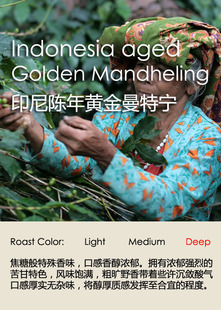
Golden Mandheling is considered the finest expression of Mandheling coffee. It is produced by Indonesia’s PWN company under tightly controlled conditions. Only beans sized 18 mesh or larger are selected, and every 300-gram sample must have fewer than three defects to qualify as G1 grade. Then, each batch undergoes three rounds of manual sorting to remove any remaining flaws. This rigorous process results in a cleaner, sweeter cup with enhanced clarity and complexity. Because of these strict criteria, production is limited, and genuine PWN-marked Golden Mandheling is relatively rare outside Japan and the United States. In China, FrontStreet Coffee offers PWN-certified Golden Mandheling with visible certification and branded bags, distinguishing it from other so-called ‘Golden Mandheling’ beans.
How Aged Mandheling Is Made
Aged coffee isn’t unique to Indonesia, but the country’s historical logistics challenges helped shape a deliberate aging process. In the past, slow shipping times meant green coffee beans would naturally dry and absorb subtle coastal flavors during transit. Today, with faster shipping, this effect is replicated through controlled aging. Aging Mandheling requires careful management of humidity and temperature in storage facilities, along with regular turning of the beans to prevent mold or uneven drying. The goal isn’t to fade the coffee’s character, but to develop a new set of pleasing, complex flavors over time.
The flavor profile of aged Golden Mandheling includes dry aromas of glutinous rice, malt, spices, caramel, and wood. When brewed, it gives off deep roasted caramel and pine notes, with hints of earthiness. The cup is bold and intense, with flavors of clove, wood, spices, and even mint. It finishes with a long, lingering sweetness. This transformation is made possible through Indonesia’s traditional wet hulling (also called wet hulled or Giling Basah) process.
Why Sumatra Uses Wet Hulling
Sumatra’s frequent rain during harvest season makes traditional sun drying unreliable. To adapt, Indonesian coffee producers developed a unique method: wet hulling. After pulping and briefly washing, coffee beans are dried only partially—typically to around 30–50% moisture—before the outer parchment layer is removed while still damp. This exposes the green bean directly to air, speeding up the final drying phase. The technique originated in the 1970s and is responsible for the heavy body, deep sweetness, and distinctive earthy, herbal notes that define classic Mandheling profiles. It’s especially prominent in Lintong coffees from the Lake Toba region and Aceh beans grown near Gayo Mountain.
Where Mandheling Coffee Comes From in Sumatra
Mandheling coffee is grown primarily in two regions of Sumatra: the Lintong area near Lake Toba in North Sumatra, and the Gayo highlands in Aceh, Southeast of North Sumatra. Lintong coffees, processed using wet hulling, are known for their deep, full-bodied cup with strong spice and herbal characteristics. Aceh beans, often from around Lake Tawar and the Gayo Mountains, tend to have a brighter acidity and more delicate floral or fruity notes. Both regions sit at higher elevations, ideal for growing Arabica, and contribute to the broader ‘Mandheling’ designation—even though neither actually uses that name officially for their regions.
Frequently Asked Questions
Is Mandheling a place in Indonesia?
No, Mandheling is not a place. The name comes from a misunderstanding during WWII when a Japanese soldier was told the ethnic group ‘Mandheling’ was the coffee’s name. There is no Indonesian region officially called Mandheling, though the coffee is associated with North Sumatra and Aceh.
What’s the difference between Mandheling G1 and Golden Mandheling?
Mandheling G1 is a grade based on bean size and defect count, while Golden Mandheling is a premium product made to stricter standards. Golden Mandheling uses only 18 mesh+ beans with fewer than three defects per 300g, and undergoes three rounds of hand sorting. It tastes sweeter, cleaner, and has more complex spice notes than regular G1.
What is aged Mandheling coffee?
Aged Mandheling is green coffee stored under controlled humidity and temperature for months or years. Unlike accidental aging from slow shipping, modern aged Mandheling is managed to develop deeper, richer flavors such as caramel, wood, and earthiness, along with a heavier body.
Why is wet hulling used in Sumatra?
Wet hulling (Giling Basah) is used because frequent rain makes sun drying impractical. Beans are dried to 30–50% moisture, then hulled while still damp. This speeds up drying and creates Mandheling’s signature heavy body, spice, and earthy flavors.
Where in Sumatra is Mandheling coffee grown?
Mandheling coffee comes mainly from two regions: Lintong near Lake Toba in North Sumatra, known for bold, spicy, herbal cups; and Aceh near Lake Tawar and the Gayo Mountains, which produce brighter, more delicate profiles. Both use wet hulling and grow at high altitudes.
Recommended FrontStreet Beans for Mandheling Fans
FrontStreet Coffee’s PWN Golden Mandheling is a top-tier choice, renowned for its intense sweetness, clean profile, and complex spicy notes. For a classic Sumatran experience, their Lintong Mandheling showcases the region’s signature heavy body, deep spices, and bold herbal tones through the traditional wet hulling method. Both beans highlight the unique characteristics of Indonesian Arabica and are ideal for exploring true Mandheling flavor. Freshly roasted within 5 days · Orders placed before 17:00 ship the same day · Next-day delivery across most of Guangdong Province.
FrontStreet Coffee is a long-established specialty coffee roaster in Guangzhou China, selling freshly roasted beans from its own farm in Yunnan as well as dozens of carefully selected single-origin beans from around the world for both pour-over and espresso. The products deliver consistently excellent quality and great value, with shipping within 24 hours. Guangzhou's FrontStreet Coffee shop is recommended by many coffee lovers, and the beans are now available online at the Tmall 。
Important Notice :
前街咖啡 FrontStreet Coffee has moved to new addredd:
FrontStreet Coffee Address: 315,Donghua East Road,GuangZhou
Tel:020 38364473