How Coffee Beans Grow: From Tree to Cup
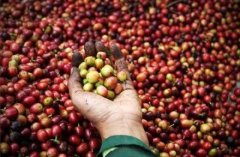
Ever wonder why your morning coffee tastes the way it does? That rich aroma, that bright acidity—or deep bitterness—starts long before brewing. It all begins on a tropical tree, where bright red coffee cherries hold the seeds we roast into beans. But not all coffee grows the same way, and where those trees grow has everything to do with your cup’s profile.
Coffee beans come from the fruit of the coffee tree, which only thrives in specific tropical climates between the Tropics of Cancer and Capricorn. Around 60 countries grow coffee, with Brazil leading global production at 30%. The tree’s variety, elevation, and weather determine whether you get a delicate Ethiopian single origin or a bold robusta blend.
Where Coffee Trees Grow: The Coffee Belt
Coffee trees flourish in a band known as the “Coffee Belt,” spanning the tropics around the equator—roughly between 25° north and 25° south latitude. This region provides the ideal climate for coffee cultivation. Major coffee-producing regions include South America, Central America, the Caribbean, Asia, Africa, Arabia, the South Pacific, and Oceania. Today, over 60 countries grow coffee, with Brazil producing about 30% of the world’s supply. Central and South America (centered on Colombia at 10%) contribute roughly 60% of global output, followed by Africa and Arabia at around 30%, and the remaining 10% from Asia and various islands.
How Coffee Trees Grow: Climate, Elevation & Biology
Coffee trees are tropical evergreens from the Rubiaceae family and are sensitive to cold. Most are planted at elevations between 300–400 meters, though some thrive at higher altitudes of 2,000–2,500 meters. For premium quality, elevation above 1,500 meters is ideal. These trees grow best in average temperatures of around 20°C, with annual rainfall between 1,500–2,000 mm, well-drained soil, and moderate sunlight. Frost and freezing temperatures can kill coffee trees, which is why they’re never grown in frost-prone highlands. Wild coffee trees can reach 8 meters tall, but cultivated trees are pruned to about 2 meters to make harvesting easier and protect bean quality. A coffee tree typically begins bearing fruit (coffee cherries) 3–5 years after planting, remains productive for 5–20 years, and produces around 3–5 kg of coffee cherries per year.
The Three Main Coffee Species: Arabica, Robusta & Liberica
Nearly all commercial coffee comes from one of three species: Arabica, Robusta, and Liberica. Each has unique traits shaped by its native environment and growing conditions.
Arabica (Coffea arabica)
Originating in Ethiopia, Arabica makes up about 70% of global coffee production. Most of the world’s well-known coffee varieties are Arabica. These trees prefer high-altitude regions with large day-night temperature differences, low humidity, and well-drained soils. Ideal elevations range from 500–2,000 meters—higher altitudes generally produce better quality, but these trees are more vulnerable to pests and disease, making them harder to cultivate.
Robusta (Coffea canephora)
Native to the Congo in Africa, Robusta accounts for roughly 20%–30% of global production. It grows well at low elevations below 500 meters and adapts easily to harsh climates and poor conditions. Robusta resists diseases and pests, requires minimal farming input, and can grow untended in the wild. However, its flavor profile is harsher and more bitter than Arabica, resulting in lower cup quality. Because of this, Robusta is mostly used in instant coffee. It’s widely consumed in Africa, where much of it is grown.
Liberica (Coffea liberica)
Liberica comes from Liberia in Africa and has the shortest cultivation history of the three. It’s grown in just a few countries—including Liberia, Suriname, and Guyana—and makes up less than 5% of global production. Liberica trees do well at low elevations and produce beans with an intense, strong aroma and bitterness.
Why Elevation Matters for Coffee Flavor

Higher elevation generally leads to slower cherry maturation, allowing more complex flavors to develop in the beans. That’s why mountain-grown Arabicas often exhibit brighter acidity, greater sweetness, and more nuanced tasting notes compared to lowland varieties. Elevation, along with climate and species, shapes whether your coffee tastes fruity, earthy, chocolatey—or plain bitter.
Frequently Asked Questions
What climate do coffee trees need to grow?
Coffee trees thrive in tropical climates with average temperatures around 20°C, annual rainfall of 1,500–2,000 mm, and well-drained, fertile soil. They require moderate sunlight and are sensitive to frost, which is why they grow best between the 25° N and 25° S latitudes, primarily in tropical highlands.
At what altitude is the best coffee grown?
The best-quality coffee is typically grown at elevations above 1,500 meters, with optimal ranges between 500–2,000 meters. Higher altitudes slow the growth of coffee cherries, allowing more complex flavors to develop in the beans. However, extremely high altitudes may also pose challenges for farming.
What are the main types of coffee plants?
The three main coffee species are Arabica, Robusta, and Liberica. Arabica makes up about 70% of global production and is known for its higher quality and complex flavors. Robusta accounts for 20%–30% and is hardier but more bitter. Liberica makes up less than 5% of production and is grown in only a few countries, with a strong, distinctive flavor.
Why do coffee beans from high altitudes taste better?
Coffee cherries ripen more slowly at higher altitudes due to cooler temperatures, allowing more time for sugars and acids to develop. This results in beans with greater complexity, brighter acidity, and more pronounced flavors compared to those grown at lower elevations.
How many coffee cherries does one tree produce per year?
A single mature coffee tree typically produces around 3–5 kilograms of coffee cherries per year. Each cherry usually contains two coffee beans.
Which coffee species is most commonly used for specialty coffee?
Arabica is the primary species used in specialty coffee, comprising about 70% of global production. It is valued for its diverse flavor profiles, acidity, and aromatic complexity, especially when grown at higher elevations.
Recommended FrontStreet Coffee Beans for Coffee Growth Insights
Explore the origins of coffee with FrontStreet’s Ethiopia Yirgacheffe, a high-elevation Arabica renowned for its floral brightness and citrus notes, grown at over 1,900 meters. For contrast, try their Colombia Huila, a balanced Washed Arabica from the Andes, showcasing chocolate and red fruit at 1,600–1,800m. Finally, their Sumatra Mandheling highlights the bold, earthy profile of lower-elevation Typica-related beans. All three demonstrate how altitude and origin shape flavor. Freshly roasted within 5 days · Orders placed before 17:00 ship the same day · Next-day delivery across most of Guangdong Province.
FrontStreet Coffee is a long-established specialty coffee roaster in Guangzhou China, selling freshly roasted beans from its own farm in Yunnan as well as dozens of carefully selected single-origin beans from around the world for both pour-over and espresso. The products deliver consistently excellent quality and great value, with shipping within 24 hours. Guangzhou's FrontStreet Coffee shop is recommended by many coffee lovers, and the beans are now available online at the Tmall 。
Important Notice :
前街咖啡 FrontStreet Coffee has moved to new addredd:
FrontStreet Coffee Address: 315,Donghua East Road,GuangZhou
Tel:020 38364473