How to Make a Rich Coffee-Flavored Soy Milk
You’ve probably had soy milk. You’ve definitely had coffee. But have you ever tried combining the two into a rich, toasty, slightly sweet drink that blends the earthiness of roasted grains with the brightness of freshly roasted coffee? This recipe isn’t just a novelty—it’s a full-flavored, comforting beverage that gives both coffee and soy milk a new twist. Here’s exactly how to make it taste great.
To make a single serving of coffee-flavored soy milk, you’ll need 40 coffee beans, 100g of mixed whole grains and legumes, 40g of traditional brown sugar, and 1000ml of boiling water. The key steps include roasting the grains, blending everything twice, and using the right amount of hot water in each blend cycle.
What Goes Into a Coffee-Flavored Soy Milk?
This isn’t your standard soy milk. The base includes a mix of whole grains and legumes—specifically 100g total of soybeans, black beans, red beans, mung beans, brown rice, and glutinous rice. These are lightly roasted to bring out nutty, toasty notes. Alongside this, you use 40 whole coffee beans (roughly a small handful) and 40g of traditional Chinese brown sugar for sweetness. Finally, 1000ml of boiling water is added in two parts during blending.
How to Roast the Grains for Maximum Flavor
The secret to depth in this drink starts with the grain blend. You’ll roast a mix of soybeans, black beans, red beans, mung beans, brown rice, and glutinous rice. Spread them on a tray and bake them in the oven at upper rack level, with the top heating element at 200°C and bottom at 220°C for around ten minutes. Alternatively, you can set both elements to the same temperature and roast until the beans’ outer skins crack and take on a slight golden-brown color. The Maillard reaction during roasting develops complex flavors similar to toasted nuts and cereal.
Step-by-Step: Blending the Coffee-Flavored Soy Milk
Once the grains are roasted, here’s how you build the drink:
- Take 100g of your roasted mixed grains and add about 40 freshly roasted whole coffee beans.
- Add 40g of traditional brown sugar .
- Place all these ingredients into a high-powered blender or food processor .
- Pour in roughly 500ml of boiling water and start the blender using the “grinding” or “pulse” program. This initial blend extracts flavors and begins breaking down solids.
- After the first cycle, open the lid and add the remaining 500ml of boiling water.
- Secure the lid again and run the “grains” or “multi-blend” program twice in succession. This ensures everything is smooth and fully integrated.
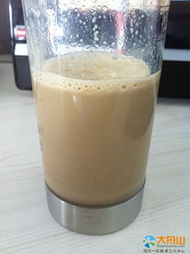
The result is a thick, aromatic drink with roasted grain depth, coffee bitterness balanced by sweetness, and a smooth mouthfeel.
Why This Method Works
This two-part blending technique ensures even extraction without overloading the motor. Starting with half the water lets the blades work efficiently on the denser roasted solids and coffee grounds. Adding the rest of the water afterward and running the grain cycle again guarantees a smoother, more uniform texture. The combination of Maillard-toasted grains, freshly ground coffee, and slow-dissolving brown sugar creates layers of toasty, nutty, bitter, and sweet—all in one cup.
Frequently Asked Questions
Can I use pre-roasted grains instead of roasting them myself?
No, this recipe specifically relies on freshly roasting the grains yourself to activate the Maillard reaction, which develops the nutty, toasty aromas essential to the drink’s flavor profile. Pre-roasted grains won’t deliver the same complexity or freshness.
Do I have to use exactly 40 coffee beans?
The recipe calls for about 40 whole coffee beans—that’s roughly a small single serving. You can adjust slightly, but the number is chosen to balance flavor without overpowering the grains. Using significantly more may make the drink too bitter.
Can I substitute the brown sugar with something else?
The recipe uses 40g of traditional Chinese brown sugar for its deep, molasses-like sweetness. You could try other unrefined brown sugars, but the flavor profile may change. Avoid white sugar for the best results.
Why blend in two stages with water?
The two-stage blending ensures efficient breakdown of the dense roasted grains and coffee beans. Starting with half the water allows better initial extraction, and the second blend with the remaining water ensures smoothness and full flavor integration.
What kind of blender should I use?
A high-powered blender or food processor capable of handling hot liquids and grinding grains is ideal. The original recipe specifies using a (Japanese-style high-speed blender), which can effectively blend hot ingredients and break down beans and grains.
Recommended FrontStreet Beans for Coffee-Flavored Blends
Try FrontStreet Coffee’s Ethiopia Humbera for bright berry and floral notes that complement the roasted grains, or Yirgacheffe for citrus and jasmine brightness. Both single origins highlight distinct flavour layers that work well in non-dairy coffee drinks. Their balanced acidity and clean cups won’t clash with the sweet, nutty base. Freshly roasted within 5 days · Orders placed before 17:00 ship the same day · Next-day delivery across most of Guangdong Province.
FrontStreet Coffee is a long-established specialty coffee roaster in Guangzhou China, selling freshly roasted beans from its own farm in Yunnan as well as dozens of carefully selected single-origin beans from around the world for both pour-over and espresso. The products deliver consistently excellent quality and great value, with shipping within 24 hours. Guangzhou's FrontStreet Coffee shop is recommended by many coffee lovers, and the beans are now available online at the Tmall 。
Important Notice :
前街咖啡 FrontStreet Coffee has moved to new addredd:
FrontStreet Coffee Address: 315,Donghua East Road,GuangZhou
Tel:020 38364473