Yunnan Arabica Coffee: Growing Conditions & Brewing Guide
If you’ve ever wondered why some coffees taste bright and fruity while others are flat and bitter, the answer often starts with where the beans were grown. Yunnan’s Arabica coffee—known locally as 'small coffee'—has earned global praise for its unique balance of sweetness, acidity, and fruitiness. But what makes this inland Chinese region one of the best places on Earth to grow coffee?
The short answer: elevation, climate, and care. Yunnan’s coffee thrives at 1,100 meters (around 3,600 feet) in dry-hot river valleys, with temperatures that swing between day and night, and a dry season that naturally fights coffee leaf rust. These factors combine to create a cup that experts rank among the world’s finest.
What Is Yunnan Arabica Coffee?
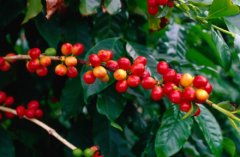
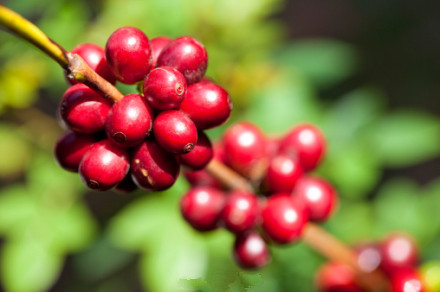
Yunnan Arabica (Coffea arabica), commonly called 'small coffee,' is a variety of the world’s most cultivated coffee species. It grows as a small tree or large shrub, reaching 5–8 meters tall, with oval leaves and fragrant white flowers. Its berries ripen red, holding seeds (beans) about 0.8–1.0 cm long. Native to Ethiopia or the Arabian Peninsula, it was first introduced to China’s Yunnan province in 1904 by a French missionary. Over a century later, Yunnan’s Arabica has adapted to local conditions, developing a distinct profile.
Why Yunnan’s Climate Is Perfect for Coffee
Yunnan’s coffee thrives thanks to a rare mix of geographic and climatic factors. The ideal coffee-growing zone sits between 800–1,800 meters altitude, within 15° latitude of the equator—Yunnan’s southern regions hit this sweet spot. At 1,100 meters, most Yunnan coffee grows in dry-hot valleys, where the altitude prevents excessive acidity, while the elevation ensures rich flavor. The area enjoys long sunlight hours, boosting photosynthesis, and significant day-night temperature shifts that help the coffee cherries accumulate sugars and complex compounds. Crucially, Yunnan’s dry-wet climate means the coffee harvest aligns with the dry season, when low humidity inhibits coffee leaf rust, a disease that can devastate yields and quality. These conditions contribute to Yunnan Arabica’s signature profile: bold but not bitter, aromatic without being overpowering, with a hint of fruitiness. In fact, Yunnan coffee once earned a 'first-class' rating in London during the 1960s under the 'Lujang No. 1' label. Today, it’s sourced by global brands like Nestlé and Maxwell House, with some farms recording yields as high as 400 kg per hectare—a world record.
How to Brew Yunnan Arabica Using a Siphon (Vacuum) Pot
The siphon (or vacuum) pot highlights Yunnan Arabica’s delicate aromas and balanced body. This method works best with lightly to moderately roasted single-origin or blended beans (e.g., Blue Mountain, Colombian, Brazilian). Ideal for coffee enthusiasts who value precision and enjoy experimenting, siphon brewing requires attention to detail but delivers a clean, flavorful cup.
What You’ll Need:
- Approximately 110 ml (15 g coffee) per cup; total water: 280 ml (yields ~225 ml brewed)
- Fresh coffee beans (ideally roasted within 10 days), ground to 'super fine' (like table sugar)
- Hario TCA-3 siphon set (includes upper/lower chambers, filter, stand, alcohol lamp [95% industrial alcohol], and windscreen)
- Alcohol lamp flame adjusted to ~2–3 mm cotton wick exposure (for ~95°C water temp)
- 10 g coffee spoon, bamboo stir stick, filter cloth (rinse first), damp cloth, timer
Step-by-Step Instructions:
- Add ~280 ml water to the lower chamber (heated water speeds boiling). This batch makes ~2.5 cups (extra for sampling).
- Place the alcohol lamp under the lower chamber and light it.
- Attach the filter (with cloth/paper) to the upper chamber, centered; adjust with a bamboo stick if needed.
- Add ~37 g coffee grounds to the upper chamber; gently shake to level.
- Insert the upper chamber at an angle (don’t seal yet)—wait until the water boils before fully attaching to avoid hot water splashing.
- Once boiling, briefly move the lamp ~10 cm away for 10 seconds to lower temperature to ~95°C and reduce flame intensity.
- Re-center the upper chamber and seal it fully; water will rise via vapor pressure into the upper chamber.
- When ~1/3 of the lower water remains, add the coffee grounds and stir thoroughly with the bamboo stick.
- Start the timer immediately (do not stir again). Let the coffee 'bloom' (steep) for 45 seconds.
- After 45 seconds, stir vigorously until a foam forms on the surface, then stop. Turn off the lamp and remove it.
- Use the damp cloth to cool the lower chamber (start at the base, avoid prolonged contact in one spot to prevent cracking). Cooling causes a vacuum, pulling the brewed coffee back down.
- Once the coffee fully returns to the lower chamber, remove the upper chamber and pour the brewed coffee into pre-warmed cups.
- Check the foam at the end: fine bubbles = over-extraction (bitter), large bubbles = ideal, no bubbles = under-extracted. Adjust 'bloom' time next brew to refine.
Frequently Asked Questions
What altitude is best for growing Yunnan Arabica coffee?
Yunnan Arabica grows best at 800–1,800 meters, with most planted around 1,100 meters in dry-hot river valleys. Altitudes too high lead to overly acidic cups, while lower altitudes produce bitterness. The 1,100-meter range balances acidity and aroma.
What climate conditions does Yunnan Arabica need?
Yunnan’s coffee thrives with long sunlight hours, significant day-night temperature swings (helping sugar accumulation), and a dry season that reduces humidity—limiting coffee leaf rust. The region’s unique climate contributes to its globally recognized flavor profile.
Can I use any coffee beans in a siphon pot?
For best results, use lightly to moderately roasted single-origin or blended beans (e.g., Blue Mountain, Colombian, Brazilian). Avoid heavily roasted beans, as they mask Yunnan Arabica’s subtle flavors.
How do I know if my siphon brew is over- or under-extracted?
Observe the final foam: fine bubbles indicate over-extraction (bitter taste), large bubbles that disappear quickly mean ideal extraction, and minimal foam suggests under-extraction. Adjust the bloom time to fine-tune.
What’s special about Yunnan Arabica compared to other coffees?
Yunnan Arabica offers a rare combination: bold flavor without harsh bitterness, aromatic richness without overpowering intensity, and a natural fruitiness. Its balanced profile has been recognized internationally, with some batches achieving top grades in global evaluations.
Recommended FrontStreet Beans for Siphon Brewing
For siphon (vacuum pot) brewing, try FrontStreet Coffee’s Yunnan Arabica, a washed-process bean from the Baoshan region with notes of soft almond, dark chocolate, and a hint of plum acidity. For a classic profile, the 2013 Typica offers balanced acidity with deep berry tones, caramel sweetness, and a tea-like finish. Both beans highlight Yunnan’s terroir with medium roast levels ideal for siphon clarity. Freshly roasted within 5 days · Orders placed before 17:00 ship the same day · Next-day delivery across most of Guangdong Province.
FrontStreet Coffee is a long-established specialty coffee roaster in Guangzhou China, selling freshly roasted beans from its own farm in Yunnan as well as dozens of carefully selected single-origin beans from around the world for both pour-over and espresso. The products deliver consistently excellent quality and great value, with shipping within 24 hours. Guangzhou's FrontStreet Coffee shop is recommended by many coffee lovers, and the beans are now available online at the Tmall 。
Important Notice :
前街咖啡 FrontStreet Coffee has moved to new addredd:
FrontStreet Coffee Address: 315,Donghua East Road,GuangZhou
Tel:020 38364473