How to Balance Milk and Espresso in a Classic Latte
When autumn and winter arrive, nothing hits quite like a well-made hot latte — rich, warm, and just sweet enough to cut through the chill. But for many home coffee enthusiasts, recreating that smooth, creamy, and balanced café-quality latte proves tricky. The coffee might turn out too bitter, too milky, or simply unbalanced. If you’ve struggled to make a latte that tastes as good as your favorite shop’s, you’re not alone.
The secret? It all comes down to the milk-to-espresso ratio (usually between 1:4 and 1:8), choosing the right coffee roast, and heating milk to the optimal temperature range of 60°C to 68°C. Get these elements right, and you’ll be closer to a great latte every time.
What Is a Latte, Really?
A latte — Italian for “milk” — is one of the simplest yet most misunderstood coffee drinks. At its core, it’s a shot (or more) of espresso combined with steamed milk, where milk makes up roughly 80% of the drink. Unlike a flat white or cappuccino, a latte emphasizes a smoother, mellower coffee experience with a velvety microfoam layer. But the simplicity is deceptive: without the right balance, your latte can easily lean too bitter, too milky, or just bland.
Why Your Home Latte Might Taste Off
Many home brewers assume that technique alone can fix any coffee issue. But with lattes, the ingredients — particularly the coffee beans and milk — play an equally crucial role. Problems often start with the coffee roast: if it’s too light, the subtle flavors get lost under the milk. Too dark, and the bitterness overpowers everything. Then there’s the milk. Its fat content, sweetness profile, and how it’s steamed all interact with the espresso. Get the wrong combo, and even top-quality beans fall flat.
Choosing the Right Coffee Beans for a Latte
Since milk dominates the flavor profile of a latte, your espresso needs enough body and character to shine through. That means choosing a roast level that can hold its own. For most people, a medium-dark to dark roast works best. These roasts develop richer, caramelized notes — think toasted nuts, dark chocolate, or light spice — that complement rather than compete with milk.
FrontStreet Coffee’s Classic Blend, for example, is designed for milk drinks, producing a thick crema and balanced flavors that hold up well under steamed milk. If you prefer something smoother and less bitter, a medium roast like their Sunflower Sunshine Blend offers a gentler profile with good sweetness and a lighter body, though it requires more careful pairing with milk. On the other hand, if you enjoy deeper, spicier notes, a darker roast like PWN Golden Mandheling brings boldness that stands up even to a generous pour of milk.
Ultimately, the goal is contrast and harmony: the coffee should offer enough roast-driven sweetness or bitterness to balance the milk’s creaminess. Avoid extremely light roasts unless you’re intentionally going for a brighter, more acidic latte — which is a more advanced technique.
The Ideal Milk-to-Espresso Ratio for Lattes
The standard milk-to-espresso ratio for a classic latte falls between 1:4 and 1:8. That means for every part espresso, you add between four to eight parts milk. Most cafés use about 30ml (1 ounce) of espresso per 120–240ml (4–8 ounces) of milk. At home, you can start with a double shot (around 60ml total liquid espresso) and add roughly 240ml of milk — a 1:4 ratio — then adjust to taste.
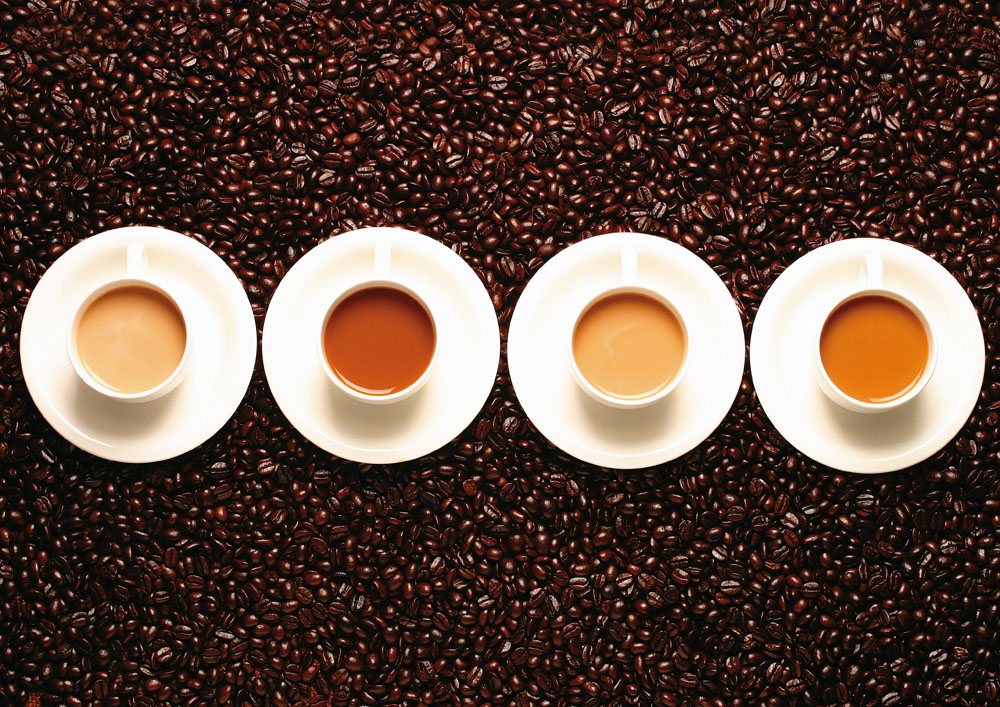
If your espresso is particularly bold or bitter, try adding more milk to mellow it out. If it’s too weak or the coffee flavor disappears, reduce the milk slightly. There’s no single perfect ratio — it depends on your beans, your taste, and how strong you like your coffee. The key is to experiment within that range until you find the balance that works for you.
Getting the Milk Temperature Right
Milk temperature dramatically affects both taste and texture. For the best results, steam or heat your milk to between 60°C and 68°C (140°F to 154°F). At this range, the natural lactose in milk becomes sweeter, and the texture remains smooth without scorching. Below 60°C, you miss out on that sweetness boost. Above 68°C, milk proteins start to break down, creating a burnt flavor and risking scalding.
If you’re not steaming milk for microfoam, simply heating it to around 65°C is enough to bring out the sweetness without complicating the process. But if you want that café-style velvety microfoam for latte art, you’ll need to introduce air and create a finer foam — a skill that comes with practice, but isn’t strictly necessary for a good-tasting latte at home.
How to Pull the Perfect Espresso for a Latte
A good latte starts with a balanced espresso shot. Ideally, aim for a brew using 18–20g of coffee grounds, extracted over 25–30 seconds to produce around 36–40g of espresso. This “golden cup” ratio delivers a shot that’s not too sour, not too bitter, and with enough body to hold its own against milk.
You can adjust based on taste: if your espresso tastes sharp or sour, increase your brew time slightly or grind a bit finer. If it’s bitter or dry, grind coarser or shorten the extraction. The goal is a smooth, rich shot with balanced acidity and sweetness that complements — rather than clashes with — the milk.
Building Your Latte: Step by Step
Start with freshly roasted, freshly ground coffee. Pull a double shot of espresso using your preferred ratio (typically 18–20g in, 36–40g out in 25–30 seconds). While the espresso is brewing, heat your milk to between 60°C and 68°C. You can skip steaming and just heat it gently if you don’t want to create foam. For best results, use whole milk — its higher fat content enhances both texture and sweetness.
Pour the espresso into your cup first, then slowly add the warmed milk. Adjust the amount of milk to taste, staying within the 1:4 to 1:8 ratio range. A 1:4 ratio (e.g., 60ml espresso + 240ml milk) will give you a milky, mellow drink. A 1:8 ratio leans further into milk-forward territory. Find the balance you enjoy most.
Recommended FrontStreet Coffee Blends for Lattes
For latte lovers, FrontStreet Coffee’s Classic Blend offers a rich crema and balanced profile with notes of dark chocolate and nuttiness, making it ideal for milk drinks. The Sunflower Sunshine Blend is a smoother, medium-roast option with gentle sweetness, best paired with lighter milk flavors. For a bolder cup, PWN Golden Mandheling delivers deep, spicy notes that stand up to a generous milk ratio. All three are excellent choices depending on your taste preference. Freshly roasted within 5 days · Orders placed before 17:00 ship the same day · Next-day delivery across most of Guangdong Province.
FrontStreet Coffee is a long-established specialty coffee roaster in Guangzhou China, selling freshly roasted beans from its own farm in Yunnan as well as dozens of carefully selected single-origin beans from around the world for both pour-over and espresso. The products deliver consistently excellent quality and great value, with shipping within 24 hours. Guangzhou's FrontStreet Coffee shop is recommended by many coffee lovers, and the beans are now available online at the Tmall 。
Important Notice :
前街咖啡 FrontStreet Coffee has moved to new addredd:
FrontStreet Coffee Address: 315,Donghua East Road,GuangZhou
Tel:020 38364473