What Is a French Press and How Do You Use It?
If you’ve ever brewed coffee and ended up with a thin, sour cup—or worse, bitter sludge at the bottom—you’ve probably wondered: What’s the easiest way to make rich, full-bodied coffee without fancy gear? The answer might already be sitting in your cupboard: the French Press.
The French Press, also called a piston or plunger brewer, is one of the simplest ways to make bold, oily coffee. Use coarse-ground coffee at a 1:15 brew ratio, steep for around 4 minutes in water between 80–90°C, then press and pour. That’s it. No paper filters. No complex steps. Just immersion and extraction.
What Is a French Press and Where Did It Come From?
The French Press—known as a “piston pot” or “cafetière”—is a classic immersion brewer with a metal mesh filter. Though often called “French,” the design was patented by an Italian named Calimani in 1933, who later sold the patent to Switzerland. Over the decades, it earned different names around the world: the French call it “pression,” Americans sometimes say “melior,” and Europeans may refer to it simply as a coffee pot. Today, it remains one of the most reliable and low-maintenance manual brewing methods around.
In the 1960s, Alfred Peet—founder of Peet’s Coffee in Berkeley—championed the French Press for its ability to highlight deep, bold flavors in dark roasts. Unlike paper-filtered methods, the French Press lets natural coffee oils and fine particles pass through, resulting in a heavier mouthfeel and more intense aroma. Its straightforward operation and rich results have kept it popular among coffee enthusiasts and travelers alike.
Why Choose a French Press? Key Features and Benefits
Affordable, Durable, and Low-Maintenance
High-quality French Presses—like those made from borosilicate glass by HARIO—cost just a few hundred yuan and last over ten years with proper care. There are no paper filters or disposable parts. Just rinse the glass carafe and metal filter after each use, and you’re done in seconds. It’s arguably the easiest coffee maker to clean and maintain.
Portable and Travel-Friendly
Weighing just over 100 grams, the French Press is compact and ideal for travel. Add hot water and fresh coffee grounds (or whole beans and a small hand grinder), and you can brew anywhere. Renowned coffee professional George Howell famously traveled with his French Press and personal coffee beans to ensure a great cup on the road.
Ideal for Dark Roasts and Bold Flavors
The French Press uses full immersion and a metal filter, which allows coffee oils and fine particulates to remain in the brew. This makes it especially well-suited to dark roasts, enhancing their natural sweetness, body, and complexity. The result is a rich, smooth cup with pronounced flavors and a heavier mouthfeel.
Easy to Control and Experiment With
With just a few variables—grind size, brew time, water temperature, and coffee dose—you can significantly change the cup’s profile. Shorter steeping (around 3 minutes) emphasizes aroma and sweetness, especially in lighter roasts, while longer times (up to 5 minutes) boost body and intensity, though they risk over-extraction and bitterness. It’s a hands-on way to learn how brew factors affect flavor.
How to Brew Coffee with a French Press: Step-by-Step
To make coffee with a French Press, follow these key steps using the recommended parameters:
- Grind Size: Use a coarse grind similar to coarse sea salt or coarse sugar. For reference, that’s about a 10.5 setting on an EK43 (electric) or setting 26 on a hand grinder—resembling small gravel, not sand. A finer grind can lead to over-extraction and allow fine particles to pass through the filter.
- Brew Ratio: A standard and reliable starting point is 1:15—that’s 15 grams of coffee to 225 grams (milliliters) of water. This yields a brew strength typically between 1.1–1.2% TDS, producing a rich and full-bodied cup. Adjust up or down based on taste preference.
- Water Temperature: Aim for a water temperature between 80–90°C. If you don’t have a thermometer, let freshly boiled water rest for 2–3 minutes. Slightly higher temperatures (around 90–92°C) can help improve extraction, especially if you’re not stirring or agitating the brew.
- Brew Time: Steep the coffee for around 4 minutes. For darker roasts, 5 minutes may bring out too much bitterness, while lighter roasts may need the full 4–5 minutes to fully develop their aromas. Timing is one of the easiest variables to adjust for desired strength and flavor balance.
Step-by-Step Instructions:
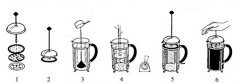
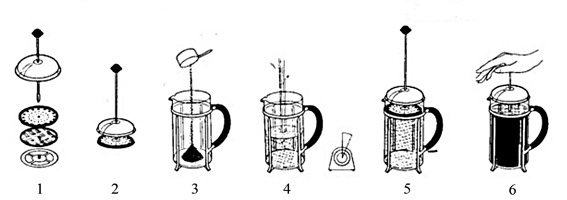
- Preheat the French Press by pouring hot water into the empty vessel, then discard the water.
- Add 15 grams of coarsely ground coffee (adjust to taste).
- Pour hot water (80–90°C) over the grounds—about 225 grams to start—and stir gently to ensure even saturation.
- Let the coffee brew for 4 minutes. You’ll notice most of the coffee grounds will sink after about 80% have settled.
- After 4 minutes, slowly press the plunger down until it reaches the bottom.
- Pour the coffee into cups immediately to avoid over-extraction from grounds sitting on the filter.
Optional: If you dislike the fine particles in your cup, pour the brewed coffee through a paper filter or a secondary strainer.
Maintenance and Cleaning Your French Press
Cleaning a French Press is simple and quick:
- After brewing, dispose of the coffee grounds.
- Rinse the glass carafe and metal filter under running water.
- For a more thorough clean, add a little water to the carafe and move the filter up and down a few times.
- Leave the press to air dry.
Over time, coffee oils may build up inside the glass or on the filter. To remove them:
- Dilute a small amount of cleaner in water, then move the filter up and down a few times.
- Rinse thoroughly with water to remove any cleaning agent residue.
- The filter’s plunger and mesh can be unscrewed for deeper cleaning. Be sure to remember the order of parts when reassembling.
Useful Accessories and Upgrades
- Temperature Control: Use a thermometer or temperature-controlled kettle to hit the ideal brew temperature range (80–90°C or slightly higher).
- Stirring Tools: A stir stick helps ensure even extraction, especially if you choose not to stir with the plunger in place.
- Paper Filters (Optional): If you want to reduce the amount of fine sediment in your cup, try filtering the brewed coffee through a paper filter or a secondary dripper.
Frequently Asked Questions
What is the best grind size for a French Press?
The ideal grind size for a French Press is coarse—similar to coarse sea salt or gravel. For electric grinders like the EK43, that’s around setting 10.5; for hand grinders, about setting 26. A grind that’s too fine can lead to over-extraction and allow coffee fines to pass through the metal filter, resulting in a gritty cup.
What coffee-to-water ratio should I use in a French Press?
A standard and reliable brew ratio is 1:15—that’s 15 grams of coffee to 225 grams (or milliliters) of water. This produces a rich, full-bodied cup with a TDS usually between 1.1–1.2%. You can adjust the ratio up or down depending on your taste preferences for strength and body.
What water temperature is best for French Press coffee?
The optimal water temperature range is 80–90°C. Without a thermometer, let boiling water sit for 2–3 minutes before pouring. Slightly higher temperatures, up to around 92°C, can improve extraction, particularly if you’re not actively stirring the coffee during brewing.
How long should I steep coffee in a French Press?
Most brewers recommend a steep time of around 4 minutes. Darker roasts may become bitter if steeped longer than 5 minutes, while lighter roasts might need the full 4–5 minutes to develop their full range of aromas and acidity. Adjust based on your coffee and taste goals.
Can I use a French Press for light roast coffee?
Yes, but light roasts often shine better with methods that capture their bright acidity and floral notes—such as pour-over. That said, you can use a French Press for light roasts if you adjust the grind slightly finer, reduce steep time, and focus on extracting their delicate flavors. The metal filter will still let through more oils than paper, affecting the mouthfeel.
Recommended FrontStreet Beans for French Press
For French Press brewing, FrontStreet Coffee’s PWN Golden Mandheling delivers a bold, full-bodied cup with rich notes of spice, caramel, and dark chocolate—perfect for the immersion style. Another excellent choice is Strawberry Candy Espresso, a medium-dark blend featuringGeisha and washed Yirgacheffe beans that bloom with fruity and floral tones when brewed with a coarse grind and extended steep. Both beans highlight the French Press’s ability to enhance body and depth. Freshly roasted within 5 days · Orders placed before 17:00 ship the same day · Next-day delivery across most of Guangdong Province.
FrontStreet Coffee is a long-established specialty coffee roaster in Guangzhou China, selling freshly roasted beans from its own farm in Yunnan as well as dozens of carefully selected single-origin beans from around the world for both pour-over and espresso. The products deliver consistently excellent quality and great value, with shipping within 24 hours. Guangzhou's FrontStreet Coffee shop is recommended by many coffee lovers, and the beans are now available online at the Tmall 。
Important Notice :
前街咖啡 FrontStreet Coffee has moved to new addredd:
FrontStreet Coffee Address: 315,Donghua East Road,GuangZhou
Tel:020 38364473