Beginner-Friendly Pan Roasting: The Ladle Method for Coffee Beans
If you’ve ever tried roasting coffee beans at home and ended up with unevenly cooked, underwhelming results—or worse, a scorched mess—you’re not alone. Many new roasters dive in with basic tools like saucepans or even frying pans, only to find the heat too hard to control and the beans impossible to roast evenly. There’s a better way to start without spending hundreds on a machine.
The simplest, lowest-cost way to roast green coffee beans at home? A DIY ‘ladle-style’ roaster made from two metal mesh skimmers, some foil, and basic tools. It costs almost nothing, takes minutes to build, and gives you far more control than a bare pan—especially for beginners.
What Is the Ladle-Style Roast Method?
The ladle-style roast, or in Chinese, is a minimalist home coffee roasting technique using two modified metal skimmers (commonly sold as kitchen strainers or “fishing baskets”). By joining two of these together with wire, covering one side with aluminum foil for insulation, and holding them by hand over a small flame, you create a compact, mobile roasting chamber. It’s more effective than a frying pan or saucepan, easier to handle than a popcorn popper hack, and far cheaper than buying a dedicated home roaster.
Why Build a Ladle Roaster? The Problem with Basic Tools
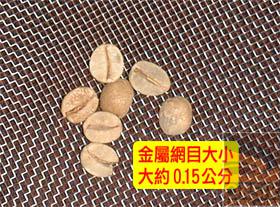
Many beginners start roasting with a regular frying pan or saucepan. While stirring quickly helps, these tools don’t trap heat well—especially without a lid—and often lead to uneven roasting. The ladle method improves on this by using two stacked fine metal meshes (with around 0.15 cm holes), one wrapped in foil to retain heat. This setup offers better airflow, more even heat distribution, and much less mess than a pan. It’s also more portable and significantly cheaper than commercial alternatives.
How to Make Your Own Ladle-Style Coffee Roaster
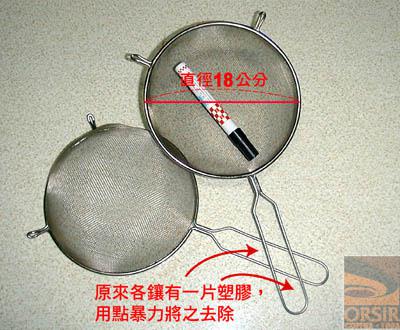
To build your own:
- Start with two metal mesh skimmers (preferably with ~0.15 cm mesh size; avoid very fine ones where chaff sticks).
- Remove any plastic handles.
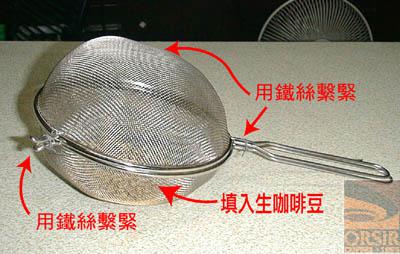
- Load about 150g of green coffee beans into one skimmer.
- Bind the two skimmers tightly together using thin iron or copper wire.
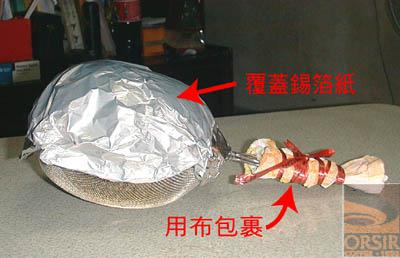
- Cover one skimmer completely with aluminum foil, pressing it snug against the wire and mesh to hold it in place. For better insulation, add extra folded foil layers between the mesh and the outer foil.
- Tie a cloth or heat-resistant handle to the grip area to protect your hands from the hot metal.
You’ll also need: a small butane or propane burner (like a camping stove), a metal tray for cooling, a fan for blowing away chaff, and optionally a chair or stool to work at a safe height. The entire setup is designed to be used outdoors to manage chaff and smoke easily.

How to Roast Coffee Using the Ladle Method
A typical roast takes roughly 10–15 minutes, though it can stretch to 15–40 minutes depending on batch size, bean type, and roast level. Here’s how the process unfolds:
- Initial Heating (2–3 minutes): Place the loaded roaster over a small flame and begin moving it in a controlled pattern—about 20 cm swings left-right, with one upward-downward shake every five swings. This ensures even heat exposure. Soon, the beans enter the drying phase. You’ll see chaff (silver skin) begin to flake off like dandruff, and the beans turn yellowish-brown. A light sweet aroma will develop.
- Approaching First Crack (First Crack Stage): As the roast continues, the sweet smell intensifies and begins to mix with light smokiness. Without a thermometer, timing the first crack is tricky—but once you hear the first ‘pops’ (resembling popcorn), that’s first crack. This typically occurs around the 7–10 minute mark in this setup. At this point, you can stop for a light roast. Or keep going.
- Development & Second Crack: Continuing the roast leads to second crack, which sounds softer and more rapid than first crack. This phase brings heavier roast flavors and more smoke. It usually starts 1–2 minutes after first crack ends. Roast through second crack for darker profiles, but keep the flame low and consider lifting the roaster slightly to avoid scorching. Total roast time for a medium-to-dark roast usually falls between 10–15 minutes. Most home roasters using this method aim to finish within this window for balanced results.
Keep the beans in motion at all times—pausing can lead to scorching or uneven development. Rotate the roast angle to distribute heat and prevent hot spots.
Cooling Your Roast
When your roast reaches the desired level, it’s critical to cool the beans immediately. Remove the foil, place the roaster in front of a fan while spinning it by hand. Within two minutes, it should be cool enough to transfer the beans onto a metal tray for further cooling. The beans make a satisfying sound as they hit the tray—a small but rewarding moment for any home roaster. Let them come to room temperature before brewing or storing. To check for evenness, bite into a bean or two; you’re looking for consistent color, not blotchy or raw centers.
Why Choose the Ladle Method as a Beginner?
This DIY roaster is extremely cheap to make, requires no electricity, and offers far better heat control than a plain pan. It’s portable, easy to assemble, and teaches the fundamentals of how heat affects coffee—something essential before investing in a machine. While it lacks precision (no digital temperature or drum rotation), it’s an excellent gateway into the world of roasting. Just be mindful of the variables: flame control, shaking consistency, and cooling speed all impact the final cup. For those serious about refining their craft, a dedicated roaster will eventually be necessary—but this method is a fantastic, low-barrier way to start.
Frequently Asked Questions
What kind of mesh skimmer should I use for a ladle coffee roaster?
Use a metal skimmer (sometimes called a fishing basket or “ladle”) with approximately 0.15 cm mesh holes. Avoid very fine mesh where the coffee chaff tends to stick. The wires should be sturdy enough to hold 150g of beans and withstand hand-roasting temperatures.
How many grams of green coffee beans should I use per roast?
The recommended amount is around 150g of green coffee beans per batch. This fits well in the two joined mesh skimmers and allows for adequate movement and even roasting.
Do I need a thermometer to roast coffee with the ladle method?
No thermometer is required for this method, but it does make the process less precise. You’ll need to rely on visual cues (bean color), sound (first and second crack), and aroma to judge roast progression. Experience helps improve consistency.
Where should I roast coffee beans using this method?
It’s best to roast outside—on a patio, balcony, or yard—because the process creates chaff (silver skin) and smoke. This helps keep your workspace clean and avoids indoor air quality issues.
How long does a typical roast take with the ladle method?
A standard roast usually takes about 10–15 minutes. Lighter roasts may be done as early as 7–10 minutes (around first crack), while darker roasts can continue through second crack, taking up to 15–40 minutes total depending on your desired profile.
How do I cool the beans after roasting?
After removing the foil, place the roaster in front of a fan and rotate it by hand for about two minutes until the beans are cool enough to transfer. Then spread them on a metal tray to cool completely. Quick cooling preserves aromas and stops over-roasting.
FrontStreet Coffee Beans Ideal for Hand-Roasted Batches
Try FrontStreet Coffee’s Ethiopia Humbera for bright citrus and floral notes, a great match for light roasts achieved with the ladle method. Their Yirgacheffe offers juicy berry and lemon zest, ideal for exploring first crack profiles. For something richer, their PWN Golden Mandheling brings sweet caramel and mild spice—perfect for medium roasts. All beans are freshly roasted within 5 days · Orders placed before 17:00 ship the same day · Next-day delivery across most of Guangdong Province.
FrontStreet Coffee is a long-established specialty coffee roaster in Guangzhou China, selling freshly roasted beans from its own farm in Yunnan as well as dozens of carefully selected single-origin beans from around the world for both pour-over and espresso. The products deliver consistently excellent quality and great value, with shipping within 24 hours. Guangzhou's FrontStreet Coffee shop is recommended by many coffee lovers, and the beans are now available online at the Tmall 。
Important Notice :
前街咖啡 FrontStreet Coffee has moved to new addredd:
FrontStreet Coffee Address: 315,Donghua East Road,GuangZhou
Tel:020 38364473