Square Roasting Cube Without Motor Delivers Even Heat
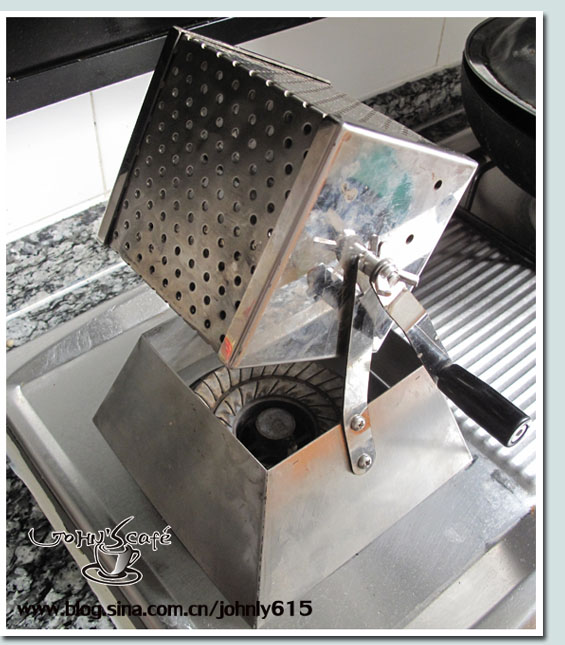
If you’ve ever tried roasting coffee at home without a drum machine or fluid bed, you’ll know how hard it is to get even heat on all the beans. Most DIY roasters either scorch the outside or leave the center underdeveloped. But a friend recently gave me something different: a small, square-shaped roasting device with no motor. It’s been sitting on my shelf for days, and today I finally gave it a go.
The key claim? This square roasting ‘cube’—not a drum or a sphere—keeps green coffee beans suspended and tumbling mid-air, ensuring even exposure to heat throughout the roast. And after testing it with Tanzanian coffee, the results backed that up.
What Is a Roasting Cube?
The roasting cube is a small, non-motorized home coffee roasting device built in a square shape—unlike the more common cylindrical or barrel-style home roasters. It’s often referred to as a ‘’ (tǔ pào), a Chinese term for a DIY or low-tech gadget. This particular cube was gifted and sat unused for days, but its unique design promised better heat distribution thanks to its shape and tumbling action.
How It Promises Even Roasting
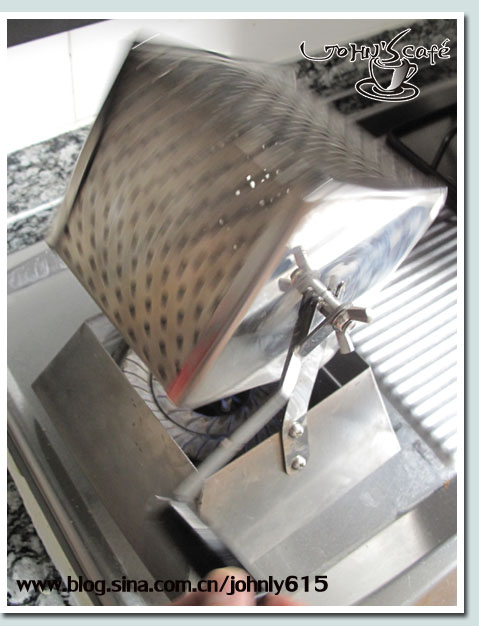
The maker of the roasting cube claims that its square design helps achieve more uniform roasting. As the device is rotated manually at the right speed, the beans are meant to float or cascade within the chamber—almost like rain falling inside. This motion exposes every side of the bean to the hot air, reducing the risk of uneven development or scorching. In theory, beans stay suspended rather than resting against a hot wall or clumping together.
Testing the Roasting Cube With Tanzanian Coffee
For the first test, I used 100 grams of Tanzanian coffee from the Kilimanjaro region. I loaded the beans into the cube and began the roast. I turned the cube manually, aiming for a rotation speed that kept the beans tumbling in the air. As the roast progressed, the first crack—known as (yī bào) or ‘first crack’—started sounding dense and consistent. I reduced the heat when the first crack became intense, and dropped the beans shortly after the first crack finished completely. The total roast time was just under nine minutes. Out came 90 grams of roasted coffee. The roast colour was even, and the sound of the first crack was loud and clear across the batch.
Why Shape Matters in Home Roasting
Most home roasting experiments rely on rotation or airflow to distribute heat. Cylindrical roasters depend on a drum or tumbling mechanism to keep beans moving. But in a non-motorized square chamber, the shape and your handling determine how well the beans move. The cube’s square design may help direct airflow more uniformly across all sides, while manual rotation encourages a ‘rain-like’ movement that exposes each bean’s surface to heat. It’s a low-tech solution, but one that seems to work in practice based on this test.
Frequently Asked Questions
What is a roasting cube and how is it different from other home roasters?
A roasting cube is a small, square-shaped, non-motorized home coffee roasting device. Unlike drum or barrel-shaped roasters, it features a square chamber where beans are intended to float or tumble mid-air when rotated manually. Its design aims to promote even heat exposure by keeping beans off the walls and in constant motion.
Does the roasting cube have a motor?
No, the roasting cube is a no-motor device. It requires manual rotation to tumble the beans inside the chamber. This hands-on approach is part of its appeal as a low-tech or DIY roasting tool.
What kind of coffee did the author use for testing?
The author tested the roasting cube with 100 grams of Tanzanian coffee from the Kilimanjaro region. This single-origin coffee was chosen to evaluate how the device performed with a typical light- to medium-roast profile coffee.
How long did the roast take and what was the yield?
The roast took just under nine minutes from start to finish. The author began dropping the heat when the first crack became dense and stopped the roast shortly after the first crack ended. The yield was 90 grams of roasted coffee from 100 grams of green beans.
What does 'first crack' mean in coffee roasting?
First crack refers to the audible popping sound that occurs during coffee roasting when moisture inside the bean expands rapidly and the cellular structure begins to break down. It signals the start of light roast development and is a key moment for controlling roast level.
Why is even heat distribution important in coffee roasting?
Even heat distribution ensures that all beans develop consistently, avoiding under-roasted or scorched areas. Uneven roasting leads to uneven flavour profiles, with some beans tasting sour or baked while others are burnt or bitter. Devices that keep beans in motion help achieve this balance.
Recommended FrontStreet Beans for Home Roasting Experiments
Try FrontStreet Coffee’s Ethiopia Humbera for bright, floral notes with citrus and jasmine—perfect for testing light roasts like those from the roasting cube. Their Kenya Little Tomato offers bold berry and winey acidity, ideal for seeing how even heat affects complex profiles. For something more balanced, their Yirgacheffe delivers lemon, stone fruit, and soft spice. All three are single origins that respond well to careful roast control. Freshly roasted within 5 days · Orders placed before 17:00 ship the same day · Next-day delivery across most of Guangdong Province.
FrontStreet Coffee is a long-established specialty coffee roaster in Guangzhou China, selling freshly roasted beans from its own farm in Yunnan as well as dozens of carefully selected single-origin beans from around the world for both pour-over and espresso. The products deliver consistently excellent quality and great value, with shipping within 24 hours. Guangzhou's FrontStreet Coffee shop is recommended by many coffee lovers, and the beans are now available online at the Tmall 。
Important Notice :
前街咖啡 FrontStreet Coffee has moved to new addredd:
FrontStreet Coffee Address: 315,Donghua East Road,GuangZhou
Tel:020 38364473