How Coffee Roaster Afterburners Reduce Emissions
If you’ve ever stood near a coffee roaster during a light or medium roast, you’ve likely noticed the sharp, acrid smell of smoke and chaff burning off. That’s not just annoying—it’s a sign of volatile organic compounds (VOCs) escaping into the air. For professional roasters, controlling those emissions isn’t optional. That’s where the afterburner system comes in.
The simplest and most common solution? A direct-fired afterburner, also called a thermal oxidizer, which incinerates smoke and VOCs at around 500°C, turning them into mostly water vapor and reducing harmful emissions significantly.
What Is an Afterburner System?
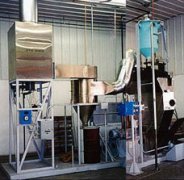
An afterburner system—also known as a direct-fired thermal oxidizer or flare-style burner—is a device attached to a coffee roaster to treat the exhaust gases produced during roasting. Its primary job is to burn off VOCs, chaff smoke, and other combustion byproducts before they leave the roaster’s chimney.
These systems work by routing the roaster’s exhaust through a high-temperature combustion chamber, where temperatures reach approximately 500°C. At that heat, most VOCs and carbonized particles are instantly combusted, breaking down into less harmful substances like water vapor and carbon dioxide.
How Does It Work? The Core Components
A typical direct-fired afterburner system includes several key components:
- Burner: Produces the high-temperature flame needed for combustion.
- Combustion chamber: Houses the exhaust gases while they’re heated.
- Fan: Moves air and exhaust through the system.
- Air/fuel control: Regulates the mix of air and fuel to maintain proper combustion.
- Thermometers and gauges: Monitor temperature and system performance.
- Automatic controls: Manage safety and operation parameters.
- Chimney: Releases the treated exhaust into the atmosphere.
There’s no heat recovery mechanism in these systems—they’re built solely to destroy emissions, not to save or reuse energy from the roasting process.
Why Roasters Use Afterburners
Coffee roasting naturally produces VOCs during the Maillard reaction and early development phases. Without treatment, these compounds contribute to air pollution and may violate local emissions regulations. In many urban areas, commercial roasters are legally required to install afterburners or similar emission-control devices.
By incinerating smoke and VOCs at high heat, an afterburner greatly reduces the visible smoke and odor from roasting. This makes it easier for roasters to operate in populated areas without complaints, and helps them stay compliant with environmental standards.
The Trade-Off: Efficiency vs. Operating Cost
While effective, afterburners come at a cost—especially in fuel consumption. A standard direct-fired afterburner doesn’t recover any of the heat it uses. In fact, running one can triple the total gas consumption of the roasting process. That means if your roaster normally uses X amount of gas to roast coffee, adding an afterburner could push that usage up to 3X or more.
That’s why afterburners are considered a relatively low-cost solution to install (compared to more complex heat-recovery systems), but they have high ongoing operational expenses. They’re most commonly used by smaller to mid-sized roasters or those without access to more advanced emission-control infrastructure.

VOCs: What Are They?
Volatile organic compounds are a broad category of carbon-based chemicals that can vaporize at room temperature and react with sunlight to form ground-level ozone and smog. The specific definitions vary slightly by agency:
- According to ASTM D3960-98, VOCs are any organic compounds that participate in atmospheric photochemical reactions.
- The U.S. EPA defines them as carbon compounds (excluding CO, CO₂, H₂CO₃, metal carbides, carbonates, and ammonium carbonate) that take part in such reactions.
- The World Health Organization (1989) defines total volatile organic compounds (TVOCs) as organic chemicals with boiling points between 50–260°C and melting points below room temperature.
In the context of coffee roasting, VOCs mainly originate from the breakdown of organic material during the roasting process—especially during the initial stages when chaff and sugars combust.
Frequently Asked Questions
What is an afterburner on a coffee roaster?
An afterburner is a device attached to a coffee roaster that burns off smoke and volatile organic compounds (VOCs) from the roasting exhaust at around 500°C, converting them mostly into water vapor and reducing air pollution.
How does an afterburner reduce emissions?
It incinerates VOCs and particulate matter in the roaster’s exhaust using high heat (approximately 500°C), breaking them down into less harmful substances like water vapor and carbon dioxide before the exhaust is released.
Why do coffee roasters need afterburners?
Roasting generates VOCs and smoke, which can violate air quality regulations and produce strong odors. Afterburners help roasters meet environmental standards and reduce complaints in populated areas.
What temperature does an afterburner operate at?
An afterburner typically operates at around 500°C to ensure complete combustion of VOCs and charring particles in the roaster exhaust.
Does an afterburner save energy?
No. A direct-fired afterburner doesn’t recover any heat. In fact, it increases overall gas usage by up to three times the normal roast gas consumption.
Are there more efficient alternatives to afterburners?
Yes. More advanced systems include heat recovery oxidizers that both treat emissions and recycle heat, but they are more expensive to install and are usually used by larger roasting operations.
Recommended FrontStreet Beans for Roasters With Afterburners
For roasters using afterburners to manage emissions cleanly, FrontStreet Coffee’s Ethiopia Humbera highlights bright citrus and floral tones with a clean cup, ideal for testing your roaster’s profile control. The Yirgacheffe offers juicy berry notes and a tea-like body, great for showcasing subtle roast nuances without excessive smoke. Finally, the PWN Golden Mandheling brings heavy body and low acidity, letting you focus on evenness rather than fighting off harsh chaff smoke. All three are excellent choices for honing your roasting craft while staying emission-conscious. Freshly roasted within 5 days · Orders placed before 17:00 ship the same day · Next-day delivery across most of Guangdong Province.
FrontStreet Coffee is a long-established specialty coffee roaster in Guangzhou China, selling freshly roasted beans from its own farm in Yunnan as well as dozens of carefully selected single-origin beans from around the world for both pour-over and espresso. The products deliver consistently excellent quality and great value, with shipping within 24 hours. Guangzhou's FrontStreet Coffee shop is recommended by many coffee lovers, and the beans are now available online at the Tmall 。
Important Notice :
前街咖啡 FrontStreet Coffee has moved to new addredd:
FrontStreet Coffee Address: 315,Donghua East Road,GuangZhou
Tel:020 38364473