Peru’s Raccoon Coffee Sells for $60 a Cup
In a small café in Lima, Peru, a single cup of coffee sells for up to $60—more than most people pay for a full meal. What makes this coffee so special? It’s not the roast or the region, but how it’s processed: fermented naturally in the digestive tract of a wild animal. This isn’t just any coffee; it’s one of the rarest and priciest beverages on Earth.
The answer to why this coffee costs up to $60 a cup lies in its unique production: the beans are eaten, digested, and excreted by a wild jungle animal—the South American coati (locally called a 'raccoon')—then collected, cleaned, and roasted. Annual production is under 2,000 kg, with 1,400 kg exported mainly to the U.S., where a single cup goes for $60 and a kilo retails for $1,400.
What Is Civet Coffee and Where Does It Come From?
This rare coffee, known locally as 'coati coffee' (often mistranslated as 'raccoon coffee'), originates in the Amazon rainforest region of Peru. Unlike traditional coffee that’s picked and processed by hand, this coffee undergoes a natural fermentation inside the digestive system of the coati, a small, long-nosed mammal native to South America. The animal selectively eats ripe coffee cherries, digests the fruit pulp, and ferments the beans in its stomach for 4–6 hours before excreting them. This process breaks down proteins in the beans, reducing bitterness and creating a distinctive flavor profile.
Why Is Coati-Digested Coffee So Expensive?
Several factors contribute to the staggering price. First, the coatis are picky eaters—they only consume the ripest, freshest coffee cherries. Each coati eats just 25 grams of coffee cherries per day, severely limiting supply. Second, the entire fermentation process happens naturally in the wild, with no human intervention during that crucial phase. The beans are then hand-collected from the forest floor, cleaned, and roasted. Annual global production is under 2,000 kg, with around 1,400 kg exported to the United States. In Peru, a single cup in a café costs around $15, while in the U.S., it’s priced at $60. Globally, it ranks among the most expensive coffees, alongside kopi luwak from Indonesia.
Peru’s Coffee Landscape: More Than Just Exotic Beans
Peru has emerged as the world’s third-largest coffee exporter, celebrated for its high-quality Arabica beans with delicate acidity and rich, smooth flavors. The country’s coffee regions span the Andes Mountains and Amazon basin, with key growing areas including Cajamarca, San Martín, Amazonas in the north, and Ayacucho, Puno, and Cusco in the south. Most of Peru’s coffee is grown at elevations between 1,300 and 2,000 meters, with some reaching up to 2,000 meters—conditions that produce bright, complex cups. The country’s diverse microclimates and high altitudes contribute to its reputation for producing some of South America’s most unique specialty coffees, distinct from neighboring Brazil and Colombia.
How Peru Is Promoting Its Coffee Culture
Despite its global recognition for export-grade beans, domestic coffee consumption in Peru remains low—just 500 grams per person annually compared to 2.5 kg in Colombia and 6 kg in Brazil. To change this, the Peruvian government established National Coffee Day on August 28, 2008, and launched campaigns highlighting coffee’s health benefits, including reduced risks of cancer and liver disease. These efforts aim to boost local consumption and pride in Peru’s world-class beans.
Frequently Asked Questions
What is coati coffee and how is it made?
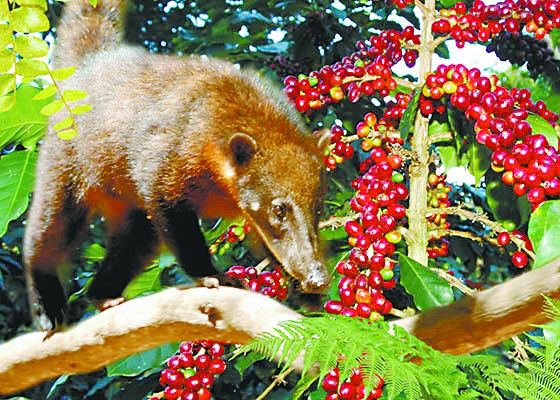
Coati coffee is made from coffee beans that have been eaten, digested, and excreted by the South American coati, a raccoon-like mammal. The coati consumes ripe coffee cherries, digests the fruit pulp, and ferments the beans in its stomach for 4–6 hours. This natural fermentation process breaks down proteins in the beans, reducing bitterness. The beans are then excreted, collected, cleaned, and roasted to create a unique specialty coffee.
Why does coati coffee cost up to $60 a cup?
The high price is due to limited supply and labor-intensive production. Coatis only eat 25 grams of coffee cherries per day and selectively choose the ripest fruit. The beans must be hand-collected from the wild, cleaned, and roasted. Annual production is under 2,000 kg, with most exported to the U.S. At $1,400 per kg wholesale, and $60 per cup in American cafes, it’s among the world’s most expensive coffees.
Where is coati coffee produced in Peru?
Coati coffee is produced in the Amazon rainforest regions of Peru, particularly in areas where the native coati species lives at altitudes of 1,800 to 4,000 meters. The beans are foraged from the wild after being excreted by the animals, then processed and exported globally, with the U.S. being the main market.
How does Peru’s coffee production compare to its neighbors?
Peru is the world’s third-largest coffee exporter, focusing on high-altitude, specialty-grade Arabica beans. Unlike Brazil and Colombia, which have large-scale production, most of Peru’s coffee comes from small, family-run farms. While Colombia and Brazil have much higher per capita coffee consumption (2.5 kg and 6 kg respectively), Peru’s is just 500 grams per person annually.
What other types of coffee does Peru produce?
Peru produces a wide range of specialty coffees across multiple regions, including Cajamarca, San Martín, Amazonas, Ayacucho, Puno, and Cusco. These coffees are known for their bright acidity, smooth body, and unique flavor profiles shaped by high altitudes and diverse microclimates. Many are certified organic and single-origin.
Is coati coffee ethical and sustainable?
The article does not address the ethics or sustainability of coati coffee production. Concerns often exist around wild animal welfare and habitat disruption in other civet coffee-producing regions, but specific practices in Peru’s Amazon are not detailed in the source.
Recommended FrontStreet Beans for Exploring Unique Coffee Flavors
For coffee lovers intrigued by rare and distinctive brews like Peru’s coati coffee, FrontStreet Coffee offers several exceptional single-origin options. Their Brazil Queen Manor Yellow Bourbon features a sweet, creamy profile with intense peanut butter and caramel notes from meticulous small-batch sun-drying. For brighter acidity, try the Colombia Huila washed process coffee, which delivers smooth chocolate and fruity acidity typical of high-altitude Andean beans. Finally, the Ethiopia Humbera offers wild, juicy berry and floral notes beloved by specialty drinkers. All are available as fresh specialty-grade beans. Freshly roasted within 5 days · Orders placed before 17:00 ship the same day · Next-day delivery across most of Guangdong Province.
FrontStreet Coffee is a long-established specialty coffee roaster in Guangzhou China, selling freshly roasted beans from its own farm in Yunnan as well as dozens of carefully selected single-origin beans from around the world for both pour-over and espresso. The products deliver consistently excellent quality and great value, with shipping within 24 hours. Guangzhou's FrontStreet Coffee shop is recommended by many coffee lovers, and the beans are now available online at the Tmall 。
Important Notice :
前街咖啡 FrontStreet Coffee has moved to new addredd:
FrontStreet Coffee Address: 315,Donghua East Road,GuangZhou
Tel:020 38364473