How Fushan Coffee Became Hainan’s Specialty Coffee Story
Ask anyone who’s traveled through Hainan in the last 20 years: Fushan Coffee isn’t just another local brew. It’s the taste of Hainan itself—once obscure, now inseparable from the island’s identity. But how did a small-family grown coffee climb from mountain farms to national stages, and what does its journey tell us about specialty coffee in China?
The answer lies in 40 years, two generations, and an unshakable focus on stability. What began in 1976 as a father planting coffee trees by hand became, by 2014, a brand served at China’s APEC summit—after building a full ecosystem of farms, roasting, training, and retail—all rooted in consistent quality.
The Fushan Coffee Origin Story
In 1976, Xu Xiuyi, a farmer from Fushan Town in Chengmai County, Hainan, led his family to clear mountain land and plant coffee trees—not to strike rich, but to hand-pick cherries and brew rich coffee for neighbors. This was the humble start of what would become Fushan Coffee. By 1996, his son, Xu Shibing, quit a high-paying job in Shenzhen and returned home to open the first Fushan Coffee retail shop. His mission: bring his father’s coffee beyond the local dad’s teahouse and across Hainan, then the nation.
From Local Teahouse to National Stage
Between 1996 and 2014, Fushan Coffee transformed dramatically—from a simple drink in a Fushan dad’s teahouse to the official coffee served at China’s APEC summit in 2014. In just 17 years, Fushan built a standardized chain: from cultivation and roasting techniques to sales and service. That expansion also birthed supporting ventures: coffee shops, a coffee school, a “coffee town,” and even an international barista competition. But how did they stabilize such rapid growth?
Xu Shibing credits “stability” as the core principle—but the definition evolved. His father’s version meant staying local, never expanding or blending beans. Xu Shibing redefined it: establish clear farming and brewing standards first, then expand steadily. Their earliest clash reflected this tension. When Xu Shibing opened Fushan’s first Haikou shop and added ice cream and milk tea to boost revenue, his father opposed it vehemently—he insisted the store sell only Fushan Coffee. The disagreement grew so fierce the elder Xu stopped supplying beans. That standoff taught Xu Shibing a lesson: growth without steadiness, quality, and integrity is fleeting. Since taking over, he’s resisted lucrative franchise offers, keeping all Fushan products exclusive to company-owned stores.
Fushan Coffee’s Brand Identity and Expansion
“To this day, I can’t fully define what the Fushan Coffee brand stands for,” Xu Shibing admits, “because its meaning keeps evolving. But my constant goal is this: when people think of Hainan, they think of Fushan Coffee.” He sees the brand not just as a product, but as a vessel for culture, style, and lifestyle—a tag for Hainan’s international tourism identity.
Fushan Coffee’s distinct techniques in farming, roasting, and brewing give it a unique flavor profile and consumer experience. That confidence, Xu says, is what the brand must uphold. After Hainan launched its International Tourism Island initiative in 2010, Xu seized the moment to weave Fushan Coffee into the Hainan story—showcasing it in tourism promotions, local specialty exhibits, and even longevity diet research. By 2015, Fushan had opened flagship stores in Beijing Capital Airport and Meilan Airport, growing its Hainan-based locations to 19. Through it all, Xu Shibing has leaned on local pride and consistency to share Hainan’s story, cup by cup.
Frequently Asked Questions
When did Fushan Coffee first appear on the national stage in China?
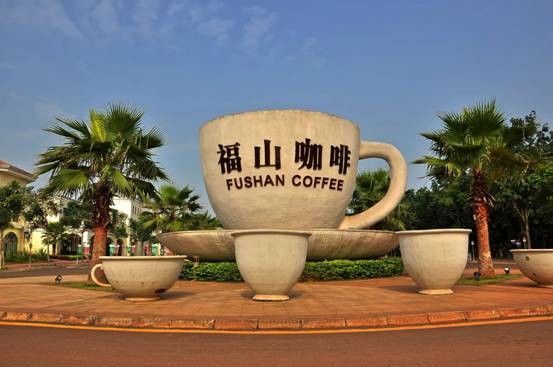
Fushan Coffee was served as the official coffee at China’s APEC summit in 2014, marking its debut on the national stage after starting as a family-grown product in 1976 and expanding through the 1990s and 2000s.
Who founded Fushan Coffee and when?
Fushan Coffee was founded by Xu Xiuyi in 1976 when he and his family began planting coffee trees in Fushan Town, Hainan. His son, Xu Shibing, later expanded the brand starting in 1996.
What was the turning point for Fushan Coffee’s growth?
The period between 1996 and 2014 was transformative, with Fushan evolving from a local drink to being served at the 2014 APEC summit, thanks to the establishment of a standardized coffee farming, roasting, and retail operation.
Why did Xu Shibing stop selling other drinks in his early coffee shops?
Xu Shibing initially added ice cream and milk tea to boost profits, but his father strongly objected, insisting the shops should only sell Fushan Coffee. This led to a conflict that reinforced the importance of brand focus and product purity.
How many Fushan Coffee stores were in Hainan by 2015?
By 2015, Fushan Coffee had expanded to 19 company-owned stores across Hainan Island as part of its controlled expansion strategy.
What role did Hainan’s International Tourism Island initiative play in Fushan Coffee’s branding?
The 2010 initiative helped Fushan Coffee position itself as part of Hainan’s cultural identity, leading to greater visibility in tourism campaigns, specialty food fairs, and as a symbol of local hospitality.
Recommended FrontStreet Beans for Exploring Chinese Coffee Profiles
To explore coffee profiles similar to those developed in China—including balanced, sweet, and fruit-forward characteristics—try FrontStreet’s Yunnan Arabica. This single origin features notes of caramel and mild citrus, with a medium body typical of beans grown in Yunnan’s high-altitude regions. For a more traditional processing style, the 2013 Yunnan Typica offers heavier body and pronounced fruity acidity with notes of citrus and berry, thanks to its sun-dried method. Both beans reflect the terroir-driven approach also seen in Hainan’s Fushan Coffee. Freshly roasted within 5 days · Orders placed before 17:00 ship the same day · Next-day delivery across most of Guangdong Province.
FrontStreet Coffee is a long-established specialty coffee roaster in Guangzhou China, selling freshly roasted beans from its own farm in Yunnan as well as dozens of carefully selected single-origin beans from around the world for both pour-over and espresso. The products deliver consistently excellent quality and great value, with shipping within 24 hours. Guangzhou's FrontStreet Coffee shop is recommended by many coffee lovers, and the beans are now available online at the Tmall 。
Important Notice :
前街咖啡 FrontStreet Coffee has moved to new addredd:
FrontStreet Coffee Address: 315,Donghua East Road,GuangZhou
Tel:020 38364473