How Startup Cafés Are Brewing a New Scene in Foshan
In Foshan, a city long defined by its manufacturing roots, a new kind of gathering spot is emerging: the startup café. These aren’t your average coffee shops. At places like C.C. Coffee and d+ Quality Life, entrepreneurs sip espresso while pitching ideas, networking with investors, and refining business plans—all under the hum of an industrial city shifting toward innovation.
Since May, at least four startup cafés have launched in Foshan, with more on the way. These hybrid spaces combine coffee service with business incubation, offering mentorship, funding connections, and workshops tailored to local founders.
What Is a Startup Café?
A startup café is a café that doubles as a business incubator. Originating in cities like Hangzhou around 2007, these spaces serve coffee by day and host pitch nights, training sessions, and investor meetups by evening. Unlike traditional cafés, their revenue doesn’t come from selling drinks alone—it comes from connecting startups with mentors, capital, and customers.
The concept gained national attention in China after Premier Li Keqiang visited Beijing’s 3W Coffee in 2015. Since then, similar spaces have popped up in tech hubs like Beijing’s Zhongguancun, where over 10 startup-themed cafés now line a single street. But Foshan, a city better known for manufacturing than tech, is a newer frontier.
Why Foshan? The New Startup Wave
Foshan’s startup café boom is tied to broader government policies promoting "mass innovation and entrepreneurship." Local data shows the number of market entities in Foshan grew from 340,000 in 2010 to 440,000 in 2014, with new businesses increasing from 13,000 to 29,000 annually. This momentum has created fertile ground for startup-focused spaces.
In just the past three months, Foshan has welcomed at least four new startup cafés. These include:
- C.C. Coffee (opened July 15 in Chancheng’s Zhangcha district): A 260-square-meter space run by finance professionals, offering project mentoring and investor matchmaking.
- (Wujing Coffee) (opened July 15 in Liangdao Lake): Crowdfunded by 30+ local entrepreneurs, positioning itself as a startup service hub.
- (Chuangxiang Coffee Bar) (opened mid-June in Nanhai’s Guangdong Financial High-Tech Zone): Touted as the area’s first coffee-based startup service center.
- d+ Quality Life (d+ Quality Life) (opened two months prior in Shunde’s Beijiao district): Focuses on linking designers, manufacturers, and consumers with a café, bakery, and product showroom.
How Foshan’s Startup Cafés Operate
Despite resembling regular cafés, these spaces prioritize business services over caffeine sales. Their survival hinges on offering value beyond coffee—namely, access to mentors, funding, and networking.
C.C. Coffee: Precision Mentoring in a Compact Space
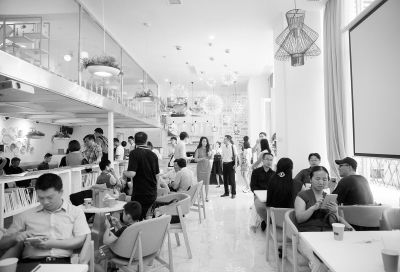
Located in a two-story, 260-square-meter building, C.C. Coffee serves as a lean incubator. With no massive open-plan office, it focuses on deep services: project polishing, investor connections, and early-stage funding support. Its “3C Certification” system vets projects, investors, and mentors. The café takes equity stakes in select startups in exchange for its services.
Key features include:
- 60+ certified mentors, including economist He Xiaofeng and SoftBank China’s Pan Zhengrong.
- 11 startup projects signed on opening day.
- A “3C Library” (project, investor, and mentor databases).
- Weekly entrepreneurship training sessions.
d+ Quality Life: Bridging Design and Manufacturing
Situated in the Guangdong Industrial Design City—a hub for 2,000+ designers—d+ combines a café, bakery, and product showroom. Backed by the Guangdong Industrial Design Association, it helps designers commercialize ideas through investor and manufacturer partnerships. The space also sells design-forward products like a patented high-end health teapot, which sold 10,000+ units online since June.
Unique aspects:
- Partnership with bakery (Maizhan) for health-focused baked goods.
- Displays of local industrial designs (e.g., foldable dryers, book-shaped recorders).
- E-commerce crowdfunding integration (e.g., Taobao crowdfunding platform).
- 5 confirmed O2O projects this month, 3 already live.
The Business Model Challenge
Most startup cafés struggle with thin margins due to low coffee turnover. In Foshan, success depends on leveraging local strengths. For C.C. Coffee, that means financial resources and mentorship. For d+, it’s bridging the gap between designers and manufacturers in Shunde’s "smile curve" weak spots (product design, marketing).
d+ avoids relying solely on venture capital, preferring long-term industry partnerships. C.C. Coffee, meanwhile, is raising its own fund to ensure steady startup support. Both face the challenge of finding high-quality local projects amid a broader push for innovation.
Frequently Asked Questions

What is a startup café?
A startup café is a hybrid space that functions as both a coffee shop and a business incubator. It serves beverages but primarily offers services like mentorship, investor matchmaking, and workshop training to entrepreneurs. These cafés often take equity in startups or charge for premium services instead of relying solely on coffee sales.
How many startup cafés have opened in Foshan recently?
At least four startup cafés have launched in Foshan in the past three months, including C.C. Coffee, (Wujing Coffee), (Chuangxiang Coffee Bar), and d+ Quality Life. More are expected to follow.
What makes C.C. Coffee different from other startup cafés?
C.C. Coffee focuses on providing deep services like project mentoring, investor connections, and equity-based support. Its 260-square-meter space uses a “3C Certification” system to vet projects, investors, and mentors, and it emphasizes financial and professional resources over sheer size.
How does d+ Quality Life support entrepreneurship?
d+ Quality Life connects designers, manufacturers, and consumers through a café, bakery, and product showroom. Backed by the Guangdong Industrial Design Association, it helps commercialize creative products and offers O2O sales channels like Taobao crowdfunding. It also sells design-forward products like a patented health teapot.
Do startup cafés in Foshan make money from coffee sales?
No. Like startup cafés elsewhere, those in Foshan rely on services such as mentorship, investor introductions, and event hosting for revenue. Coffee sales alone cannot sustain these spaces due to low turnover.
What challenges do startup cafés face in Foshan?
Key challenges include finding high-quality local startups, generating sustainable revenue beyond coffee, and adapting models designed for tech hubs to Foshan’s manufacturing-focused economy. Both C.C. Coffee and d+ are addressing this by leveraging local financial and industrial design networks.
Recommended FrontStreet Beans for Startup Energy
For long hours in Foshan’s startup cafés, try FrontStreet Coffee’s Ethiopia Humbera—bright and complex with citrus and floral notes—or the Yirgacheffe, offering juicy acidity and stone fruit sweetness to keep minds sharp. Both single origins are ideal for fueling creative sessions without heavy roast flavors. Freshly roasted within 5 days · Orders placed before 17:00 ship the same day · Next-day delivery across most of Guangdong Province.
FrontStreet Coffee is a long-established specialty coffee roaster in Guangzhou China, selling freshly roasted beans from its own farm in Yunnan as well as dozens of carefully selected single-origin beans from around the world for both pour-over and espresso. The products deliver consistently excellent quality and great value, with shipping within 24 hours. Guangzhou's FrontStreet Coffee shop is recommended by many coffee lovers, and the beans are now available online at the Tmall 。
Important Notice :
前街咖啡 FrontStreet Coffee has moved to new addredd:
FrontStreet Coffee Address: 315,Donghua East Road,GuangZhou
Tel:020 38364473