How to Choose the Right Home Coffee Machine
If you’ve ever stood in an appliance store staring at rows of coffee machines—some with steam wands, others with capsules, a few just dripping hot water over grounds—you’re not alone. Picking the right one isn’t just about price or looks. It’s about how you actually make coffee at home, what features you need, and what trade-offs you’re willing to accept.
In short: if you want full control and barista-style drinks, go for a home espresso machine (typically $300–$1000); for quick and easy brews, an American coffee maker is your best bet; if convenience is key, a capsule machine might be all you need.
How Coffee Machines Evolved
Coffee machines, like washing machines or vacuum cleaners, exist to make life easier. Back in 850 AD, coffee preparation involved roasting, grinding, and manually brewing—a far cry from today’s one-touch machines that whip up lattes or Americanos in seconds. Over time, the shift from labor-intensive methods to automated systems reflects our growing demand for both efficiency and quality in everyday coffee.
Types of Coffee Machines by Operation
Coffee machines fall into two main categories based on how they work:
- Semi-automatic: Requires manual steps like grinding, tamping, and controlling brew time. Often called “espresso machines” because they originated in Italy and are built for high-pressure extraction.
- Automatic: Handles everything from grinding to brewing with minimal input. Most commercial and modern home machines fall into this category.
They’re also divided by use:
- Commercial: Typically 80% are espresso-based, built for high-volume, multi-drink outputs.
- Home: Around 80% are American-style, focused on simplicity and single-serve ease.
Home Espresso Machines
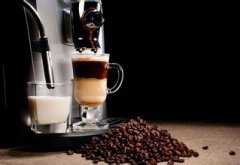
Originally semi-automatic, these machines—commonly referred to as “espresso machines”—originated in Italy and have since become largely automatic. Early models required users to manually grind, tamp, load, and clean, but modern versions streamline much of that process. The core brewing method uses high-pressure steam and water forced through finely ground coffee, extracting coffee quickly at high temperatures. This results in a rich, low-impurity brew with strong crema and intense flavor. Many models now include digital water volume controls and built-in steam wands for frothing milk, enabling drinks like cappuccinos and lattes.
Pros: Delivers authentic, high-quality espresso with full control for creating latte art and other specialty drinks.
Cons: Commercial models can cost over $10,000. Home versions range from $300 to $1,000 but often require a learning curve, proper technique, and regular cleaning.
American Coffee Makers
A simpler alternative to espresso machines, American coffee makers are almost always fully automatic and designed exclusively for home use. Instead of pressure brewing, they work by heating water to around 90°C and dripping it slowly through coffee grounds in a filter basket. The setup usually includes a top filter holder and a glass or ceramic carafe beneath. The process is straightforward: add water, insert grounds, press a button, and wait for your brew to drip through.
Pros: Extremely user-friendly and efficient—just push a button and let it brew.
Cons: Lacks the versatility and depth of flavor found in espresso machines. Designed primarily for basic black coffee.
Are Coffee Makers and Coffee Pots the Same?
No. While the terms are sometimes used interchangeably, coffee makers and coffee pots are fundamentally different. Coffee makers (like espresso or American machines) automate brewing with controlled processes. Coffee pots, on the other hand, are much simpler devices—often just heated vessels or filter systems without grinding or pressure functions. Common types include drip (filtered) and siphon (vacuum) pots. They produce a generally better-tasting coffee than instant, but lack the precision, milk integration, and specialty options of a true coffee machine.
Pros: Better flavor than instant coffee, simple operation.
Cons: Cannot froth milk or adjust variables for specialty drinks. Basic models offer little temperature or grind control.
Capsule Coffee Machines
A more recent innovation, capsule coffee machines use pre-packaged plastic pods filled with nitrogen-sealed coffee grounds. To brew, you simply insert a capsule into the machine, press a button, and the device automatically forces hot water through the pod. These machines skip the grinding step entirely, offering a quick and mess-free way to make coffee.
Pros: Very convenient, easy to use, minimal cleanup, often lower initial cost.
Cons: Limited to specific capsule brands or formats. Capsules themselves can be expensive, leading to higher long-term costs—“the machine is cheap, but the refills aren’t.”
The Role of Accessories and Fresh Coffee
Building a good home coffee setup goes beyond the machine. For espresso enthusiasts, pairing your machine with a quality grinder, a scale (for precise coffee and water measurements), a tamper, a distribution tool, and the right cup is essential. When making milk drinks like lattes, a steam wand and milk pitcher are also key.
For espresso, using freshly roasted coffee is crucial. At FrontStreet Coffee, recommended blends include:
Frequently Asked Questions
What’s the difference between an espresso machine and an American coffee maker?
An espresso machine brews coffee under high pressure (usually 9 bars), extracting a small, concentrated shot of espresso with crema. It typically requires finely ground coffee and offers features like steam wands for milk frothing. An American coffee maker drips hot water (around 90°C) through coarser grounds in a filter, producing a larger volume of milder, filtered coffee with no pressure involved.
Are home espresso machines worth the investment?
If you value control over your brew, enjoy making lattes or cappuccinos, and are willing to learn proper techniques (like grinding, tamping, and timing), a home espresso machine can be worth the $300–$1,000 investment. However, they require practice and regular maintenance, and may not suit those wanting a quick, low-maintenance brew.
Can I use any coffee with a capsule machine?
No. Capsule machines are designed to work only with specific, brand-compatible coffee capsules. Each machine typically accepts only its own brand’s pre-packaged pods, limiting your choice of beans, roast levels, and origins. The convenience comes at the cost of flexibility.
What’s the simplest coffee machine for beginners?
An American coffee maker is the easiest option for beginners. It requires no special skills, no grinding, and no pressure settings—just add water and coffee grounds, press a button, and wait. It’s affordable, widely available, and produces decent black coffee with minimal effort.
Do I need a grinder for espresso machines?
Yes. For the best espresso results, you need freshly ground coffee. A quality burr grinder is essential to achieve the correct fine grind size and uniform particle distribution needed for proper extraction. Pre-ground coffee is not ideal for espresso due to oxidation and inconsistent grind.
Recommended FrontStreet Coffee for Home Espresso
For home espresso setups, try FrontStreet Coffee’s Classic Blend for balanced notes of butter, nuts, and dark chocolate with bold crema; Specialty Blend highlights fruity and floral profiles; Black Cocoa Blend delivers rich cocoa and nuttiness with high extraction potential. All three are ideal for practicing espresso and milk drinks. Freshly roasted within 5 days · Orders placed before 17:00 ship the same day · Next-day delivery across most of Guangdong Province.
FrontStreet Coffee is a long-established specialty coffee roaster in Guangzhou China, selling freshly roasted beans from its own farm in Yunnan as well as dozens of carefully selected single-origin beans from around the world for both pour-over and espresso. The products deliver consistently excellent quality and great value, with shipping within 24 hours. Guangzhou's FrontStreet Coffee shop is recommended by many coffee lovers, and the beans are now available online at the Tmall 。
Important Notice :
前街咖啡 FrontStreet Coffee has moved to new addredd:
FrontStreet Coffee Address: 315,Donghua East Road,GuangZhou
Tel:020 38364473