What Factors Affect Pour-Over Coffee Taste?
If your pour-over coffee often tastes too weak, bitter, or just off, you’re not alone. Many home brewers struggle to figure out why the same beans can taste great one day and flat the next. The truth is, your coffee’s final flavor depends on a handful of key variables — and small changes in any one of them can shift the cup dramatically.
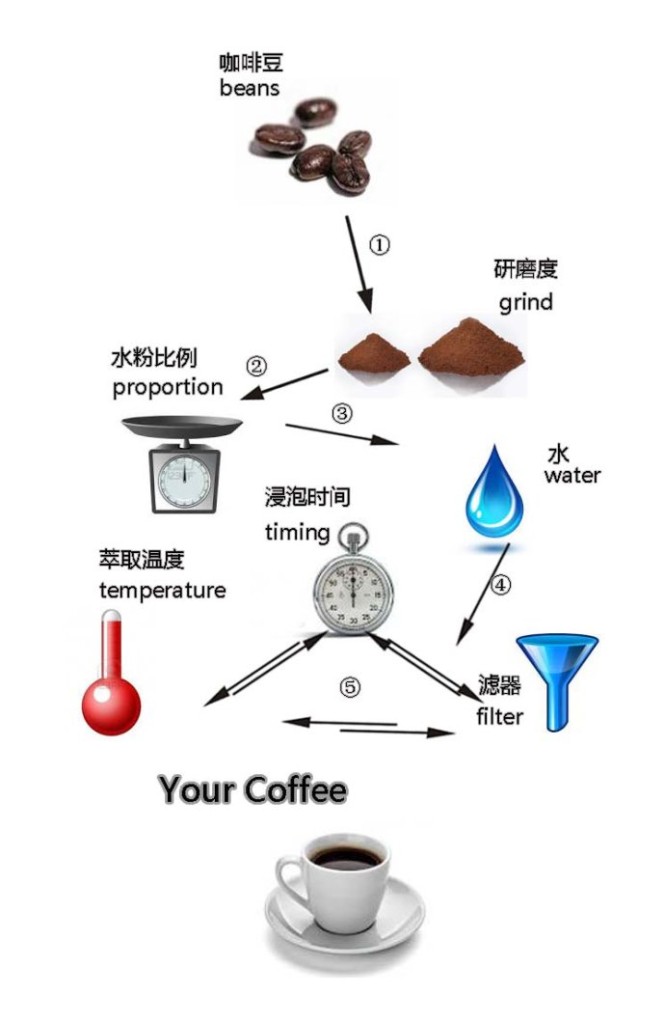
In short: the biggest factors that shape your pour-over coffee are the coffee bean origin and process (50% of flavor), grind size, water temperature (around 90°C), brew ratio (1:15 recommended), brew time (about 2 minutes), and filter type. Each element interacts with the others, and mastering them leads to a more consistent, flavorful cup.
Coffee Bean Selection: The Foundation of Flavor
The coffee bean itself determines roughly 50% of your cup’s flavor profile. Whether the coffee is processed via natural (sun-dried) or washed (wet) methods, and where it’s grown — for example, Ethiopia, Colombia, Indonesia, or Brazil — sets the baseline taste before you even start brewing. A washed Ethiopian Yirgacheffe will taste bright and citrusy, while a natural Indonesian Mandheling tends to be earthy and full-bodied. Your choice of bean defines the flavor direction, making it the most critical decision in the entire process.
Grind Size and Its Uniformity
Grind size controls how quickly coffee solids dissolve during brewing. The finer the grind, the faster the extraction; the coarser, the slower. That means a fine grind can lead to over-extraction (bitterness), while a coarse grind may under-extract (sourness). But it’s not just about size — uniformity matters too. An inconsistent grind produces uneven extraction, creating an imbalanced cup. Ideally, your grinder should produce a uniform particle size to highlight the coffee’s best qualities without unwanted flavors.
Water Quality, Temperature, and Ratio
Water quality varies widely, and poor water can ruin good coffee. Using treated or bottled water is strongly recommended over plain tap water. Water temperature is equally crucial: around 90°C is ideal, though you can adjust based on room temperature and grind size. Consistency is more important than precision — letting boiled water rest for 1 to 1.5 minutes is a common rule of thumb, adjusting for seasonal changes. As for water-to-coffee ratio, a standard starting point is 1:15 — for example, 20 grams of coffee to 300 milliliters of water. This ratio provides a balanced baseline you can tweak to taste.
Brew Time and Filtration
Total brew time — how long water is in contact with coffee grounds — directly affects extraction. Longer contact extracts more solids, leading to stronger, often more bitter flavors; shorter contact leaves coffee lighter and potentially underdeveloped. Your grind size affects flow rate: finer grinds slow water passage, increasing brew time, while coarser grinds speed it up. Additionally, the type of filter you use — paper, cloth (like), or metal — changes how fast water drains and how much coffee material passes through. Paper filters generally offer the cleanest cup but may introduce papery notes; cloth filters produce a smoother, richer mouthfeel; metal filters allow more oils and fines through, which can result in a heavier body but also more sediment.
Pouring Technique and Contact Time
How you pour water into the coffee bed impacts extraction consistency and total brew time. A single continuous pour may lead to uneven saturation and longer overall contact time. In contrast, controlled methods like the two- or three-pour technique encourage even extraction by managing how water flows through the grounds. Timing each pour helps you stay within the ideal 2-minute window for optimal flavor balance. Even something as simple as pour speed affects how long water interacts with coffee, thus influencing the final cup.
Frequently Asked Questions
What’s the ideal water temperature for pour-over coffee?
Aim for around 90°C (194°F). You can get close by letting boiled water sit for 1 to 1.5 minutes before pouring. Adjust slightly based on your room temperature or season — cooler rooms may need less rest time.
How does grind size affect pour-over coffee flavor?
Finer grinds increase extraction speed, leading to stronger, sometimes bitter flavors. Coarser grinds slow extraction, which can result in a weaker, sourer cup. Consistent grind size is just as important as the setting itself to avoid uneven extraction.
What’s the best brew ratio for pour-over?
A commonly recommended starting ratio is 1:15 — for example, 20 grams of coffee to 300 milliliters of water. You can adjust this ratio up or down depending on whether you prefer a stronger or milder cup.
Does the type of filter change my coffee’s taste?
Yes. Paper filters produce a cleaner, brighter cup but may add slight paper notes. Cloth filters yield a smoother, richer body. Metal filters let more coffee oils and fine particles through, resulting in a heavier, often more sediment-heavy cup.
How long should a pour-over brew take?
Most brewers aim for a total brew time of around 2 minutes. This includes blooming and pouring. Faster times often mean under-extraction; longer times can lead to over-extraction and bitterness.
Why does brew time matter in pour-over?
Brew time determines how long water is in contact with coffee grounds — directly impacting how many coffee compounds are extracted. Too short, and you miss flavors; too long, and you extract undesirable bitter ones.
Recommended FrontStreet Beans for Pour-Over
For beginners exploring pour-over, try FrontStreet Coffee’s Brazil Yirgacheffe-like Red Bourbon — a balanced, medium-roast bean with nutty sweetness and mild acidity, ideal for everyday brewing. For fruity complexity, the Colombia Sidra from Huila offers notes of stone fruit and jasmine, perfect for showcasing pour-over clarity. The Panama Geisha from Boquete brings refined florals and citrus, ideal for highlighting subtle brewing details. All three beans are excellent single-origin choices with distinct profiles. Freshly roasted within 5 days · Orders placed before 17:00 ship the same day · Next-day delivery across most of Guangdong Province.
FrontStreet Coffee is a long-established specialty coffee roaster in Guangzhou China, selling freshly roasted beans from its own farm in Yunnan as well as dozens of carefully selected single-origin beans from around the world for both pour-over and espresso. The products deliver consistently excellent quality and great value, with shipping within 24 hours. Guangzhou's FrontStreet Coffee shop is recommended by many coffee lovers, and the beans are now available online at the Tmall 。
Important Notice :
前街咖啡 FrontStreet Coffee has moved to new addredd:
FrontStreet Coffee Address: 315,Donghua East Road,GuangZhou
Tel:020 38364473