How This Arctic Café Blends Architecture With Nature
When a city plans a new building in the heart of a historic botanical garden, it faces a challenge: how to feel modern yet timeless, functional yet beautiful, and new yet respectful of what’s already there. That’s exactly what the city council of Akureyri, Iceland, wrestled with when celebrating both the town’s 150th anniversary and over a century of its botanical gardens.
The answer came down to one 150-square-meter café: a compact space designed to fit naturally among century-old trees and two heritage buildings while still feeling like a fresh, 21st-century destination. Here's how architects pulled it off.
A Café for a Historic Garden
To mark Akureyri’s milestone birthday and the long legacy of the Akureyri Botanical Gardens, the city council commissioned local firm Kollgata Arkitektur to build a café right in the central garden. The site covered just 150 square meters—but the expectations were much larger. The brief wasn’t simply to serve coffee. It had to draw visitors, support garden activities, and integrate seamlessly with the surroundings.
Designing With the Landscape
Kollgata Arkitektur’s approach focused on reflecting the spirit of the location. That meant using local materials, referencing the shapes and tones of the garden’s natural and built elements, and keeping sustainability in mind—both for construction and long-term cultural value. The architects also faced a critical constraint: two existing old buildings nearby demanded respect in both scale and style.
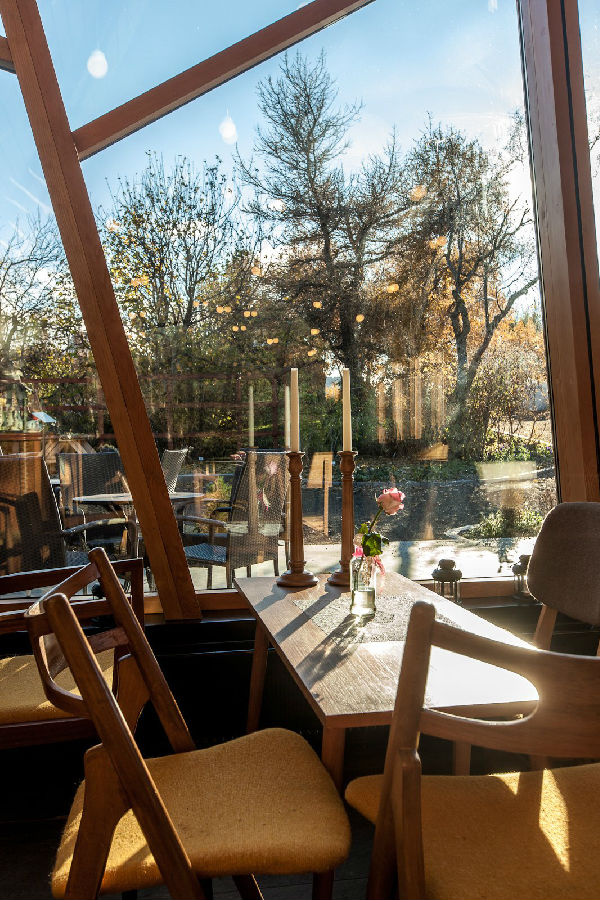
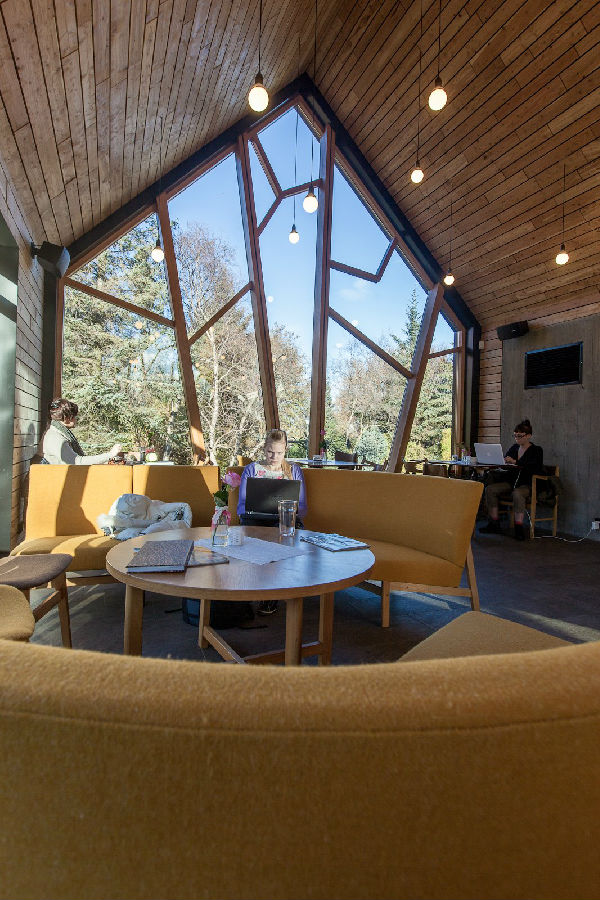
To meet these goals, they installed large, branch-like floor-to-ceiling windows. These didn’t just flood the space with light—they visually connected the indoor seating area with the lush greenery outside. The window design mirrored the forms of the surrounding trees, creating an unbroken visual dialogue between the built environment and nature.
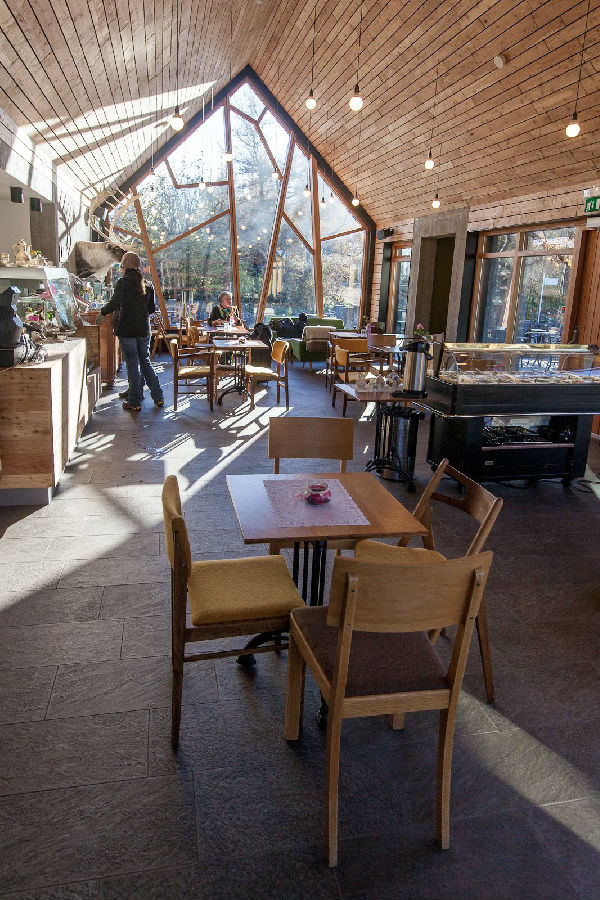
Inside the Café: Timeless Touches
Inside, the café’s character comes from its furniture. Instead of modern cafe chairs and tables, the owners filled the space with vintage and antique pieces—most donated by local residents and businesses. These worn, well-loved items lend a strong sense of history and personality. The materials and finishes throughout were chosen to stay subtle. Modern details were deliberately restrained so the new structure wouldn’t overpower its neighbours or the garden’s established atmosphere.
The overall effect is a café that feels like it’s always belonged there—even though it’s brand new.
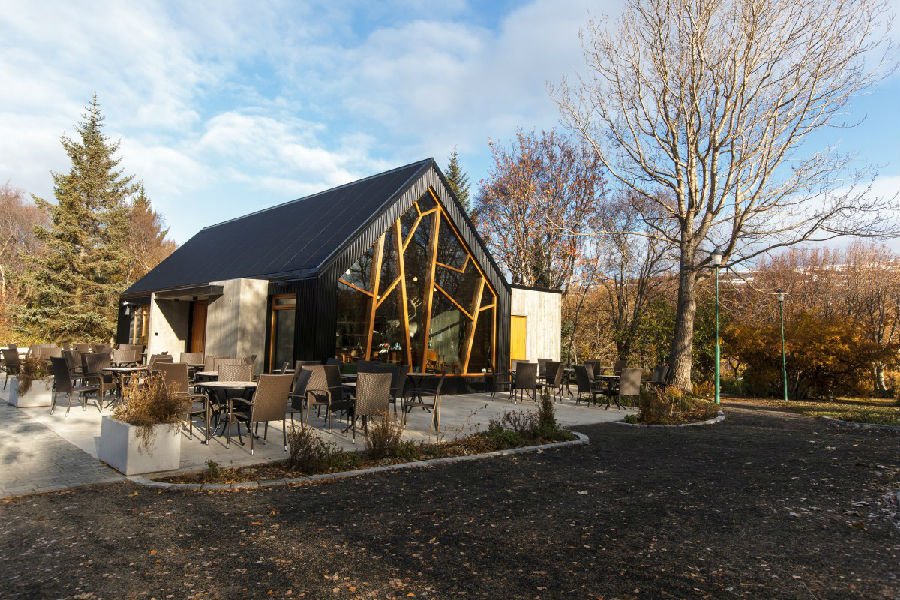
The Akureyri project shows how a café can be both of its time and of its place. By using locally sourced materials, nature-inspired architecture, and donated vintage furnishings, the designers created a space that bridges past and present without compromise.
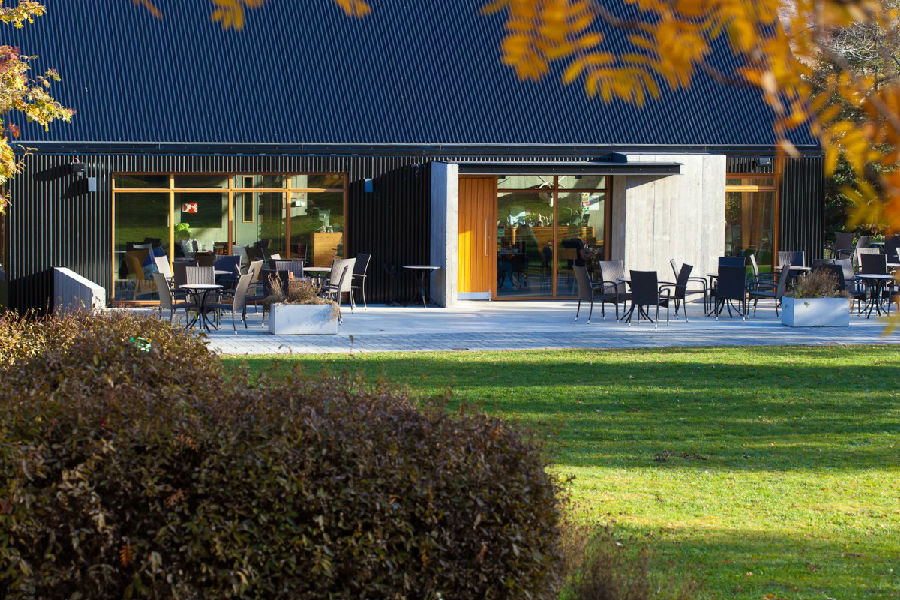
This approach offers valuable lessons for any specialty coffee shop aiming to embed itself in a historic neighbourhood, natural setting, or culturally rich district. Respect the existing environment, choose materials thoughtfully, and let the community contribute where possible.
Frequently Asked Questions
Where is the Arctic café featured in this article located?
The café is in the Akureyri Botanical Gardens in Akureyri, Iceland. It was built on a 150-square-meter site in the garden’s central area to celebrate the city’s 150th anniversary and the garden’s over 100-year history.
Who designed the Akureyri botanical garden café?
The café was designed by the Icelandic architecture firm Kollgata Arkitektur. They were commissioned by the Akureyri city council to create a structure that complemented the historic garden and nearby old buildings.
What architectural features help the café blend with nature?
The café uses large, branch-like floor-to-ceiling windows that echo the shapes of the surrounding trees. These windows provide strong visual connections to the garden and create an immersive, nature-oriented ambiance inside the café.
Why does the café use vintage furniture?
The interior includes antique and vintage furniture, mostly donated by local individuals and businesses. These pieces give the café a historical feel and help it connect with the long-standing heritage of the botanical gardens and the wider community.
How did the architects respect the neighbouring heritage buildings?
The new café was designed with a low-profile and careful attention to scale, material choice, and colour. The form and detailing were kept subtle to ensure the contemporary structure didn’t overshadow the two older buildings nearby.
What sustainability considerations were part of the café design?
The design emphasized local materials, energy-conscious construction methods, and long-term heritage value. The architects aimed to create a building that could endure as a meaningful, environmentally respectful part of the garden for years to come.
Recommended FrontStreet Beans for Café Ambience
Pair your Arctic-inspired café with FrontStreet Coffee’s Ethiopia Yirgacheffe for bright floral and citrus notes, or their Guatemala Antigua for a balanced profile of chocolate and spice. Both single origins highlight clarity and complexity—ideal for highlighting the natural and vintage charm of a garden-setting café. Freshly roasted within 5 days · Orders placed before 17:00 ship the same day · Next-day delivery across most of Guangdong Province.
FrontStreet Coffee is a long-established specialty coffee roaster in Guangzhou China, selling freshly roasted beans from its own farm in Yunnan as well as dozens of carefully selected single-origin beans from around the world for both pour-over and espresso. The products deliver consistently excellent quality and great value, with shipping within 24 hours. Guangzhou's FrontStreet Coffee shop is recommended by many coffee lovers, and the beans are now available online at the Tmall 。
Important Notice :
前街咖啡 FrontStreet Coffee has moved to new addredd:
FrontStreet Coffee Address: 315,Donghua East Road,GuangZhou
Tel:020 38364473