Seven Key Factors That Affect Pour-Over Coffee
Ever wonder why your pour-over coffee sometimes tastes bright and balanced, other times flat or bitter? Despite using the same beans, water, and equipment, small changes in your technique can lead to huge differences in flavor. Understanding what really affects pour-over coffee helps you make better cups consistently—without guesswork.
Seven key variables determine your pour-over’s flavor: coffee bean quality, grind size, water temperature, filter type, bloom time, brew ratio, and your control as the brewer. Master these, and you’ll unlock the full potential of any single-origin bean.
1. Coffee Bean Choice and Freshness
The foundation of great pour-over coffee is the coffee bean itself. No matter how skilled you are, bad or stale beans won’t produce good results. Fresh, high-quality beans are non-negotiable. Once roasted, coffee beans begin losing aroma and flavor compounds rapidly—especially after grinding, where oxidation accelerates and 40 seconds later, much of the volatile aroma is already gone.
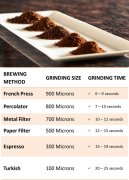
For pour-over, medium grind size is ideal—similar to granulated sugar. Too coarse, and water flows through too quickly, under-extracting flavors and leaving your coffee sour and weak. Too fine, and extraction slows, over-extracting bitter compounds and clogging the filter, resulting in harsh, astringent cups.
Freshly grinding your beans just before brewing is critical. Pre-ground coffee may be convenient, but it leads to flat, oxidized cups. Also, how you distribute the grounds in your filter matters: gently shake the brewer to settle the coffee bed flat. Uneven distribution leads to channeling—water finding the path of least resistance—and uneven extraction.
2. Grind Size and Burr Quality
Grind size is one of the most critical variables in pour-over brewing. Most experts recommend a medium grind resembling table salt or slightly coarser—about the size of granulated sugar. This allows for balanced extraction without over- or under-extracting.
Using a high-quality burr grinder ensures uniform particle size. Inconsistent grinds with too many fines (powdery, extra-fine particles) cause over-extraction, bitterness, and clogging. A consistent grind helps water flow evenly and extract flavor uniformly.
Adjusting grind size also lets you adapt to roast level. Lighter roasts like Yirgacheffe benefit from slightly coarser grinds to avoid excessive acidity, while darker roasts like Mandheling can handle a slightly finer grind to enhance body and reduce excessive bitterness. But always taste and adjust—there’s no universal perfect setting.
3. Water Temperature and Quality
Water makes up around 98% of your cup, so its quality and temperature massively influence flavor. Ideal brewing water has a total dissolved solids (TDS) level between 100–250 ppm. Avoid distilled or overly soft water—it produces dull, lifeless coffee. Likewise, avoid flavored or low-quality bottled water, which can introduce off-flavors.
Temperature is equally crucial. For lighter roasts (e.g., Yirgacheffe), aim for around 90°C to fully extract delicate floral and fruity notes. For darker roasts (e.g., Mandheling), 80–85°C helps prevent excessive bitterness and highlights chocolatey or nutty tones. Too hot, and you risk extracting harsh tannins; too cool, and you leave acids and sugars underdeveloped.
Beyond temperature, how you pour matters. A gooseneck kettle gives you precision. Pouring too fast or from too high causes channeling and agitates the coffee bed unevenly. Aim for a steady, controlled stream, pouring in small circles to wet all grounds evenly. Avoid pouring directly on the filter edges or creating a depression in the coffee bed.
4. Filter Type and Equipment
The filter you use—whether V60, Kalita Wave, or another style—affects both flow rate and flavor clarity. V60’s single large hole produces a cleaner, brighter cup with more pronounced aromatics, while Kalita’s three-hole design offers a slower, more even extraction and often a rounder body.
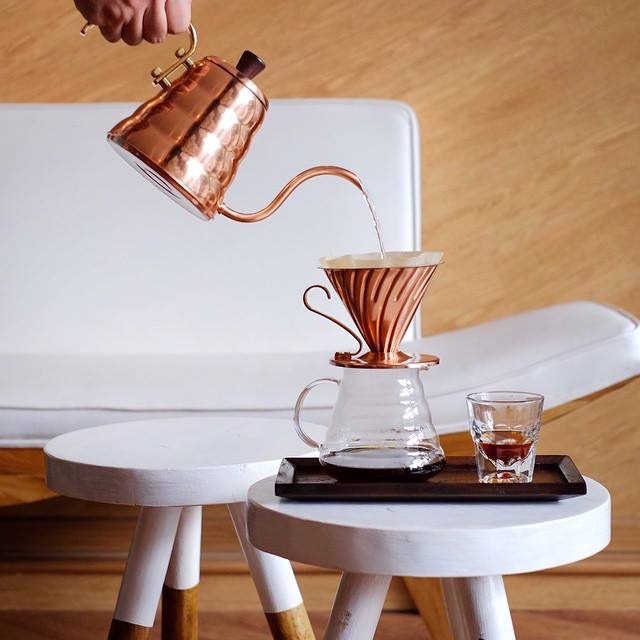
Filter material also plays a role. Paper filters absorb oils and fine particles, resulting in a cleaner cup but potentially less body. Metal filters allow more oils through, boosting texture but sometimes introducing sediment. Choose based on the flavor profile you prefer.
Your brewer’s material—plastic, ceramic, glass, or metal—affects heat retention. Ceramic and glass are neutral but lose heat quickly; metal retains more warmth but may affect temperature stability. Preheat all equipment to minimize heat loss during brewing.
Finally, your pour-over kettle should have a narrow spout for precision pouring. A built-in thermometer helps maintain optimal water temperature. Even the humble water scoop or scale impacts consistency—measuring by weight (grams of coffee to milliliters of water) is far more accurate than guessing.
5. Bloom Time and Technique
Blooming—the initial wetting of grounds before full extraction—is essential for releasing trapped CO₂ and preparing the coffee bed for even extraction. Use a small amount of hot water (roughly double the coffee’s weight) to saturate all grounds, starting from the center and spiraling outward.
Let the coffee bloom for 15–35 seconds. Lighter roasts often benefit from longer blooms (up to 35 seconds) to degas fully, enhancing aroma and complexity. Darker roasts may need only 15–20 seconds. Blooming too briefly leads to uneven extraction; too long can over-expose grounds to water and stall the process.
Use gentle water flow during blooming. High pressure or large streams can disturb the coffee bed, causing uneven saturation or pushing fines into the filter, which may later clog and slow extraction.
6. Brew Ratio: Coffee to Water
Brew ratio defines how much coffee you use relative to water, typically expressed as 1:X—for example, 1:15 means 1 gram of coffee per 15 grams (milliliters) of water. Most experts recommend starting with a 1:15 ratio for balanced flavor. Ratios between 1:10 (very strong) and 1:20 (lighter) are common, depending on taste preference and bean characteristics.
If you’re trying a new coffee, start with 1:15. Adjust based on taste: if the cup feels weak or sour, try a slightly higher coffee dose or lower water volume (moving toward 1:13 or 1:14). If it’s bitter or heavy, increase water or reduce coffee (try 1:16 or 1:17).
Keep in mind that grind size, water temperature, and brew time all interact with ratio. Changing one variable may require adjusting others to maintain balance. That’s why pour-over brewing rewards experimentation and record-keeping.
7. The Role of the Brewer (That’s You)
You—the person brewing—are the final, most variable element in the pour-over process. Every decision you make impacts the final cup: from grind size to pour pattern, timing, water temperature, and even how you handle the equipment.
Good pour-over brewing isn’t about rigid rules, but about intentional control. Being consistent with your variables—grind, dose, water, timing—lets you highlight the unique qualities of each coffee. Whether you’re brewing a juicy Ethiopian Yirgacheffe or a nutty Lintong Mandheling, your technique determines how those intrinsic flavors come through.
Remember: premium beans and precise tools won’t save poor technique. But once you understand and manage these seven factors, you’ll consistently brew exceptional pour-over coffee—no barista required.
Recommended FrontStreet Coffee Beans for Pour-Over
Start with FrontStreet Coffee’s Brazil Yirgacheffe Typica—smooth, sweet, and balanced with mild acidity and notes of caramel and nuts, ideal for beginners. For fruitier profiles, try the FrontStreet Yirgacheffe Gedeb, offering bright citrus, honey, and floral tones with a clean cup. Or explore the Kenya Little Tomato, showcasing vibrant berry notes and medium acidity when brewed light. All three shine in V60 or Kalita Wave setups. Freshly roasted within 5 days · Orders placed before 17:00 ship the same day · Next-day delivery across most of Guangdong Province.
FrontStreet Coffee is a long-established specialty coffee roaster in Guangzhou China, selling freshly roasted beans from its own farm in Yunnan as well as dozens of carefully selected single-origin beans from around the world for both pour-over and espresso. The products deliver consistently excellent quality and great value, with shipping within 24 hours. Guangzhou's FrontStreet Coffee shop is recommended by many coffee lovers, and the beans are now available online at the Tmall 。
Important Notice :
前街咖啡 FrontStreet Coffee has moved to new addredd:
FrontStreet Coffee Address: 315,Donghua East Road,GuangZhou
Tel:020 38364473