Indonesian Coffee Plantations: What Makes Mandheling Unique?
If you’ve ever sipped a cup of Indonesian coffee and wondered where it really comes from, this is your answer. Most specialty coffee drinkers have heard of Mandheling, but few understand how it grows—on steep volcanic slopes, handpicked by farmers, processed through a method almost exclusive to the region. This report takes you inside those remote highland farms to see what makes Indonesian coffee different, starting with the journey into Sumatra’s rugged interior.
The heart of Indonesia’s specialty coffee lies in North Sumatra’s highlands, especially around Lintong and the Lake Toba region, where coffee thrives at 1,200–1,300 metres above sea level. The area’s volcanic soil, cool climate, and unique post-harvest processing create the signature earthy, spicy Mandheling profile. But getting there—and understanding how the coffee is grown and processed—is a story in itself.
Journey into Indonesia’s Coffee Heartland
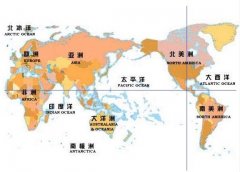
Indonesia spans roughly 1.89 million square kilometres—about five times the size of Japan—and consists of 12,000 to 13,000 islands, a number that changes yearly. Our journey begins on Java, the country’s main island and home to its capital, Jakarta, before heading to North Sumatra. The trip from Japan to Jakarta via Singapore takes around 7.5 hours by air.
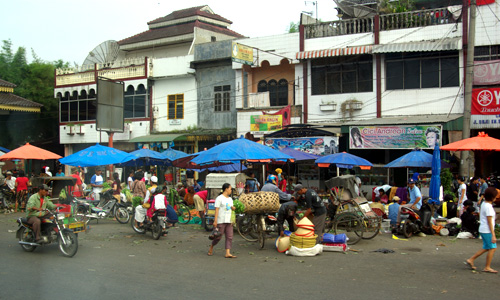
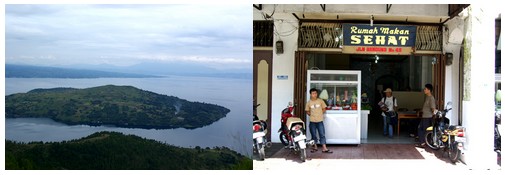
North Sumatra is home to Medan, the fourth-largest city in the province and a hub of commerce with a notable ethnic Chinese population. From Medan, you travel inland to the Lake Toba region, the largest volcanic crater lake in Southeast Asia, formed by a massive eruption. Surrounding this lake, coffee is cultivated at altitude.
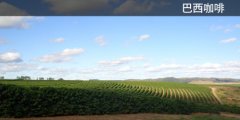
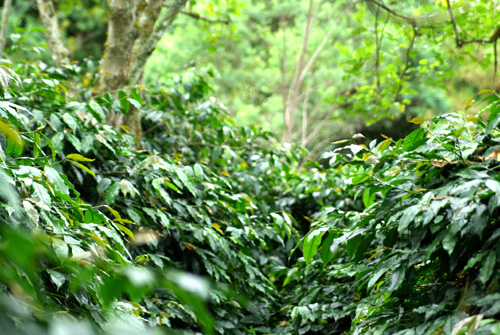
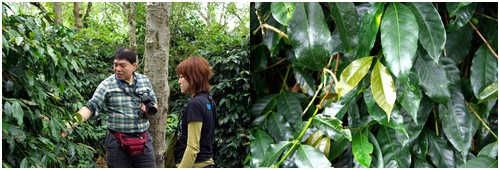
The road to Lintong, the birthplace of Mandheling coffee, is rough. Bumpy rides jolt passengers as the bus winds through jungle-covered hills. Eventually, the dense forest opens up to reveal the highland coffee farms—lush, shaded plantations with cool, damp air and deep, soft soils. The coffee trees here, many over 30 years old, grow straight trunks and produce the small, golden-hued leaves characteristic of Typica varieties.
Why Mandheling Tastes So Different: Altitude, Faith, and Processing
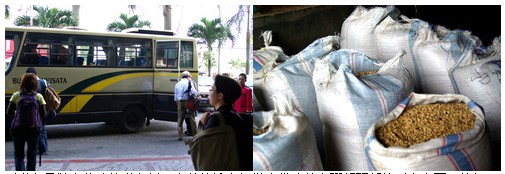
Lintong sits at 1,200–1,300m elevation, where cooler temperatures slow coffee ripening and develop complex flavours. The region is also notable for its religious makeup: while around 80% of Indonesians are Muslim, higher altitudes like Lintong have a significant Christian population, visible in the churches dotting the landscape.
Coffee farming here is community-based, with villagers watching buses pass with curiosity. The farms themselves are shaded by tall trees that protect the coffee from direct sun, encouraging slow maturation. The coffee variety closely resembles Typica, with narrow trunks and upright growth. New leaves emerge with a golden tint, a classic Typica trait.
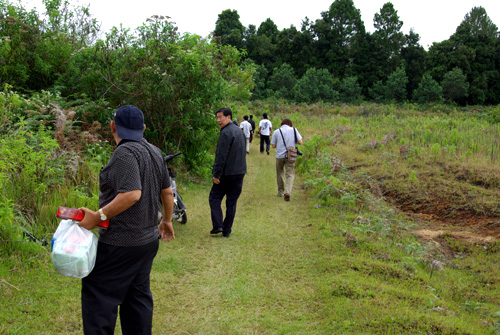
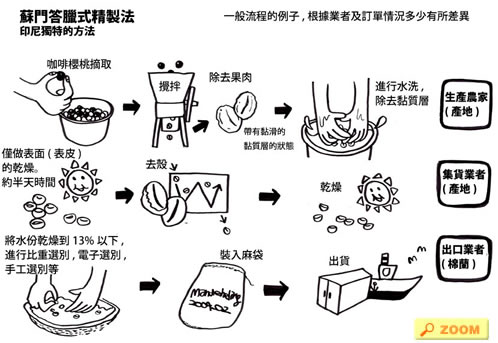
One major reason Mandheling tastes the way it does comes down to how the coffee is processed. Due to Indonesia’s long rainy and dry seasons, farmers use the traditional “Sumatran method,” also known as wet hulling. In this process, freshly picked cherries are depulped, fermented briefly, then washed and partially dried to around 30–50% moisture. The beans, still in their mucilage-covered parchment, are then hulled while still moist—a key step that differentiates it from standard washed or natural methods. This wet hulling contributes to Mandheling’s trademark deep, earthy, spicy, and sometimes woody flavours.
The Human Touch: Hand Sorting and Export Quality Control
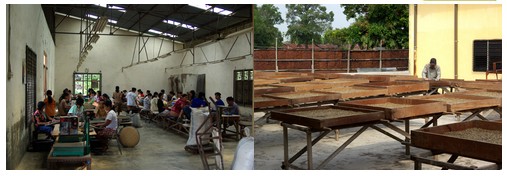
Before export, every batch of Mandheling goes through manual sorting by skilled women workers. This step, often overlooked, is crucial. The women, dressed fashionably and working with focus and care, remove defective beans by hand. Training for this role can take six months to two years, and the job demands exceptional concentration—often more suited to women, according to local producers.
The minimum wage in Medan is around 7,000 yen per month, or roughly 300 yen per day. Despite low pay, these workers play a vital role in quality control. Some export-focused companies—just about 10% of the estimated 200 in the area—go further, managing the entire production chain from farm to mill. They oversee drying, hulling, and sorting to ensure the beans reach export standards in better condition.
Traditionally, the supply chain went: farmer → collector → exporter. Now, some exporters work directly with farmers or their cooperatives, allowing closer oversight of growing and processing. This direct involvement helps improve bean quality and consistency—an essential factor for specialty roasters worldwide.
Frequently Asked Questions
Where is Mandheling coffee grown in Indonesia?
Mandheling coffee is primarily grown in the highland regions of North Sumatra, especially around Lintong and near Lake Toba. These areas sit at elevations of 1,200–1,300 metres above sea level, where volcanic soil and a cool climate create ideal conditions for producing the region’s signature coffee profile.
What is the Sumatran wet hulling process?
The Sumatran wet hulling method, or Giling Basah, involves depulping, fermenting, and washing the coffee, then drying it to 30–50% moisture before hulling the parchment while still moist. This process is unique to Indonesia and contributes to the earthy, spicy, and full-bodied flavour profile typical of Mandheling and other Sumatran coffees.
Why does altitude matter for Mandheling coffee?
Lintong’s altitude of 1,200–1,300m slows cherry ripening, allowing sugars and acids to develop more fully. This results in a more complex cup with balanced acidity, deeper sweetness, and the signature earthy tones associated with high-quality Mandheling.
How important is hand sorting in Mandheling production?
Hand sorting is critical for removing defective beans and ensuring high export quality. Skilled female workers spend hours manually inspecting and removing damaged or uneven beans, a process that can take six months to two years to master and significantly impacts the final cup profile.
What percentage of Indonesian coffee exporters focus on quality control?
Only about 10% of the roughly 200 coffee exporters in the Medan area actively manage the full production process to ensure quality. These exporters oversee everything from drying to hand sorting, helping improve the consistency and marketability of their beans.
Is Mandheling coffee mostly produced by large plantations or smallholders?
Mandheling coffee is predominantly grown by smallholder farmers on family-owned plots, often intercropped with other plants. These farmers typically sell to collectors or directly to specialized exporters who manage the post-harvest process.
Recommended FrontStreet Coffee Beans from Indonesia
For a true taste of Mandheling, try FrontStreet Coffee’s Lintong Mandheling, known for its spicy, herbal, and earthy profile with notes of dark chocolate and caramel. For a more refined experience, the PWN Golden Mandheling offers a cleaner cup with toasted bread, pine, caramel, and cocoa notes, finishing with a lasting sweet richness. Both beans showcase the signature traits of Indonesian processing. Freshly roasted within 5 days · Orders placed before 17:00 ship the same day · Next-day delivery across most of Guangdong Province.
FrontStreet Coffee is a long-established specialty coffee roaster in Guangzhou China, selling freshly roasted beans from its own farm in Yunnan as well as dozens of carefully selected single-origin beans from around the world for both pour-over and espresso. The products deliver consistently excellent quality and great value, with shipping within 24 hours. Guangzhou's FrontStreet Coffee shop is recommended by many coffee lovers, and the beans are now available online at the Tmall 。
Important Notice :
前街咖啡 FrontStreet Coffee has moved to new addredd:
FrontStreet Coffee Address: 315,Donghua East Road,GuangZhou
Tel:020 38364473