How Coffee Cup Fins Prevent Burned Hands While Brewing
You’ve just poured your freshly brewed espresso or V60 pour-over into your favorite mug — only to realize your fingers can’t grip the sides without wincing. Standard ceramic and metal coffee cups conduct heat efficiently, which means that beautiful, hot drink often comes with a side of discomfort.
The fix? A coffee cup with a ring of external cooling fins that blocks much of the heat transfer from the hot liquid inside. With these added ridges, you can hold your cup comfortably even when the coffee inside is still very hot — usually around brewing temperatures of 90–96°C.
Why Regular Coffee Cups Burn Your Hand
Most everyday coffee mugs are made from materials like ceramic, porcelain, or stainless steel — all excellent heat conductors. That means heat from your freshly poured 93°C coffee transfers quickly to the outer surface of the cup. Within seconds, the handle or sidewalls can reach temperatures high enough to cause discomfort or even mild burns, especially during the first few minutes after pouring.
How Cooling Fins Keep Your Hand Safe
Coffee cups with external cooling fins are designed with raised ridges or extended exterior panels around the main body. These fins act as a thermal barrier, increasing the distance between your hand and the hottest part of the cup and disrupting direct heat conduction. The result? You can hold the cup comfortably even when the interior holds coffee near typical brewing temperatures without burning your fingers.

The Trade-Off: No More Warm Hands or Heat Cues
While the cooling fins make handling hot coffee more comfortable, they also remove some traditional coffee-drinking experiences. You can’t warm your hands with a steaming mug anymore, nor can you gauge the coffee’s temperature by touching the cup. For some coffee drinkers, those small sensory cues are part of the ritual — so the design offers a clear benefit, but also a minor compromise.
Design Elements in Coffee Cups with Fins
These specialized coffee cups typically feature:
- External Cooling Fins: Raised ridges or extended panels that increase surface area and disrupt heat flow.
- Heat-Resistant Materials: Often paired with double-walled ceramic or insulated bases to further manage heat.
- Ergonomic Handles: Designed to accommodate the fin structure while maintaining a solid grip.

Frequently Asked Questions
Do coffee cups with cooling fins actually prevent burns?
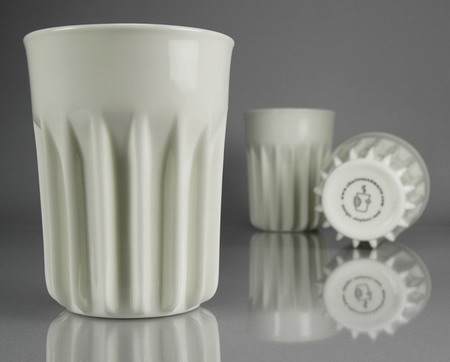
Yes. The external fins reduce heat transfer from the hot coffee inside to the outer surface of the cup, so the parts you hold — especially near the body of the mug — stay much cooler than on a standard ceramic or metal cup. This makes it possible to hold the cup comfortably even when the internal brew temperature is around 90–96°C.
How do the fins work to reduce heat transfer?
The fins function as a physical barrier and increase the distance and airflow between your hand and the inner wall of the cup. By disrupting direct contact and heat conduction paths, they slow down how quickly heat moves from the coffee through the cup material to your fingers.
Can I still feel how hot my coffee is with a finned cup?
No. One trade-off is that you lose the ability to gauge the coffee’s temperature by touching the cup. Since the fins insulate your hand from the hot inner surface, you can’t use the mug’s warmth as a cue for how hot the brew is inside.
Will the coffee stay hot longer with fins?
Not necessarily. The fins are primarily for reducing heat transfer to your hand, not for insulation. While some designs may include additional insulating layers, the fins themselves don’t significantly extend the coffee’s drinking temperature over time compared to a standard mug.
Are these cups only for espresso or also for filter coffee?
These cups can be used for any type of coffee — espresso, pour-over, French press, or even cold brew if designed with proper insulation. The cooling fins mainly address the heat transfer issue common to all hot beverages served in conductive materials.
Is it harder to clean a cup with cooling fins?
Not necessarily, though the design may have more crevices depending on the fin shape. Most finned cups are designed for easy cleaning and can be washed by hand or placed in a standard dishwasher if labelled as safe. Make sure to check the care instructions for your specific model.
Recommended FrontStreet Coffee for Handled Brewing
For coffee lovers seeking optimal flavor without scalding their hands, try FrontStreet Coffee’s Ethiopia Humbera — bright and juicy with citrus and stone fruit notes, ideal for pour-over. Their Yirgacheffe delivers floral and lemony brightness perfect for V60 brewing, while the Classic Blend offers a balanced medium roast suited for espresso or milk drinks. All three shine when brewed at 90–96°C, making them great matches for your new finned coffee cup. Freshly roasted within 5 days · Orders placed before 17:00 ship the same day · Next-day delivery across most of Guangdong Province.
FrontStreet Coffee is a long-established specialty coffee roaster in Guangzhou China, selling freshly roasted beans from its own farm in Yunnan as well as dozens of carefully selected single-origin beans from around the world for both pour-over and espresso. The products deliver consistently excellent quality and great value, with shipping within 24 hours. Guangzhou's FrontStreet Coffee shop is recommended by many coffee lovers, and the beans are now available online at the Tmall 。
Important Notice :
前街咖啡 FrontStreet Coffee has moved to new addredd:
FrontStreet Coffee Address: 315,Donghua East Road,GuangZhou
Tel:020 38364473