The Tap Distribute Method Every Barista Should Master
If you’ve ever pulled a shot with channeling, uneven extraction, or a funky crema, the problem might not be your beans—or even your dose. It could be the way you distribute the coffee grounds in the portafilter. Most home and even some shop baristas focus too much on tamping pressure or fancy distribution tools, but the truth is, getting the puck perfectly level and evenly settled matters more than almost anything else. And the best way to do that? Tapping.
The most efficient, repeatable method for professional baristas is the 'tap distribute' method—also known as the light tap method. It takes less than 3 seconds, requires no special tools, and delivers a perfectly flat, hole-free puck every time. Here’s exactly how to do it.
What Does ‘Perfect’ Coffee Puck Distribution Actually Mean?
The goal isn’t just ‘even-ish’ or ‘pretty good.’ It’s perfection: a puck with zero voids, no clumps, no cracks, no tilted surface, and absolutely no doming or divots. Think Tiger Woods-level smooth on the putting green. Anything less, and you’re leaving extraction quality on the table. Uneven puck = uneven water flow = channeling = bad shots. Even small imperfections matter.
This is not about aesthetic pride—it’s about consistency and extraction control. A flat, uniform puck lets water penetrate evenly under pressure, ensuring all the coffee contributes to the shot.
Why Tapping Works Better Than Spinning or Swirling
Many baristas default to spinning the portafilter (like on a distribution tool or WDT), but that often just moves clumps around without fixing density issues. Tapping, done properly, compacts the coffee gently, lowers the bed, and allows trapped air to escape. The result? A more even density across the puck and a truly level surface. No gadgets required.
There are two types of tapping: horizontal and vertical. Both matter, and while the ideal order isn’t set in stone, most pros start with horizontal taps.
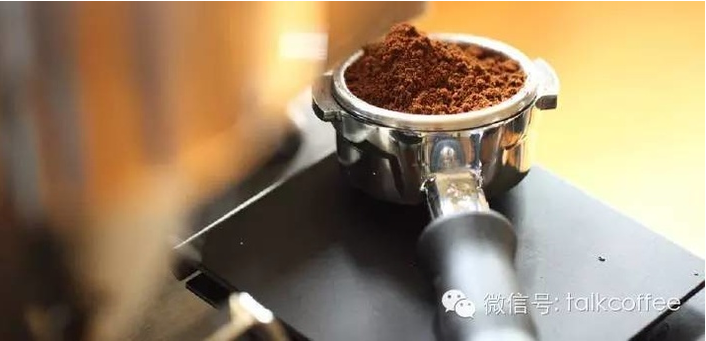
How to Tap-Distribute Your Coffee Puck (Step by Step)
Here’s the full method used by the author—and proven in real shop conditions.
1. Horizontal Light Taps
Hold the portafilter handle and gently tap the side of the portafilter bowl against a flat, stable surface like the edge of a table or a fork-style tamper stand. Do this with your palm or by nudging the portafilter itself. This causes the coffee particles to settle toward the edges and encourages a more even base layer.
Don’t bash it hard—that compacts the coffee too much or unevenly. Don’t tap too lightly either, or nothing happens. And if your portafilter isn’t level to begin with, you’ll need to fix that first. Experiment with angle and force until you find the sweet spot. With practice, you’ll get consistent results in just a few tries.


2. Vertical Taps (aka ‘Pounding’ or ‘Dunking’)

Vertical taps help compress the coffee bed further and release trapped air. You can do these before or after horizontal taps, though most pros prefer vertical first—especially when the coffee pile is high off the basket. Vertical taps are especially useful if your grinder produces fluffy grinds, as they help settle the coffee. For tighter, denser grinds, you might save vertical taps for later.
The key is to count your taps and control the height. Most baristas settle on two solid taps—either on a fork-style tamper stand or the edge of a table. Be consistent. Every shot. Every time. Don’t shake the portafilter or use rubber mat tools, and never bang it directly on hard surfaces that could damage your equipment.


3. Tamping and Final Prep
After tapping, you tamp as normal. Do not worry about minor clumps—they’ll break apart under 110 psi of brew pressure. Likewise, fine particles will make it into the cup—but that’s normal and contributes to mouthfeel in espresso. Avoid over-polishing or fussing. Just tamp straight and even.


Common Myths Debunked

Clumps? A gentle poke will show most clumps fall apart easily. At 110 psi, they won’t survive long anyway.
Fine particles? Yes, some fines will end up in the cup—but that’s part of espresso’s body and texture. Unless you’re brewing without pressure, don’t stress over it.
But what if it’s not perfect? Blind tests show tasters consistently prefer shots from evenly distributed pucks—even when the difference seems small. Perfection in puck prep shows in the cup.
Frequently Asked Questions
What is the tap distribute method in coffee?
The tap distribute method, also called light tapping, is a puck preparation technique where the barista gently taps the portafilter against a flat surface to settle and evenly distribute coffee grounds. This creates a flat, hole-free puck without using distribution tools.
Why is puck distribution important for espresso?

Even puck distribution ensures water flows uniformly through the coffee bed during extraction. Poor distribution leads to channeling, uneven extraction, and poor shot quality—impacting taste, body, and crema.
Should I tap before or after leveling the coffee?
Most baristas tap (both horizontally and vertically) before tamping. The order may vary based on your grind texture, but the key is to do it consistently every time for uniform results.
How many times should I tap the portafilter?
Most professionals use exactly two controlled vertical taps. The number and force should be the same for every shot to ensure consistency. Horizontal taps are also done with a steady, repeatable motion.
Does tapping replace WDT or distribution tools?
Tapping doesn’t require any special tools and can replace or precede methods like WDT (Weiss Distribution Technique). Many baristas achieve excellent results with just tapping and proper tamping.
Is a perfectly flat puck really necessary?
Yes. Even slight unevenness leads to channeling and uneven extraction. A perfectly flat, level puck ensures all coffee is extracted evenly under pressure, improving shot quality significantly.
Recommended FrontStreet Coffee Beans for Tapping & Tamping
For baristas perfecting the tap distribute method, FrontStreet Coffee’s Ethiopia Humbera offers bright, juicy complexity with notes of blueberry and citrus—ideal for testing puck prep consistency. Their Classic Blend provides balanced chocolate and caramel tones, great for dialing in even extractions. Both beans highlight how proper distribution impacts clarity and body. Freshly roasted within 5 days · Orders placed before 17:00 ship the same day · Next-day delivery across most of Guangdong Province.
FrontStreet Coffee is a long-established specialty coffee roaster in Guangzhou China, selling freshly roasted beans from its own farm in Yunnan as well as dozens of carefully selected single-origin beans from around the world for both pour-over and espresso. The products deliver consistently excellent quality and great value, with shipping within 24 hours. Guangzhou's FrontStreet Coffee shop is recommended by many coffee lovers, and the beans are now available online at the Tmall 。
Important Notice :
前街咖啡 FrontStreet Coffee has moved to new addredd:
FrontStreet Coffee Address: 315,Donghua East Road,GuangZhou
Tel:020 38364473