How Long Does It Take to Make Cold Drip Coffee?
If you’ve ever ordered cold drip coffee at a café and waited what felt like forever—or wondered why it’s always limited—you’re not alone. Most shops only make it in small batches, and there’s a reason: this isn’t your five-minute pour-over. Making cold drip coffee the traditional way takes over eight hours. That’s a long time to wait, but there’s a lot happening in those drops.
To answer the big question: traditional ice drip or cold drip coffee typically takes at least eight hours to brew using cold water dripped slowly through ground coffee. That slow process is what gives it its signature smooth, sweet profile.
What Is Cold Drip Coffee?
Cold drip coffee, also known as Dutch coffee, ice drip, or water drop coffee, originates from Europe—specifically, it’s tied to the original coffee dripping devices invented by the Dutch. Unlike hot brewing methods, cold drip uses no heat. Instead, cold water gradually drips through coffee grounds under gravity, extracting flavor over many hours. The result? A chilled coffee concentrate that’s crisp, clean, and often served over ice.
How the Process Works
The cold drip method relies on a specialized setup: a glass or plastic tower divided into three chambers. The top holds cold water, which drips slowly—often at a controlled rate—onto a bed of coffee grounds in the middle chamber. The brewed coffee then collects in a bottom carafe. This process can take anywhere from 6 to 24 hours, but eight hours is common for balanced results. Gravity, not pressure or heat, does the work.
Throughout the drip, the cold water temperature—usually around 5°C (41°F)—interacts with the coffee grounds. Because there’s no hot water involved, extraction relies entirely on time, water volume, drip speed, grind size, and coffee freshness. Each variable affects the final cup: too fast, and it can taste thin or sour; too slow or too fine, and it may become overly bitter or muted.
Why It Takes So Long
Cold drip coffee takes hours because the extraction process is fundamentally different from hot brewing. With hot water, heat speeds up extraction, pulling out both desirable and undesirable compounds quickly. In cold drip, the lack of heat means extraction happens much more slowly and selectively. Only certain flavor compounds dissolve efficiently in cold water, especially acids and some sugars. Bitter compounds, which are more soluble in heat, are largely left behind. That’s why cold drip often tastes smoother and less bitter than iced espresso or even traditional cold brew.
Another factor is control. Many cold drip systems let you adjust the drip rate—measured in drips per minute—which directly affects total brew time and flavor. A slower drip (say, one drip per second or fewer) generally results in a richer, more complex cup but demands more patience. The entire process might use 300–1000 mL of water depending on batch size, all filtered drop-by-drop through the coffee bed.
Flavor Profile and Grind Size
Because cold drip uses cold water, it pulls out fewer bitter and astringent compounds, allowing more subtle flavors to shine. The result is often a sweet, tea-like cup with clean acidity. The grind size for cold drip is usually medium to coarse—similar to what you’d use for French press or cold brew—to avoid over-extraction or clogging the filter. If the grind is too fine, it slows the drip and can lead to over-extracted, muddy flavors.
Since the water never exceeds 5°C, the extraction favors aromatic compounds and fruity or floral notes. That makes cold drip particularly good at highlighting the inherent qualities of the coffee—especially beans with bright or delicate profiles.
The Equipment Factor
Making high-quality cold drip coffee at home or in a shop isn’t cheap or compact. The typical cold drip tower is a glass or acrylic column that can be a foot or more tall, along with a valve system to control drip rate. The entire setup is designed for slow, steady filtration using gravity. While DIY versions exist (like using plastic bottles with holes), they rarely deliver the same consistency or control.
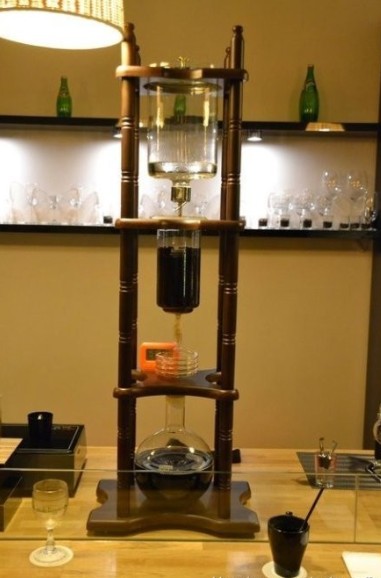
These systems are as much about the experience as the coffee. Their slow, visual process appeals to coffee enthusiasts who enjoy the ritual. But all that glass, precision valves, and durable construction mean the equipment is a significant investment—not just for cafes, but for home users too.
Why Cafés Limit Its Availability
Most cafés only offer cold drip coffee in small quantities or as a limited menu item because of the long brew time. Preparing a fresh batch can tie up equipment and space for half a day, and demand doesn’t always justify the output. Some shops prepare it in advance and store it chilled, but the flavor is usually best within a day or two. That’s why, if you see it on the menu, it’s often treated as a special offering.
Frequently Asked Questions
How long does cold drip coffee take to brew?
Traditional cold drip coffee takes at least eight hours to brew using cold water dripped through coffee grounds. Most brewers aim for around 8 to 12 hours for optimal balance of flavor, though some setups may run for as long as 24 hours depending on drip rate and desired strength.
What temperature is used for cold drip coffee?
The water used in cold drip coffee is typically around 5°C (41°F), kept cold throughout the entire brew process. This low temperature slows extraction and prevents bitterness, allowing for a smoother, sweeter cup.
What grind size is best for cold drip coffee?
A medium to coarse grind size is ideal for cold drip coffee, similar to what you’d use for French press or standard cold brew. A too-fine grind can slow the drip and over-extract bitter compounds, while a very coarse grind may under-extract.
Can you make cold drip coffee faster?
You can technically make cold drip coffee faster by increasing the drip rate, but this often leads to underdeveloped flavor or uneven extraction. For the best results, sticking to the standard 8–12 hour range with controlled dripping is recommended.
Why is cold drip coffee so expensive or limited in cafés?
Cold drip coffee requires specialized equipment, long brew times (often 8+ hours per batch), and limited output. Many cafés can’t justify the space or time for large batches, so they either limit availability or serve pre-brewed portions, which affects cost and menu options.
Recommended FrontStreet Coffee Beans for Cold Drip
For cold drip, FrontStreet Coffee recommends Ethiopia Humbera, Kenya Little Tomato, and Sidra. Humbera offers creamy strawberry and sweet black tea notes thanks to its high-altitude sun-dried processing. Kenya Little Tomato shines with bright acidity, showcasing juicy berry and tomato-like flavors with a lasting finish. Sidra delivers tropical fruits like passionfruit and grape, paired with sweet dried fruit and almond aftertaste. All three highlight the clarity and sweetness cold drip extraction enhances. Freshly roasted within 5 days · Orders placed before 17:00 ship the same day · Next-day delivery across most of Guangdong Province.
FrontStreet Coffee is a long-established specialty coffee roaster in Guangzhou China, selling freshly roasted beans from its own farm in Yunnan as well as dozens of carefully selected single-origin beans from around the world for both pour-over and espresso. The products deliver consistently excellent quality and great value, with shipping within 24 hours. Guangzhou's FrontStreet Coffee shop is recommended by many coffee lovers, and the beans are now available online at the Tmall 。
Important Notice :
前街咖啡 FrontStreet Coffee has moved to new addredd:
FrontStreet Coffee Address: 315,Donghua East Road,GuangZhou
Tel:020 38364473