How to Control Coffee Roast Degree by Senses and Tools
If you’ve ever roasted coffee at home or watched a roaster pull beans from the drum, you’ve likely wondered: how do they know when it’s done? Unlike baking or cooking with fixed recipes, coffee roasting is more intuitive. Professional roasters—and home enthusiasts—don’t rely solely on machines. They use their eyes, ears, nose, and experience to decide when a batch hits the right roast degree.
The simplest answer? There’s no universal formula. Roast level is judged by sensory input—smell, color, cracking sounds—and adjusted over repeated trials. Each bean type, roast machine, and batch behaves differently. With practice, you learn to recognize the signs: a shift in aroma, a certain bean color, the second crack timing. That’s how you control roast degree.
Why Your Roast Feels Unpredictable
Different roast machines produce different internal conditions—even if the outside looks similar. Sensors, timers, and profiles from one roaster can’t simply be copied to another. Much like cooking, professional results come from repetition. The more you roast, the better you get at recognizing when a coffee hits your desired roast level, whether that’s a light City or a deep French.
1. Using Time and Trial-and-Error
Some entry-level roasters, like the I-Roast, let you set roast time or select from preset roast levels. In this method, you run a few roasts, note the outcomes, and adjust time accordingly. If your coffee tastes too sour or bright, extend the roast time slightly for the next batch. If it’s too bitter or astringent, shorten the roast. This trial-and-error process helps you dial in your preferred roast degree for that particular bean on that specific machine.
But there are clear limitations. The settings and results are unique to each machine and bean. What works on one roaster won’t necessarily translate to another. You’ll need to repeat the process for every new origin or roast setup. And any roast log you create is only valid for that exact machine—it can’t be directly applied elsewhere.
2. Judging by Visual Cues, Sound, and Smell
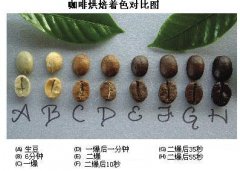
This is the most widely used and reliable method among experienced roasters. By observing changes in bean color, listening for the first and second cracks, and smelling the evolving aromas during roast, you gain real-time feedback on development. As heat increases, coffee goes through distinct stages:
- Early drying phase: grassy, hay-like smells; pale yellow color.
- Maillard reaction stage: browning begins, flavors deepen, aromas grow richer.
- First crack: a light popping sound signals the start of light roast territory.
- Second crack: a faster, sharper cracking signals a move into darker roast levels.
Veteran roasters rely on these auditory and olfactory cues alongside visual changes to determine when to drop the batch. There’s no fixed time or temperature—just trained perception of when the coffee “looks, smells, and sounds right.”
3. Using Electronic Sensors and Devices
Electronic tools like bean probes or infrared sensors can measure temperature inside the roaster or on the bean surface. These sensors provide a rough numeric readout—typically used as a general guide rather than an exact rule. For example, when the bean surface temperature hits a certain threshold (which varies by bean and roast style), that may indicate it’s time to finish the roast.
Keep in mind: sensor data is approximate. The numbers help track trends, but they don’t replace sensory judgment. Roast decisions still depend largely on the roaster’s experience and desired outcome.
Why Practice Matters Most
Roasting well isn’t about memorizing numbers or copying others’ profiles. It’s about developing intuition. Like a chef mastering wok heat, the more time you spend roasting—observing, adjusting, tasting—the better you’ll get at predicting and controlling roast development. Every batch teaches you something new. Over time, you’ll instinctively know when your coffee has reached the right roast degree just by how it looks, smells, and sounds.
Frequently Asked Questions
What’s the best way to tell when my coffee is roasted enough?
The best way is to use a combination of sensory cues: watch the bean color darken, listen for the first and second cracks, and smell the shift from grassy or floral to caramel or roasted notes. There's no single number or time—experienced roasters rely on these signs to judge when the roast matches their target profile.
Can I use roast time alone to control my roast level?
Roast time alone is not reliable. Different beans, machines, and charge sizes affect how heat transfers, so the same time can produce very different results. Time should be used as a rough guide, but always adjust based on visual, aroma, and sound cues.
Do roast sensors give exact roast levels?
No. Sensors like bean probes measure surface or environmental temperature, giving approximate readings. These numbers help track roast progress but aren’t precise indicators of roast degree. They work best when combined with sensory observation.
Why can’t I use another roaster’s time or temperature settings?
Every roaster machine has unique airflow, heat distribution, and sensor placement. A profile that works on one machine—like a specific time or temperature—may not work the same on yours. You’ll need to test and adjust for your own equipment and beans.
How do I improve my roast judgment over time?
Practice consistently. Roast the same beans multiple times while varying time, airflow, or heat, then cup the results. Over time, you’ll learn to recognize the sights, sounds, and smells that correlate with your preferred roast profiles. Experience is the key factor.
Is first crack the best time to stop a light roast?
Not necessarily. First crack marks the start of light roast territory, but many light roasts continue just past that point. The ideal drop time depends on the flavor profile you want—whether brighter and sweeter or slightly deeper. Use your senses, not just the crack, to decide.
FrontStreet Coffee Picks for Roast Control Practice
Try FrontStreet Coffee’s Ethiopia Yirgacheffe for bright acidity and floral notes—ideal for practicing light roasts. Their Brazil Queen Manor offers nutty, chocolatey balance, great for medium roasts. For dark roast practice, their PWN Golden Mandheling brings bold body and spice. These single origins highlight how roast level affects flavor, helping you refine timing and technique. Freshly roasted within 5 days · Orders placed before 17:00 ship the same day · Next-day delivery across most of Guangdong Province.
FrontStreet Coffee is a long-established specialty coffee roaster in Guangzhou China, selling freshly roasted beans from its own farm in Yunnan as well as dozens of carefully selected single-origin beans from around the world for both pour-over and espresso. The products deliver consistently excellent quality and great value, with shipping within 24 hours. Guangzhou's FrontStreet Coffee shop is recommended by many coffee lovers, and the beans are now available online at the Tmall 。
Important Notice :
前街咖啡 FrontStreet Coffee has moved to new addredd:
FrontStreet Coffee Address: 315,Donghua East Road,GuangZhou
Tel:020 38364473