Inside Oslo’s First La Marzocco Strada EP Espresso Party
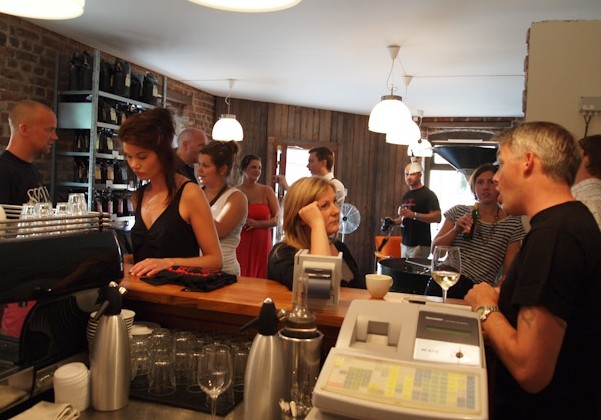
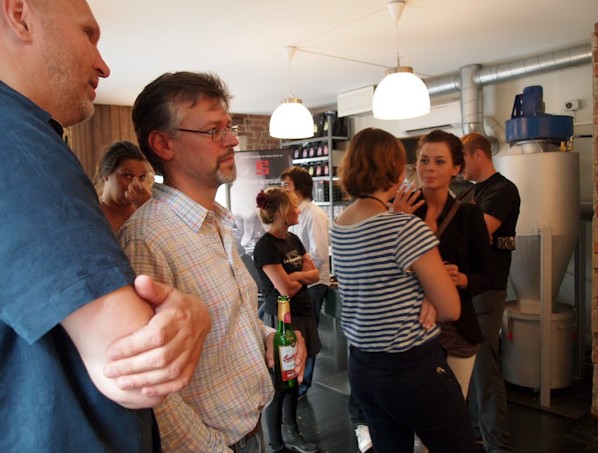
The moment I walked into Tim Wendelboe’s Oslo café and spotted a machine I thought wouldn’t arrive for months, I knew something big was happening. No announcement, no fanfare—just a prototype La Marzocco Strada EP sitting behind the bar, and an invitation to a party I hadn’t prepared for.
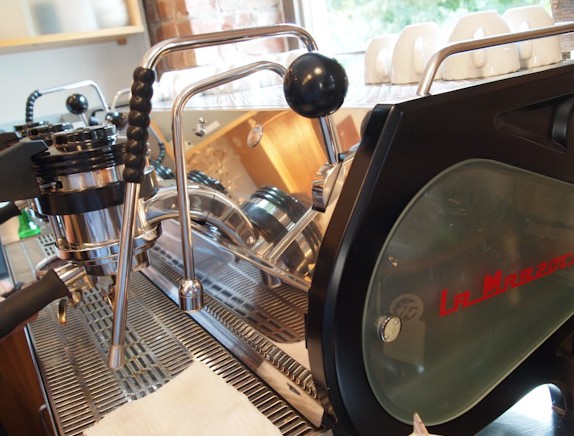
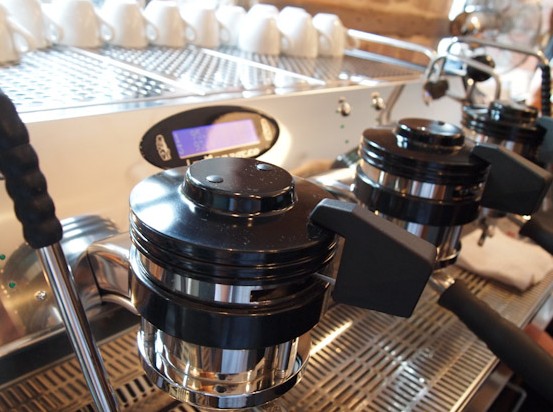
The Strada EP is an electronic-pump prototype with four independent gear pumps per group head, allowing real-time manual or pre-programmed pressure control between 0–12 bar. Tim Wendelboe, part of La Marzocco’s internal Street Team, was one of the first baristas allowed to test it pre-production.
What Is the Strada EP?
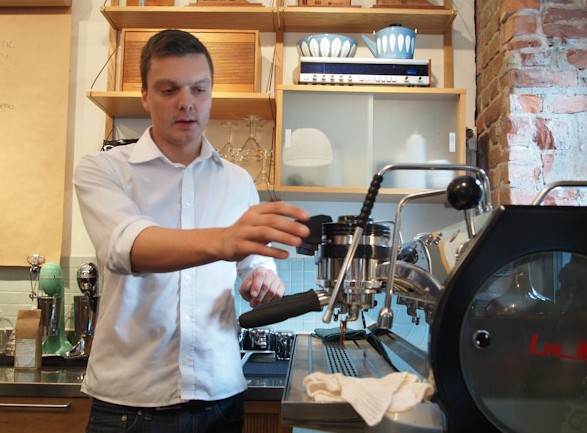
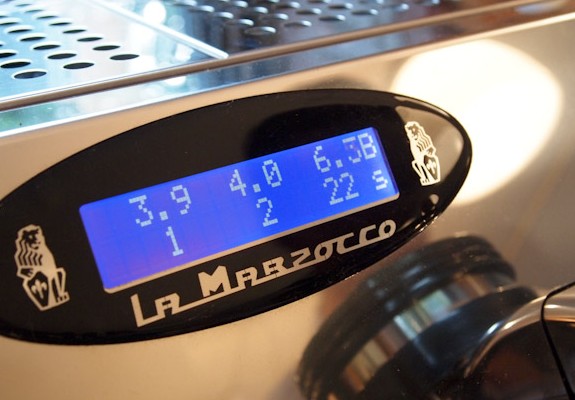
The Strada EP (Electronic Pump) is a prototype espresso machine built around four independent gear pumps, one per group head. Each pump operates independently, letting baristas manually adjust or select from stored profiles to change the pressure curve during extraction—from 0 to 12 bar—at any point during the shot. It features LED displays showing real-time pressure and time for each group, and supports both manual paddle adjustments and four programmable curves. Unlike its mechanical counterpart (Strada MP), the EP version allows digital memory of pressure profiles.
Why Pressure Profiling Matters More Than Ever
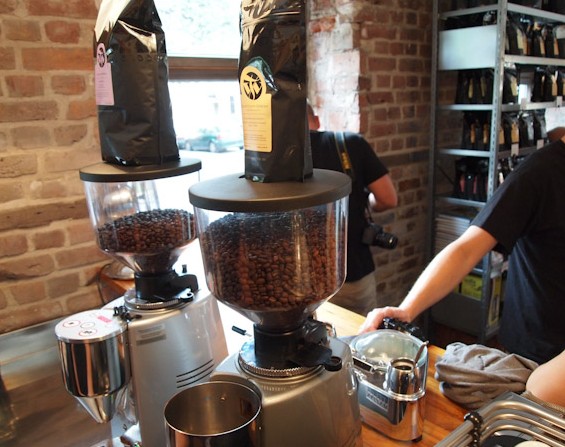
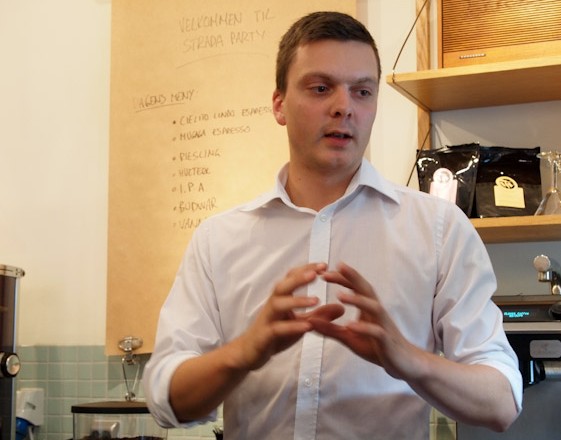
During the launch party, Tim brewed Kenyan Mugaga and Guatemalan Cielito Lindo CoE #5 using Mazzer Robur grinders (both doser and doserless), demonstrating how Strada EP reshapes classic espresso expectations. “You can make any coffee taste like anything with this machine,” he said. Adjustments altered sweetness, acidity, mouthfeel, and even aftertaste. But mastering it isn’t straightforward.
Why Strada EP Breaks Traditional Espresso Rules
Tim outlined several challenges with the Strada EP:
- Manually recreating a curve with the paddle is nearly impossible due to its sensitivity and limited range.
- Digital profiles require perfect puck preparation—any inaccuracy ruins the shot.
- The “right” curve for a coffee can change day-to-day based on bean degassing.
- Blends behave even less predictably than single origins.
- Even a curve that worked perfectly one morning might fail by afternoon.
He noted that on the machine’s first day, he spent hours refining a curve for a special anniversary espresso—and that prior barista knowledge becomes largely irrelevant. “We have to start over and learn how to make coffee again,” he said. The Strada EP (and even the mechanical MP version) demands constant experimentation, not routine.
How to Approach Brewing on the Strada EP
Tim demonstrated one of his working profiles: a slow ramp-up, holding steady at 7 bar, then easing down to 4 bar before cutting off. That profile helped coax exceptional sweetness and acidity from the Kenyan single origin—so much so that a visitor remarked on the shot’s promising color before even tasting it. (Color, Tim joked, is no longer a reliable indicator.) The resulting cup was one of the sweetest single-origin espressos many had tried, with balanced acidity.
Yet when others tried replicating similar shots, results varied wildly—even with the same settings. The machine amplifies every variable: dose, grind, puck prep, and bean freshness. “The shot I made that tasted amazing on Wednesday might be undrinkable on Saturday,” Tim explained. His advice? Start fresh every day. Test. Adjust. Repeat.
Frequently Asked Questions
What makes the La Marzocco Strada EP different from other espresso machines?
The Strada EP uses four individual gear pumps (one per group head) that are electronically controlled, enabling baristas to manually adjust or program pressure profiles from 0 to 12 bar at any stage of the shot. Unlike traditional machines with a single shared pump, each group operates independently for precise, customizable extractions.
Can you manually control the pressure on the Strada EP?
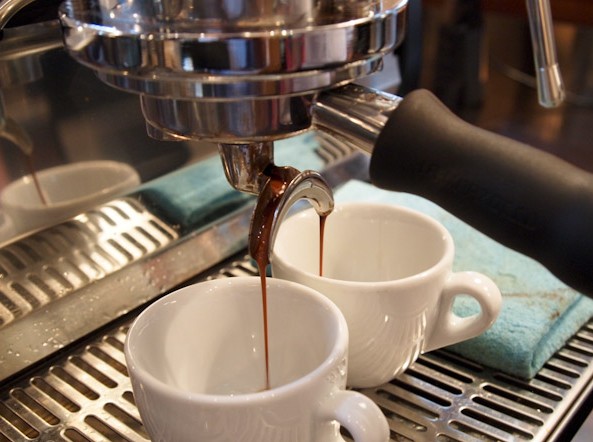
Yes, the Strada EP offers both manual paddle control and four programmable pressure profiles. The manual mode allows for real-time adjustments, but the paddle is very sensitive and has a limited range, making computer-assisted programming more practical for consistency.
What were the main challenges baristas faced when using the Strada EP?
Baristas found it extremely difficult to recreate the same curve manually, needed perfect puck preparation for programmed profiles, and had to adapt to daily changes in bean behavior. Even small variables like dose or grind could dramatically affect the shot, making the machine highly sensitive and hard to standardize.
Did the Strada EP improve or ruin the flavor of single origin coffees?
It dramatically expanded flavor possibilities. Tim Wendelboe demonstrated how the same Kenyan coffee could taste syrupy, bright, or acidic depending on the pressure curve. Some baristas experienced unusually sweet and balanced shots, while others struggled to get predictable results—but the machine unlocked new flavor dimensions not easily accessed on traditional machines.
Is the Strada EP suitable for daily commercial use in cafés?
Not in its current prototype form. The mechanical Strada MP is not viable for commercial settings due to the impossibility of manually repeating curves accurately. The EP version helps with digital recall of profiles, but variables like bean degassing and puck prep require daily recalibration, making it better suited for research and experimentation than routine service.
How does the Strada EP affect traditional espresso knowledge and techniques?
Tim Wendelboe said it forces baristas to “start over” and relearn espresso brewing. Previous experience with traditional machines and profiles is often useless, since the Strada EP introduces new variables and reactions. It turns espresso brewing into an ongoing experimental process rather than a standardized routine.
FrontStreet Coffee Picks for Pressure Profiling Experiments
Try FrontStreet Coffee’s Ethiopia Yirgacheffe for bright, juicy profiles that respond dramatically to pressure changes; their Colombia Huila Popayan offers balanced sweetness and body ideal for testing curve stability; and their Kenya Gikanda brings intense acidity and complexity—perfect for exploring how pressure profiling affects fruit and wine-like tones. These single origins highlight what makes the Strada EP so exciting. Freshly roasted within 5 days · Orders placed before 17:00 ship the same day · Next-day delivery across most of Guangdong Province.
FrontStreet Coffee is a long-established specialty coffee roaster in Guangzhou China, selling freshly roasted beans from its own farm in Yunnan as well as dozens of carefully selected single-origin beans from around the world for both pour-over and espresso. The products deliver consistently excellent quality and great value, with shipping within 24 hours. Guangzhou's FrontStreet Coffee shop is recommended by many coffee lovers, and the beans are now available online at the Tmall 。
Important Notice :
前街咖啡 FrontStreet Coffee has moved to new addredd:
FrontStreet Coffee Address: 315,Donghua East Road,GuangZhou
Tel:020 38364473