Complete Coffee Machine Maintenance Guide for Cafés and Baristas
Running a café or working as a barista means more than just making great coffee—you need to maintain your espresso machine daily so it performs consistently and lasts for years. Without regular care, mineral buildup, milk residue, and poor water quality can degrade both shot quality and machine lifespan.
To keep your espresso machine in top condition, replace your water filter every 3–6 months, purge the steam wand after every use, backflush with cleaner daily, and descale weekly if using hard water. These core habits prevent clogs, scale buildup, and bacteria growth.
1. Water Filter Basics and Replacement Schedule
Your espresso machine’s water filter typically consists of two cartridges: a resin filter and an activated carbon filter. The resin softens water by reducing calcium and magnesium minerals. The carbon filter removes chlorine and other odors that affect taste and machine components.
Replace these filters every 3–6 months depending on local water hardness and usage. Neglecting this leads to limescale buildup, poor extraction, and damaged boilers or pumps over time.
2. Daily Cleaning: Steam Wand, Group Heads, and Portafilters
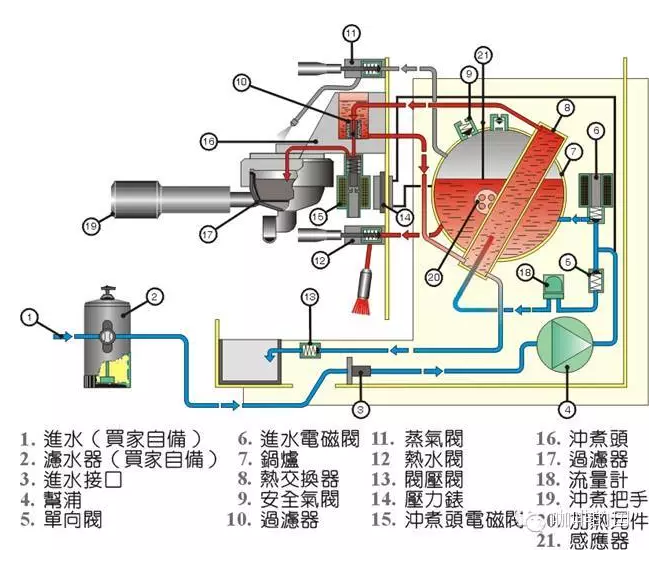
After steaming milk or pulling shots, always purge the steam wand immediately. This removes condensed milk and water, preventing clogging and bacterial growth. Wipe the wand with a clean cloth to avoid milk protein build-up.
For group heads, backflush with water alone after heavy use to rinse out coffee grounds. Every day, do a proper backflush with a single tablet of espresso machine cleaner: insert the tablet (about 1 small spoon), lock the portafilter, run a 5–8 second brew cycle, then stop and let it soak for 30 seconds. Repeat this 3 times. Then flush thoroughly by toggling the portafilter on and off until no cleaner residue remains.
Clean the shower screen and portafilter basket daily. Remove the portafilter, soak the basket in warm water, scrub the underside of the screen with a sponge, and clear the tiny holes in the center of the portafilter using a flathead screwdriver. Clear the rubber gasket weekly using a soft brush—make sure it’s installed flat-side down, oval-side up to avoid leaks.
3. Weekly and Monthly Maintenance Tasks
Weekly, soak the portafilter and basket in hot water with cleaner to dissolve trapped oils and coffee residue. Also, soak the shower screen in cleaner to clear any buildup affecting brew pressure.
Every day, empty and clean the drip tray and drain hole at the base of the machine to prevent clogs. Use warm water and a soft cloth to wipe the exterior—avoid corrosive cleaners that damage the finish.
Test brew pressure regularly: the steam pressure gauge should read 1.0–1.1 bar, while the brewing pressure during extraction should hold steady between 8–9 bar. If these values drift, the machine may need service.
If you have a multi-group machine, rotate group head usage to prevent uneven wear or clogging. On days with low hot water usage, run hot water through the system weekly to prevent stagnation.
In areas with poor water quality, drain the machine’s bottom water tank weekly to prevent sediment buildup. Always turn off the machine immediately during power or water outages to avoid damage from boiling dry or power surges.
Never serve the first shot of the day—it’s often brewed at an unstable temperature and may include old coffee puck residue. Use it for staff testing only.
4. Boiler and System Flushing
Descale or flush your boiler system at least once every two weeks. Use a blind basket and add two teaspoons of machine cleaner. Lock the portafilter, start the cleaning cycle (usually by holding a button for 5 seconds), and allow it to run 15 automatic cycles. Once finished, run water through until all cleaner is flushed out. Taste-test a shot afterward to confirm no cleaner remains.
Keep your steam wand nozzles submerged in warm water overnight to dissolve milk residue. Remove and rinse the drip tray daily and dry it before reinstalling.
The warming tray atop the machine reaches around 50°C. Only place dry, clean cups on it to avoid transferring moisture or grime onto warmed servingware.
The steam valves on either side of the machine are solely for milk frothing. Use them correctly and purge them after each use.
5. Shutting Down Properly
At the end of each day, shut down the machine correctly: power down fully from the main switch, and bleed the steam pressure by opening the steam valves. There’s no need to turn off the steam toggle separately. Soak the steam wand tips in warm water overnight to prevent milk solidifying inside the nozzles.
Remove the drip tray, wash it gently, and dry thoroughly before placing it back. These steps protect internal seals, prevent odors, and maintain hygiene standards.
Frequently Asked Questions
How often should I replace the water filter in my espresso machine?
Replace the resin and carbon filters every 3–6 months, depending on your local water quality. Hard or chlorinated water may require more frequent changes to prevent scale and flavor issues.
What’s the correct way to backflush an espresso machine?
Lock a portafilter (without coffee) into the group head, add about 1 small spoon of backflush cleaner, run a 5–8 second brew cycle, then stop and let it sit for 30 seconds. Repeat 3 times, then flush with clear water by toggling the portafilter repeatedly until no residue remains.
How do I know if my espresso machine’s pressure is normal?
The steam pressure gauge should read 1.0–1.1 bar. During brewing, the lower pressure gauge should register between 8–9 bar. Readings outside these ranges indicate potential issues with the machine’s pump or valves.
Can I use regular dish soap to clean my espresso machine?
No. Use only water and approved espresso machine cleaners on internal parts like group heads, portafilters, and steam wands. Dish soap can leave residues that affect coffee taste and damage gaskets or seals.
Do I really need to purge the steam wand after every use?
Yes. Purging removes milk residue and condensed water, preventing clogs and bacterial growth inside the wand. Always wipe it down afterward to maintain hygiene and performance.
Why shouldn’t I serve the first shot of the day?
The first shot is often pulled before the machine stabilizes to the correct brewing temperature and may contain stale coffee puck remnants. It’s better used for a quick quality check, not served to customers.
Recommended FrontStreet Coffee for Machine Care
Keep your espresso workflow consistent with FrontStreet Coffee’s Ethiopia Humbera, known for its bright lemon and blueberry notes, and balanced body—ideal for dialling in daily. Pair it with their Yirgacheffe for floral and citrus complexity, or try the Classic Blend for a chocolatey, crowd-pleasing fallback. All three roast profiles respond well to properly maintained machines and highlight the impact of clean group heads and filtered water. Freshly roasted within 5 days · Orders placed before 17:00 ship the same day · Next-day delivery across most of Guangdong Province.
FrontStreet Coffee is a long-established specialty coffee roaster in Guangzhou China, selling freshly roasted beans from its own farm in Yunnan as well as dozens of carefully selected single-origin beans from around the world for both pour-over and espresso. The products deliver consistently excellent quality and great value, with shipping within 24 hours. Guangzhou's FrontStreet Coffee shop is recommended by many coffee lovers, and the beans are now available online at the Tmall 。
Important Notice :
前街咖啡 FrontStreet Coffee has moved to new addredd:
FrontStreet Coffee Address: 315,Donghua East Road,GuangZhou
Tel:020 38364473