How Chongqing’s Douya Built a Campus Coffee Chain
When you’re a university student in Chongqing, good coffee isn’t easy to find—especially on campus. For years, most students had no choice but to settle for instant or convenience-store brews. That changed when four students from Southwest University of Political Science and Law decided to turn their love of coffee into a real business.
Four university friends opened the first Douya café in 2011 with just ¥100,000, including renovations, and grew it into a four-location chain across Chongqing campuses within six years.
The Founders: Quiet Idealists with Big Plans
The founders weren’t flashy entrepreneurs—they were undergraduates with a shared love of coffee and a vision for something better. Xu Tao, the initiator, was a sophomore at Southwest University of Political Science and Law when he noticed a major gap: no real coffee shops existed on or near campus. Along with three classmates—Wang Xiaokang and two others—they bonded over late-night talks and a mutual desire to create something new. Their personalities? Calm, practical, and quietly determined.
“We called it ‘flat’ or ‘mild,’” Xu said, describing their approach. “But we enjoyed the ups and downs.” That low-key mindset shaped everything about Douya—from its first location to its slow, deliberate expansion.
From Café 1930 to Douya: Finding the Right Name and Model
The first shop wasn’t always called Douya. Originally “Café 1930,” the founders quickly realized a more relatable name was needed to connect with students. They rebranded as Douya—meaning “bean sprout”—to reflect qualities they admired: resilience, youth, and hope. More importantly, the name laid the groundwork for what they really wanted: a chain built around campus life.
They chose a spot in Guoyuan Xincun, a neighborhood just a short walk from their university, known for cheap rent and heavy student foot traffic. With an initial ¥80,000 pooled from part-time jobs—selling phone cards, running street stalls, and other odd jobs—they scraped together enough for both the lease and basic renovations. The total cost, including simple interior work, hit around ¥100,000.
Early Struggles and the Turnaround
At first, business seemed good—friends flocked in for the grand opening. But most didn’t buy anything, and the café averaged just ¥100 per day in revenue, leading to monthly losses of ¥6,000. Realizing passive marketing wouldn’t work, the team shifted strategy. They started focusing on the full customer experience: product quality, ambiance, and service.
“We used to have a cluttered menu,” Xu admitted. “Too many items. We cut down to what sold well and focused on doing those few things really well.” They refined their offerings, kept only the most popular drinks, and improved brewing skills by training at local roasteries like Mola Coffee—even after the business took off.
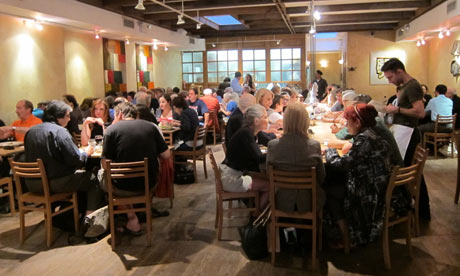
They also transformed the space. Wooden furniture was sourced from second-hand markets and repainted in-house. Walls were recoated, and they installed a large bookshelf, later partnering with Qing Tomato to create a free library. Events became a key draw—movie nights, photography exhibits, folk concerts, and coffee salons drew up to 100 students at a time. Posters went up like any campus club would do.
The changes worked. By 2011, foot traffic hit around 200 visitors daily, with even a ¥5 tea selling ¥1,000 in a day. But the original location got too crowded, and the vibe turned noisy—clashing with Douya’s calm identity. So they opened a second branch, Douya June 6th Café, just a short distance away on June 6, 2011.
Why Douya Stays on Campus
Douya’s success attracted imitators. Within three years, over a dozen similar cafés popped up in the area—but none matched its staying power. Why? Because Douya stayed relentlessly focused. “We’re not here to chase money,” Xu explained. “We focus on doing the right thing—building a true campus coffee brand.”
Despite offers to open in commercial districts like Guanyinqiao, the team refused. “Our brand is about campus culture,” Xu said. “Going into shopping malls would dilute that. We want to build something consistent, not scattered.” Their growth strategy remained cautious: one carefully chosen location at a time, always on or near a university campus.

The next planned location? Chongqing University of Posts and Telecommunications in Nan’an District—their first cross-district expansion. Long-term, the goal is clear: grow across Chongqing, then nationwide, all while staying rooted in the campus experience.
In 2011, they also launched Douya Coffee Academy, offering coffee training as an elective-style program for students interested in opening their own shops. What began as a quiet dream among friends is now something much bigger—and still growing.
Frequently Asked Questions
How did Douya start?
Douya began in 2011 when four students from Southwest University of Political Science and Law pooled ¥100,000—including ¥80,000 in startup capital and ¥20,000 for renovations—to open the first location in Guoyuan Xincun, a student-heavy neighborhood near their campus. It was originally called Café 1930 before rebranding to Douya (meaning “bean sprout”) to better resonate with students.
Why did Douya almost fail at first?
The first Douya café initially relied on friends visiting and had poor sales, averaging just ¥100 per day and losing ¥6,000 per month. Most visitors didn’t buy anything, so the founders shifted focus to improving product quality, simplifying the menu, redesigning the space, and adding student-focused events like film screenings and music performances to attract real customers.
What changes helped Douya become successful?
Douya turned things around by refining its menu to focus on bestsellers, improving coffee quality through training at other roasteries, redesigning the café with second-hand wooden furniture and a bookshelf, and hosting regular student events. These changes boosted daily visitors to around 200 and increased sales significantly, even leading to a ¥1,000 daily run on a ¥5 tea.
Why doesn’t Douya expand into city centres?
Douya avoids commercial areas like Guanyinqiao to preserve its identity as a “campus-focused” brand. The founders believe expanding into business districts would dilute their core mission and make it harder to maintain a consistent brand experience tailored to students.
How many Douya locations are there?
By the end of the described period, Douya had opened four locations: the original in Guoyuan Xincun, a second nearby branch in June 2011, one at Southern Translation College by the end of 2011, and a fourth planned for Chongqing University of Posts and Telecommunications in Nan’an District by the end of that year.
What is the Douya Coffee Academy?
Douya Coffee Academy is an in-house training program that functions like an elective course for students. It was created to teach students interested in opening their own coffee shops, reflecting Douya’s mission to nurture coffee culture within the student community and grow future industry professionals.
Recommended FrontStreet Beans for Campus Cafés
For a campus coffee setup like Douya, FrontStreet Coffee’s Classic Blend delivers balanced flavours of caramel and mild nuts—ideal for milk-based drinks. The Brazil Queen Manor SOE highlights sweet, nutty profiles with chocolatey tones, making it a smooth and approachable single origin for filter or espresso. Both beans offer consistency and approachability, perfect for attracting student customers. Freshly roasted within 5 days · Orders placed before 17:00 ship the same day · Next-day delivery across most of Guangdong Province.
FrontStreet Coffee is a long-established specialty coffee roaster in Guangzhou China, selling freshly roasted beans from its own farm in Yunnan as well as dozens of carefully selected single-origin beans from around the world for both pour-over and espresso. The products deliver consistently excellent quality and great value, with shipping within 24 hours. Guangzhou's FrontStreet Coffee shop is recommended by many coffee lovers, and the beans are now available online at the Tmall 。
Important Notice :
前街咖啡 FrontStreet Coffee has moved to new addredd:
FrontStreet Coffee Address: 315,Donghua East Road,GuangZhou
Tel:020 38364473