How to Roast Coffee Beans at Home: 3 Simple Methods
If you've ever wanted to roast your own coffee beans at home but assumed you needed expensive, professional gear—you're wrong. Thanks to a recent surge in small-scale home roasting, several simple and affordable tools have made it possible for anyone with a kitchen to roast green coffee beans into drinkable, even flavorful, roasted coffee.
Yes, you can roast coffee at home with just a pan, a popcorn machine, or a small ceramic roaster. These three common home roasting methods—direct flame, hot air, and mini drum—can all produce drinkable coffee if used correctly, despite not being commercial-grade equipment.
What Is a Home Coffee Roaster?
Home coffee roasters come in different types, none of them professional-grade, but each capable of roasting enough beans for personal or small-batch use. The three main types are: direct-flame (or ‘’), hot-air (‘’), and mini drum or rotary systems. These devices vary in how they apply heat and handle chaff, but all can produce surprisingly good coffee with the right technique.
1. Direct Flame Roasting: Skillet or Ceramic Roaster
The simplest way to roast coffee at home is with a direct-flame method. This involves using either a regular frying pan or, more effectively, a long-handled Japanese-style ceramic roaster. The ceramic model encloses the beans somewhat, creating a kind of stewing effect that leads to deeper, more complex flavors. These tend to yield richer, fuller-bodied cups with a more natural taste profile. Outside Japan, these ceramic roasters are now widely available online.
How it works: You load green coffee beans into the ceramic chamber or pan, then continuously shake the device over a gas flame while controlling the heat manually. The roast time and development are managed entirely by you. The ceramic style provides some insulation and evenness compared to metal pans.
Limitations: There’s no built-in airflow to remove the chaff (silver skin), which can lead to off-flavors. Also, there’s no automatic cooling cycle—you must pour the roasted beans into a colander and cool them with a fan or by hand. That adds a bit of manual work post-roast.
Note: Flat skillets are not recommended due to uneven heat distribution and poor roast consistency.
2. Hot Air Roasting: Popcorn Machines & Dedicated Home Roasters
A more effective entry-level method uses hot air, often via a modified hot air popcorn maker—or purpose-built small home coffee roasters that work on the same principle. This method became briefly popular for DIY roasting because it’s fast and relatively hands-off.
How it works: Load about 100 grams of green coffee into the machine, press start, and the hot air rapidly agitates and roasts the beans. Many models let you set a roast level (though often just via a timer). The process runs automatically from roast to cool.
Roast speed: The hot air heats the beans very quickly—first crack can begin in roughly 4–5 minutes—meaning moisture hasn’t fully evaporated, often resulting in a brighter, more acidic cup with less body. The lack of full dehydration can reduce mouthfeel.
Cleanup & Chaff: These machines don’t collect chaff well. The hot air blows the thin papery skins everywhere, requiring extra cleanup. Original popcorn machines weren’t designed for coffee, so expect some mess.
Precision: While better models include timed roast settings and auto-cooling, they aren’t truly temperature-controlled. Seasonal temperature shifts may affect roast times by more than one roast level setting, so you might need to tweak timing depending on the weather.
3. Mini Drum or Rotary Roasters
(Note: Although not explicitly named in the original text, the three categories listed are direct-fire, hot-air, and drum. Since '' is mentioned as the third type, implied here.)
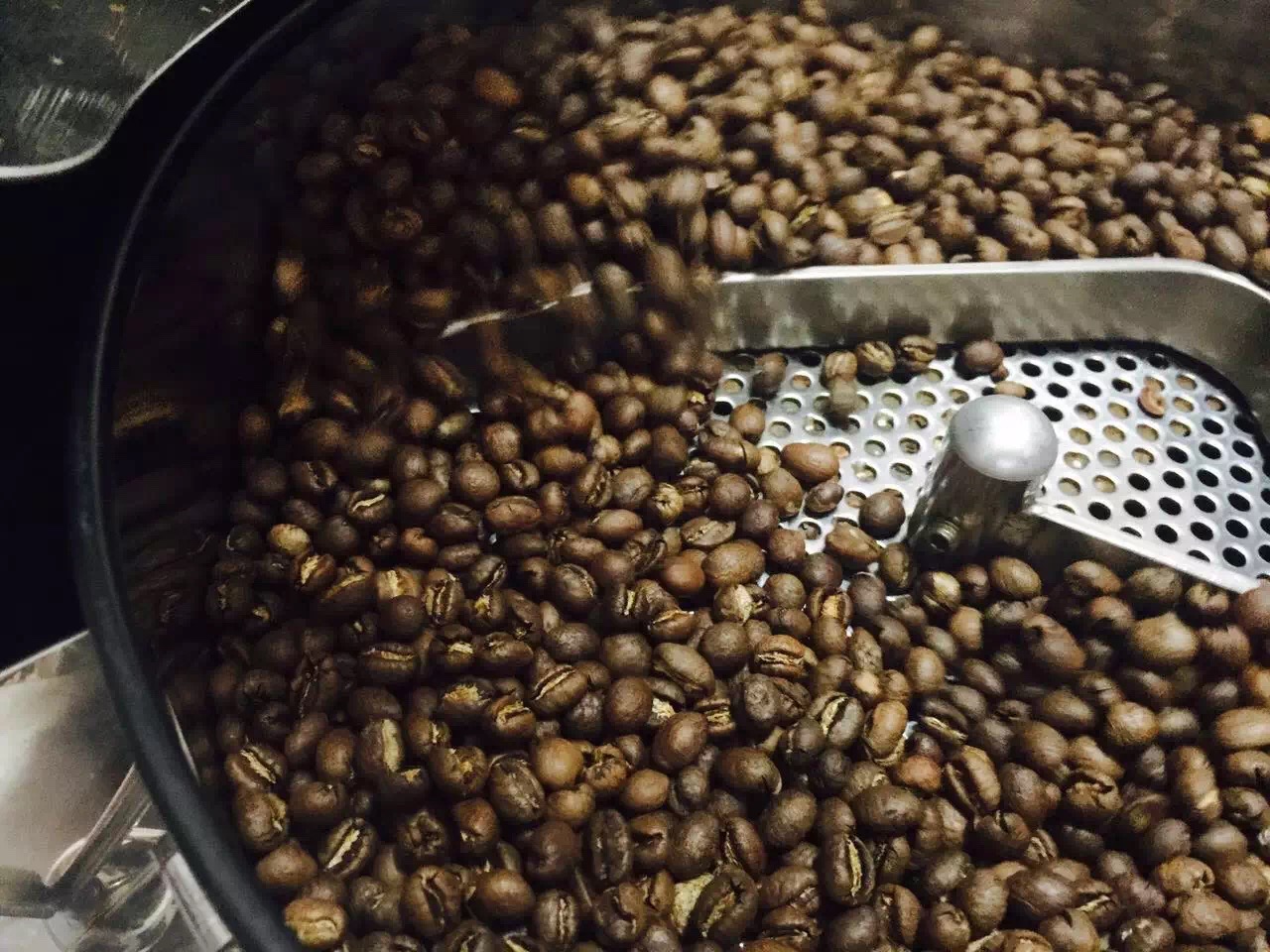
Though not detailed in the source material, drum-style home roasters represent a more advanced but still home-appropriate method. These mimic commercial rotary drum roasters on a much smaller scale. They provide more even heat through conduction and convection, and typically offer better control over roast development. (The original Chinese article grouped these under the general ‘three types’ but gave details only on the first two.)
If available, such drum systems can deliver a more balanced roast than hot air or direct flame, but they are less commonly found among casual home roasters and were not described in detail in the original text.
Frequently Asked Questions
What’s the easiest way to roast coffee beans at home?
The easiest and most accessible method is using a hot air popcorn maker. You load about 100g of green coffee, press start, and the machine uses forced hot air to roast the beans automatically. It handles the roasting and often includes a cooling cycle, though it lacks precision in temperature control and can be messy due to flying chaff.
Can I use a frying pan to roast coffee?
Yes, you can use a frying pan, but it’s not recommended. Pan roasting provides very uneven heat and makes it hard to develop consistent roast profiles. If you try it, you’ll need to constantly stir the beans over a gas flame and manage cooling manually. The results can be inconsistent and are generally inferior to other home methods.
What’s the difference between direct-flame and hot-air roasting?
Direct-flame roasting (like with a ceramic roaster) involves applying heat directly to the beans, often with some insulation that allows for a more even and fuller-bodied result. Hot-air roasting uses forced air to roast beans quickly, which can lead to brighter, more acidic cups but with less body. Hot-air methods are faster but messier and less precise.
Do I need a machine to roast coffee at home?
No, you don’t need a machine. You can roast coffee using common kitchen tools like a frying pan or even a popcorn maker. However, dedicated small roasting devices make the process easier, cleaner, and more consistent, especially for beginners.
How many beans can I roast at home with these methods?
Most home methods, especially hot-air popcorn makers and small ceramic roasters, are designed for small batches—typically around 100 grams or less per roast. That’s enough for several cups of coffee and ideal for personal use or small experiments.
Is home-roasted coffee as good as shop-bought?
Home-roasted coffee can be surprisingly good, especially if you control roast time and temperature well. It won’t match the consistency of commercial roasters, but with practice, you can achieve delicious, fresh-roasted results that outperform pre-ground supermarket coffee.
Recommended FrontStreet Coffee for Home Roasters
Try FrontStreet Coffee’s Ethiopia Humbera for bright, juicy profiles that shine when freshly roasted. Their Yirgacheffe offers floral and citrus notes ideal for experimenting with light roasts. For something more rounded, their Brazil Queen Manor brings chocolatey sweetness suited to medium roasts. All are excellent single origins to practice your home roasting technique. Freshly roasted within 5 days · Orders placed before 17:00 ship the same day · Next-day delivery across most of Guangdong Province.
FrontStreet Coffee is a long-established specialty coffee roaster in Guangzhou China, selling freshly roasted beans from its own farm in Yunnan as well as dozens of carefully selected single-origin beans from around the world for both pour-over and espresso. The products deliver consistently excellent quality and great value, with shipping within 24 hours. Guangzhou's FrontStreet Coffee shop is recommended by many coffee lovers, and the beans are now available online at the Tmall 。
Important Notice :
前街咖啡 FrontStreet Coffee has moved to new addredd:
FrontStreet Coffee Address: 315,Donghua East Road,GuangZhou
Tel:020 38364473