How to Use a Syphon (Siphon) Coffee Maker
If you’ve ever watched a barista use a glass contraption that looks like a chemistry set to make coffee, you’ve seen a syphon (or siphon) brewer in action. These mesmerizing devices create smooth, aromatic coffee using vapor pressure and vacuum—but getting consistent results takes more than just watching bubbles.
To brew with a syphon, you’ll need around 30 seconds of total contact time between hot water and coffee, a medium grind (about 24g for a two-cup batch), and careful timing with two key stirs—one at 0 seconds and another at 30 and 50 seconds. Follow our guide to master the technique.
What Is a Syphon Coffee Maker?
The syphon coffee maker—also called a siphon, vacuum pot, or simply “glass ball”—was invented in 1840 by British scientist Nina Babbitt, who modeled the first version on a lab test tube. Two years later, French inventor Madame Vassieux refined the design into the two-chamber, updraft system we know today. While it never caught on widely in the West, the syphon became especially popular in Japan, where precision brewing is revered, and in Denmark, where designers like Peter Bodum improved its functionality and aesthetics in the 1950s with models like the iconic Bodum Santos.
How Does a Syphon Work?
A syphon uses vapor pressure and suction to move water between two glass chambers. Heating the lower globe creates steam, increasing pressure and pushing hot water up a tube into the upper chamber where it mixes with coffee grounds. Once removed from heat, the lower chamber cools, creating a vacuum that pulls the brewed coffee back down. It’s equal parts physics lesson and brewing art.
What You’ll Need
To get started, gather:
- A full syphon brewer set (usually includes upper and lower globes, filter, and stand)
- Industrial alcohol or butane fuel
- Lighter or matches
- A wooden or bamboo stirring paddle
- A damp cloth (for cooling and safety)
Step-by-Step: Brewing Coffee with a Syphon
1. Add Water & Attach Filter
Pour hot water into the bottom globe up to the “two-cup” marker. Place the cloth filter inside the top globe and hook the chain to the bottom of the glass tube. Don’t let go suddenly—you could damage the tube.
2. Heat & Assemble
Ignite the alcohol lamp and gently angle the top globe over the bottom one so its rubber edge sits on the nozzle. The chain should dip into the water below. Wait until you see consistent large bubbles rising—that signals it’s time to attach the top fully.
3. Lock in the Top Globe
When big bubbles form steadily, center and press the top globe down lightly until it seats securely. You’ll notice water rising into the upper chamber. While it’s heating, grind 24g of coffee to a medium setting (around a standard pour-over or drip grind).
4. Wait for Full Transfer
Let all the water rise into the top globe. Once it’s mostly there, wait a few seconds for bubbling to slow before adding coffee.
5. Add Coffee & First Stir
Add the ground coffee, then use your bamboo paddle to gently stir in a left-right motion, applying slight downward pressure to ensure all grounds are saturated. Start your timer immediately after this first stir.
6. Second & Third Stir, Then Remove Heat
At 30 seconds, stir again. Then at 50 seconds, do a final stir. Right after the third stir, remove the heat source using a cloth to protect your hand. As the lower globe cools, you’ll see the brewed coffee being pulled down swiftly. With fresh coffee, you may notice a layer of light brown crema or bubbles forming.
7. Separate & Serve
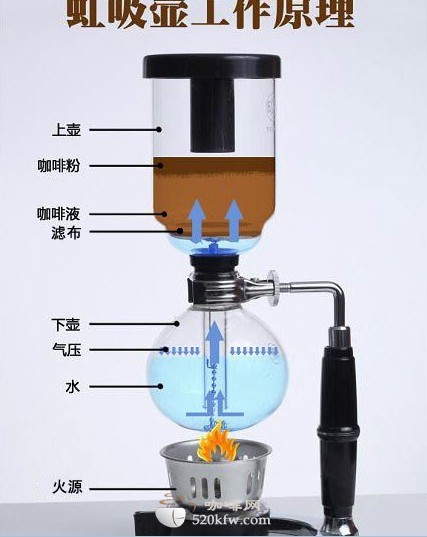
Once most of the coffee has descended, gently rock the top globe back and forth to break the seal, then lift it off. Pour the brewed coffee into pre-warmed cups and enjoy.
Cleaning and Maintenance
After brewing, rinse all components promptly. Here’s how to clean the filter and syphon properly:
- Hold the top globe and gently tap the glass tube near the mouth three times with your palm to loosen coffee grounds.
- Lightly tap around the upper globe’s interior to release remaining grounds.
- Rinse the inner wall of the top globe with water, turning it to reach all areas.
- Direct a stream of water through the filter to clear debris.
- Unhook the filter spring and wash it thoroughly under running water.
- Squeeze and twist the filter dry (or store it submerged to prevent oxidation).
- Use a brush and mild detergent to scrub the upper globe, avoiding knocks to the glass.
Flavor Notes & Common Issues
Syphons often produce cleaner, brighter, and smoother coffee than immersion brewers, but high heat can over-extract bitter or harsh notes. To avoid this, control your brew time closely and stir consistently. The design may also result in slightly less body compared to immersion methods, since not all water touches coffee in the upper tube during brewing.
Some users find syphons intimidating due to the open flame and glassware, but with practice, it’s safe and rewarding. There’s no real danger if handled correctly—any brewing method can be risky if misused.
Frequently Asked Questions
How much coffee do I use in a syphon for two cups?
For a standard two-cup (approx. 300–400ml) syphon brew, use around 24g of medium-ground coffee.
What grind size should I use for syphon coffee?
Use a medium grind size, similar to what you’d use for pour-over or drip coffee—roughly a standard café drip setting.
Do I need to stir when brewing with a syphon?
Yes. Stir once at 0 seconds after adding coffee, again at 30 seconds, and a final time at 50 seconds. Gentle left-right stirring with downward pressure ensures even extraction.
How long does a syphon coffee brew take?
Total brew time is around 60 seconds, counting from when you add the coffee to when you remove the heat. Final extraction is driven by cooling and vacuum, not active brewing time.
Why is my syphon coffee bitter or over-extracted?
Bitterness often comes from overheating or too-long contact time. Control the flame, stir consistently, and don’t let the coffee sit in the upper chamber too long after stirring.
Is a syphon dangerous to use?
No, not if used properly. The open flame requires care, and glassware should be handled gently, but there’s no significant danger beyond what’s involved with any hot liquid or open flame.
How do I clean a syphon filter and globe?
Rinse the top globe and filter components immediately after use. Tap the tube to release grounds, flush the filter, and wash all parts with mild detergent. Store the filter damp or dry—but never let it dry out completely if it has a cloth element.
Recommended FrontStreet Beans for Syphon Brewing
For syphon brewing, try FrontStreet Coffee’s Ethiopia Yirgacheffe—known for its bright citrus, floral tones, and silky body—or their Colombia Huila, which offers balanced caramel and almond notes with medium acidity. Both single origins highlight the clarity and cleanliness that syphons excel at. For a fruit-forward option, the Kenya AB lot brings juicy blackcurrant and winey brightness. All three shine when brewed with care on a syphon. Freshly roasted within 5 days · Orders placed before 17:00 ship the same day · Next-day delivery across most of Guangdong Province.
FrontStreet Coffee is a long-established specialty coffee roaster in Guangzhou China, selling freshly roasted beans from its own farm in Yunnan as well as dozens of carefully selected single-origin beans from around the world for both pour-over and espresso. The products deliver consistently excellent quality and great value, with shipping within 24 hours. Guangzhou's FrontStreet Coffee shop is recommended by many coffee lovers, and the beans are now available online at the Tmall 。
Important Notice :
前街咖啡 FrontStreet Coffee has moved to new addredd:
FrontStreet Coffee Address: 315,Donghua East Road,GuangZhou
Tel:020 38364473