How to Master Coffee Latte Art: Techniques & Tips
If you’ve ever watched a barista pour a heart or a tulip into a coffee cup and wondered how they did it, you’re not alone. Latte art looks magical—but behind every beautiful leaf or rosetta is a mix of precise technique, the right equipment, and well-prepared espresso and milk. Whether you're learning for fun or to impress customers, getting that clean, crisp design starts long before the pour.
To make good latte art, you need a well-pulled espresso with rich crema, velvety microfoam heated to 60°C, and the ability to pour and maneuver your pitcher with control—especially a steady wrist motion. Most basic designs like hearts and leaves can be learned with practice, while more advanced patterns require mastering flow rate and pouring distance.
What Is Coffee Latte Art?
Coffee latte art refers to the patterns created on the surface of espresso-based drinks—most commonly lattes and cappuccinos—by manipulating steamed milk during the pour. Though visually focused, latte art also reflects the quality of the espresso and milk texture. The craft originated as a performance skill in coffee competitions in Europe and America, later becoming a hallmark of skilled baristas worldwide. Over time, it evolved from mere visuals to an indicator of proper milk integration, flavor balance, and overall drink quality.
Essential Tools, Equipment & Ingredients
To start making latte art, you’ll need the right setup:
- Espresso machine – Preferably a semi-automatic machine capable of producing consistent 9-bar pressure.
- Milk pitcher – With a spout designed for controlled pouring.
- Steam wand – For texturing milk to microfoam consistency.
- Espresso – A properly extracted shot with a rich, stable crema is essential for contrast and integration.
- Milk – Whole milk is ideal for its protein and fat content, heating to around 60°C (not exceeding 70°C).
Note: Only semi-automatic machines allow full control needed for optimal latte art. Avoid fully automatic machines for this purpose.
How to Steam Milk Properly for Latte Art
Creating microfoam is one of the most critical steps. Here’s how to do it right:
- Pour cold milk into your steaming pitcher, filling it no more than halfway to allow room for expansion.
- Position the steam wand just off-center at a 45-degree angle, with the tip just beneath the milk surface.
- Start steaming: introduce air (stretch) for a few seconds until the milk expands slightly, then submerge the wand deeper to create a whirlpool and heat the milk without adding more air.
- Heat the milk to approximately 60°C (do not exceed 70°C to protect proteins), then turn off the steam.
- Tap the pitcher gently to remove large bubbles and swirl the milk to create a smooth, glossy texture.
For iced microfoam, cool milk to below 5°C without freezing.
The Role of Espresso & Crema
Your espresso serves as the base. A well-pulled shot features a rich, reddish-brown crema—this provides the contrast for the white milk art. Key points:
- Use freshly ground coffee with a grind size fine enough for espresso (typically around 20g in, 30–40g out in ~25–30 seconds).
- Aim for a shot with a stable crema to ensure the milk integrates well and patterns remain visible.
- Preferably, pull the espresso directly into your serving cup to maintain heat and crema integrity.
Poor crema or channeling will make latte art harder to execute and less visually appealing.
Latte Art Basics: Pouring Technique
Once your espresso and milk are ready, pouring is where the art happens:
- Start by pouring the milk from a height to allow it to sink beneath the crema.
- As the cup fills to about half, bring the pitcher closer and begin a steady left-right wrist movement to create the base pattern (like a ‘zigzag’ or leaf veins).
- Use only your wrist—not your whole arm—for stability.
- To form a heart, begin with a centered pour, then as you slow down, move the pitcher forward and draw a small line upwards to form the heart’s stem.
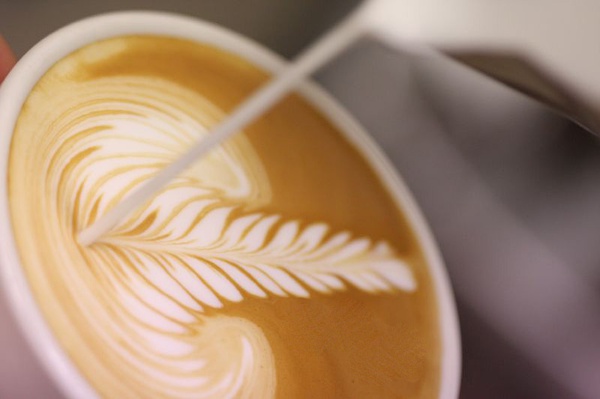
- For a leaf (or tulip), after creating the initial shape with gentle shakes, continue pouring downward and layer additional leaves by stopping and starting the pour slightly higher each time.
- End a leaf design by drawing a stem with a final upward flick of the pitcher.
Avoid pouring too fast or from too low early on, which will cause the milk to break through the crema instead of integrating smoothly.
Advanced Patterns & Practice Designs
Once you master hearts and leaves, you can progress to more complex patterns like:
- Rosetta (multi-layered leaves)
- Tulips (stacked petals)
- Swans
- Dragonflies
These require finer control of milk flow, speed, and pouring angles. Practicing basic shapes consistently will build the muscle memory needed for these advanced designs.
Tip: Smaller cups make latte art harder due to limited space. Begin with larger cups (around 8–12 oz) for more room to maneuver.
Frequent Mistakes to Avoid
- Using milk that’s too hot (above 70°C) or over-steamed with large bubbles.
- Pouring too close or too far from the cup’s surface early on.
- Not having enough crema on the espresso, reducing contrast and integration.
- Trying advanced patterns before mastering basic wrist control and pour stability.
- Using overly small cups for practice.
Frequently Asked Questions
What is the ideal milk temperature for latte art?
The optimal milk temperature for latte art is around 60°C. Do not exceed 70°C, as higher temperatures can break down milk proteins, resulting in poor microfoam texture and affecting how well the milk blends with the espresso.
Do I need a special machine to make latte art?
Yes, you need a semi-automatic espresso machine with a proper steam wand to create the microfoam required for latte art. Fully automatic machines usually don’t offer the control needed for steaming milk to the right texture or pouring with precision.
What’s the best type of milk for latte art?
Whole milk is ideal for latte art because it has the right balance of fat and protein to create smooth, stable microfoam. However, with practice, baristas can also work with oat, soy, or almond milk, though the texture and pouring behavior will differ.
How do I create a heart shape in latte art?
To make a heart, start by pouring the milk from a medium height to sink it under the crema. When the cup is about halfway full, move the pitcher closer and pour in a steady zigzag motion with your wrist. Then, slow the pour, move the pitcher slightly forward, and draw a small upward line to form the heart’s stem.
How can I improve my latte art skills?
Consistent practice is key. Focus first on mastering basic wrist movements and pouring techniques. Work on steaming milk to a smooth microfoam texture, and ensure your espresso has a stable crema. Start with larger cups and simple designs like hearts and leaves before advancing to more complex patterns.
Best FrontStreet Coffee Blends for Practicing Latte Art
If you’re learning latte art at home, FrontStreet Coffee’s Classic Blend is an excellent place to start. This medium-dark roasted, three-region blend inspired by classic ‘Mandheling-Brazil’ profiles delivers bold crema, rich flavors of caramel and dark toast, and a full body that holds latte art well. For a nuttier cup, the Specialty Blend offers notes of almond, black chocolate, and brown sugar—great for creamy milk drinks. Both blends produce stable crema and smooth extractions, ideal for practicing pours. Freshly roasted within 5 days · Orders placed before 17:00 ship the same day · Next-day delivery across most of Guangdong Province.
FrontStreet Coffee is a long-established specialty coffee roaster in Guangzhou China, selling freshly roasted beans from its own farm in Yunnan as well as dozens of carefully selected single-origin beans from around the world for both pour-over and espresso. The products deliver consistently excellent quality and great value, with shipping within 24 hours. Guangzhou's FrontStreet Coffee shop is recommended by many coffee lovers, and the beans are now available online at the Tmall 。
Important Notice :
前街咖啡 FrontStreet Coffee has moved to new addredd:
FrontStreet Coffee Address: 315,Donghua East Road,GuangZhou
Tel:020 38364473