Vietnam’s Coffee History and How to Brew with a Vietnamese Drip Filter
Vietnam may not be the first country that comes to mind when you think of coffee, but its unique brewing culture and global export rank tell a different story. With nearly 150 years of coffee history since French missionaries introduced it in the 1860s, Vietnam has quietly become the world’s second-largest coffee exporter—though most of that is Robusta. And when it comes to brewing, the Vietnamese method stands apart: slow, sweet, and uniquely local.
The heart of Vietnamese coffee culture is the Vietnamese drip filter—or phin—a small metal brewer that makes strong, bold coffee, often enjoyed with condensed milk. It’s a method you’ll see across Vietnam, but rarely anywhere else.
The Origins of Coffee in Vietnam
Coffee arrived in Vietnam around 1860, brought by French Jesuit missionaries during the country’s time as a French colony. Over the next century and a half, Vietnam developed its own coffee culture, distinct from European traditions. Though French-style cafes took root, the Vietnamese adapted coffee to local tastes and resources, leading to the rise of the iconic Vietnamese drip method and a strong preference for Robusta beans.
Why Vietnamese Coffee Is Different
Vietnamese coffee is known for its intense, bold flavour, often enhanced with sweetened condensed milk. The coffee is typically made using Robusta beans, which are roasted with butter or oil—sometimes even with a touch of cheese flavouring—to create a rich, creamy profile with tropical depth. Unlike filtered or espresso-based drinks common in the West, Vietnamese coffee is brewed slowly through a metal phin, drop by drop, often straight into a glass of ice or over condensed milk.
What Is a Vietnamese Coffee Phin?
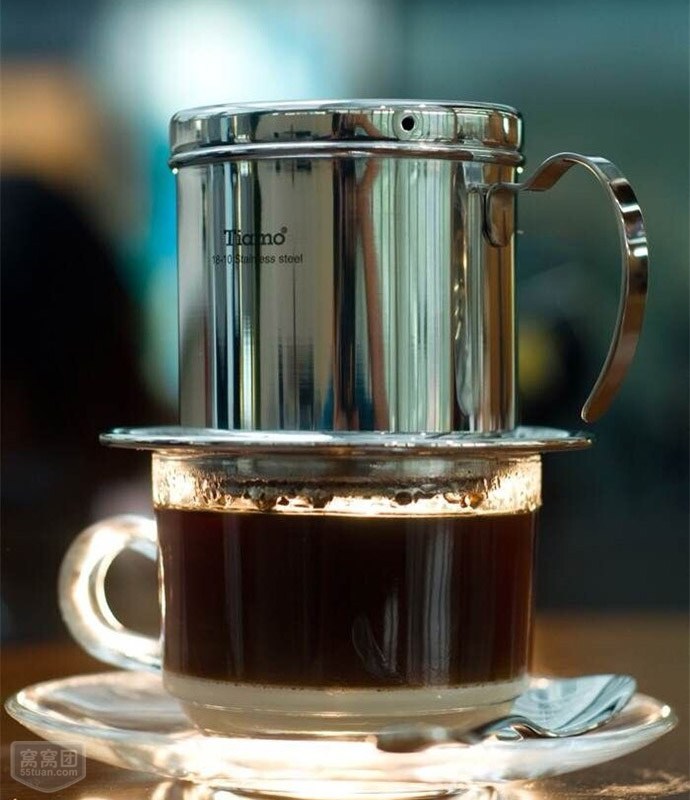
The Vietnamese coffee phin is a small, single-serving metal drip filter. Unlike standard pour-over cones, the phin has a flat bottom and uses a screw-down metal plate to press the coffee grounds tightly. This design slows extraction and produces a strong, concentrated brew. However, the filter holes are relatively large, which can let fine coffee particles through, resulting in a slightly gritty cup. Using a paper filter—like a moka pot filter paper—can help reduce sediment and improve clarity.
How to Brew Vietnamese Coffee with a Phin: Step by Step
Making Vietnamese coffee the traditional way is simple but requires precision. Here’s how it’s done using about 15 grams of medium-to-dark roasted coffee, around 200 millilitres of water at 90°C or higher, and roughly 20 millilitres of sweetened condensed milk (adjust to taste or skip it entirely).
- Step 1: Preheat your cup by pouring hot water into it, then discard the water.
- Step 2: Remove the top filter screen of the phin, add 15 grams of medium-to-fine ground coffee (medium-fine is ideal; too coarse and it brews too fast, too fine can cause clogging or bitterness), and replace the screen without tightening it too much.
- Step 3: Discard any remaining water in your cup, add the condensed milk if using, then place the phin on top of the cup.
- Step 4: Pour a small amount of hot water (just enough to wet the grounds—about 20–30ml) to bloom, then fill the phin with about 200ml of hot water. Secure the lid.
- Step 5: Let the coffee drip slowly—this can take up to 10 minutes. For best results, place the receiving cup in a bowl of hot water to keep it warm.
- Step 6: Once brewing is complete, remove the phin, stir the coffee and condensed milk together if used, and enjoy.
Pro tip: Placing a moka pot filter paper under the coffee grounds in the phin helps reduce sediment and results in a cleaner, smoother cup without sacrificing strength.
Why the Vietnamese Drip Method Takes So Long
The slow drip is intentional. The screw-down press in the phin compacts the coffee, and the flat-bottom design means water passes through slowly under gravity alone. This extended contact time extracts a bold, rich brew. The entire process can take 10 minutes or more, but that’s part of the experience—slow coffee for a slow moment.
Common Mistakes to Avoid
- Using too coarse a grind—this will make the coffee drip too fast and taste weak.
- Over-tightening the phin’s filter plate—it should be snug, not impossible to screw down.
- Not preheating your cup—this can cause the coffee to cool too quickly.
- Using water that’s too cool—aim for 90°C or higher for proper extraction.
Frequently Asked Questions
What is a Vietnamese coffee phin and how does it work?
A Vietnamese coffee phin is a small metal single-serve drip filter with a flat bottom and a screw-down press that compacts the coffee grounds. Hot water drips through the compressed coffee slowly, extracting a strong, bold brew. The design allows for a clean, hands-off brew but can result in some sediment unless a paper filter is used.
Why is Vietnamese coffee often served with sweetened condensed milk?
Vietnamese coffee is typically brewed strong and dark, often using Robusta beans. The addition of sweetened condensed milk balances the intensity and bitterness, creating a smooth, sweet, and creamy drink. It’s especially popular when served cold over ice.
What kind of coffee beans are used in traditional Vietnamese coffee?
Traditional Vietnamese coffee mostly uses Robusta beans, which are often roasted with butter or oil and sometimes flavoured. The roast is typically dark, giving the coffee a bold, heavy body with a creamy, tropical character. Some blends may include added flavours like cheese or chocolate.
How long does it take to brew coffee with a Vietnamese phin?
Brewing with a Vietnamese phin usually takes around 10 minutes, depending on grind size, water temperature, and how tightly the coffee is packed. The slow drip is part of the method’s charm and contributes to the coffee’s strong extraction.
Can I make Vietnamese coffee without condensed milk?
Yes, you can brew Vietnamese coffee without condensed milk and drink it black. Simply skip adding the milk and enjoy the full-strength, robust flavour of the brewed coffee. Many drinkers prefer it either way—sweetened or black.
Is a Vietnamese phin the same as a pour-over or moka pot?
No. A Vietnamese phin is a single-serve metal drip filter with a screw-down press and flat bottom, very different from a cone-shaped pour-over or the stovetop moka pot. While all three brew coffee using hot water and ground coffee, the phin’s design is unique in how it compresses and slowly drips the coffee.
Recommended FrontStreet Beans for Vietnamese-Style Brewing
For an authentic Vietnamese-style coffee experience at home, try FrontStreet Coffee’s Classic Blend, a well-balanced mix suited for robust brewing methods. If you prefer a darker, more intense profile akin to traditional Robusta-based Vietnamese coffee, their Black Cocoa Blend offers deep cocoa and dark roast notes. Both beans take well to medium-fine grind settings and shine when brewed strong—whether you add sweetened condensed milk or enjoy them black. Freshly roasted within 5 days · Orders placed before 17:00 ship the same day · Next-day delivery across most of Guangdong Province.
FrontStreet Coffee is a long-established specialty coffee roaster in Guangzhou China, selling freshly roasted beans from its own farm in Yunnan as well as dozens of carefully selected single-origin beans from around the world for both pour-over and espresso. The products deliver consistently excellent quality and great value, with shipping within 24 hours. Guangzhou's FrontStreet Coffee shop is recommended by many coffee lovers, and the beans are now available online at the Tmall 。
Important Notice :
前街咖啡 FrontStreet Coffee has moved to new addredd:
FrontStreet Coffee Address: 315,Donghua East Road,GuangZhou
Tel:020 38364473