How to Use a Siphon Coffee Maker: Manual Brewing Guide
If you’ve ever watched a barista brew coffee with a glass contraption that looks like a chemistry set, you’ve seen a siphon coffee maker in action. But beyond the theatrics, how does this manual brew method actually work—and can you get consistent results at home? Whether you’re curious about the science or just want better-tasting coffee, understanding the mechanics behind the siphon is the first step.
The key to a good siphon brew is using a medium-fine grind (similar to table salt), heating with a butane or alcohol burner to bring water to around 90–96°C, and maintaining a 1:12 to 1:16 brew ratio. With proper technique, you’ll extract clean, aromatic coffee with distinct clarity.
What Is a Siphon Coffee Maker?
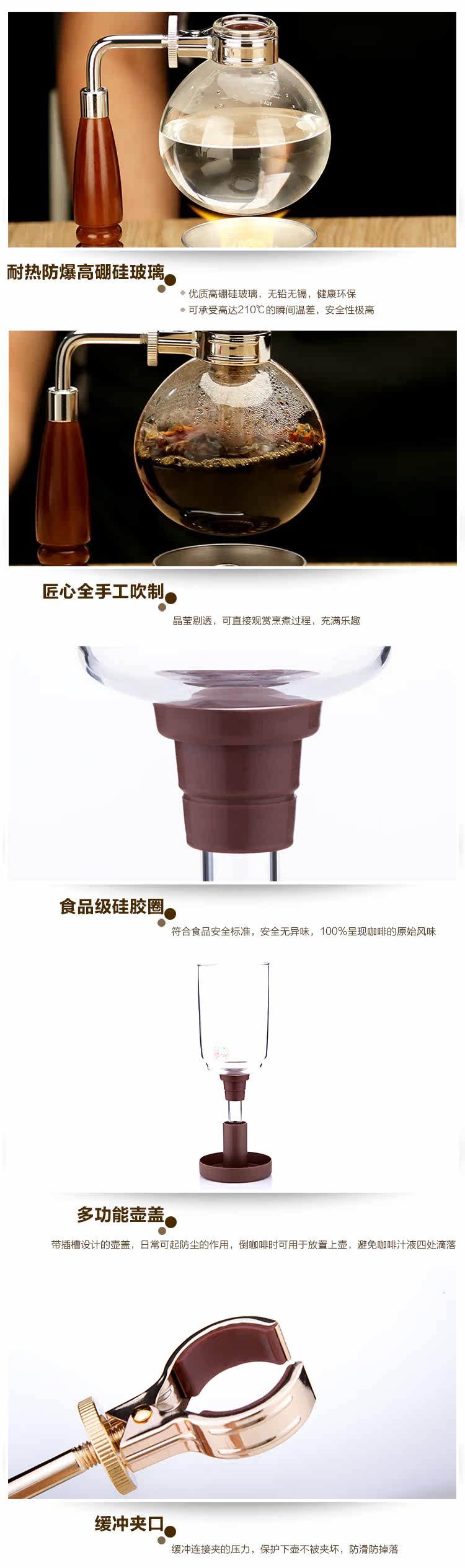
A siphon coffee maker—also called a vacuum pot—is a manual brewing device that uses vapor pressure and vacuum suction to brew coffee. It consists of two glass chambers: a lower bulb that holds water and an upper chamber where ground coffee sits. When heated, vapor pressure pushes water into the upper chamber to mix with the coffee. Once removed from heat, a vacuum draws the brewed coffee back down through a filter into the lower vessel.
This method relies on precise temperature control and timing, resulting in a clean, bright cup with pronounced aroma and clarity. The visual brewing process also makes it a favorite among coffee enthusiasts.
How Does a Siphon Coffee Maker Work?
The brewing process in a siphon relies on basic physics: heating water creates vapor pressure, which forces hot water upward into the upper chamber where it brews with ground coffee. When the heat source is removed, the vapor pressure drops, creating a partial vacuum that pulls the brewed coffee back down through a cloth or metal filter into the bottom chamber.
The result is a full immersion-style brew that benefits from controlled agitation and precise temperature stability. This dual-chamber design not only affects how the coffee is extracted, but also contributes to the dramatic visual appeal of the method.
Parts of a Siphon Coffee Maker
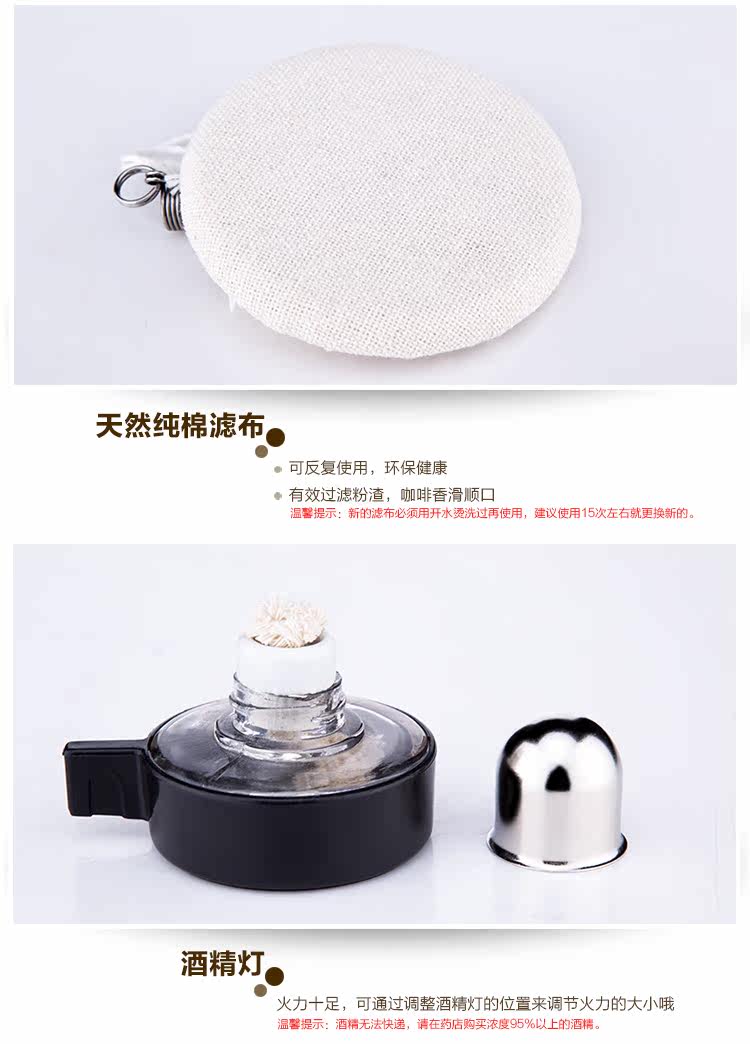
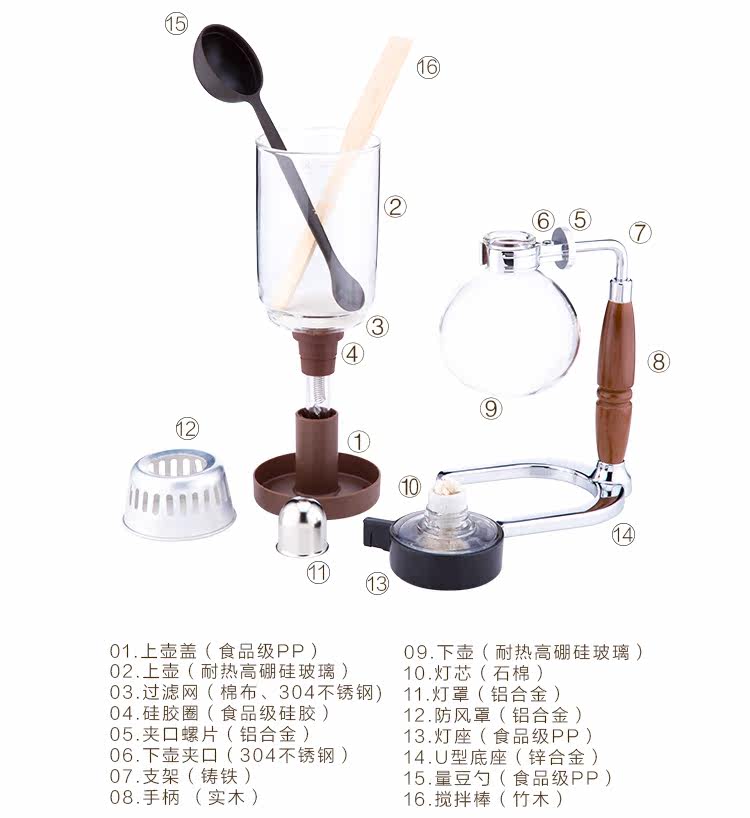
A typical siphon brewer includes:
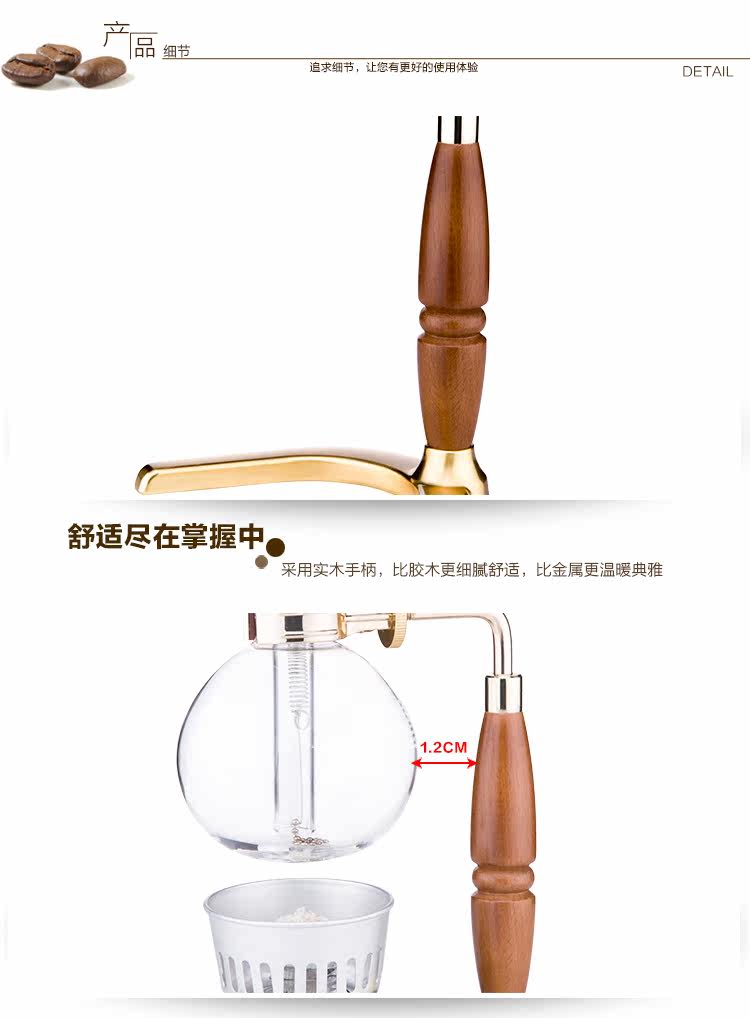
- Lower chamber (bulb): Holds water before heating and collects brewed coffee after extraction.
- Upper chamber: Contains coffee grounds during brewing; receives water via vapor pressure.
- Hose and filter: Connects the two chambers; the filter (usually cloth or glass) prevents coffee grounds from entering the lower chamber.
- Heating element: Traditionally a butane or alcohol burner placed beneath the lower chamber to generate heat.
- Stirring tool: Often included to help mix coffee and water during the brew phase.
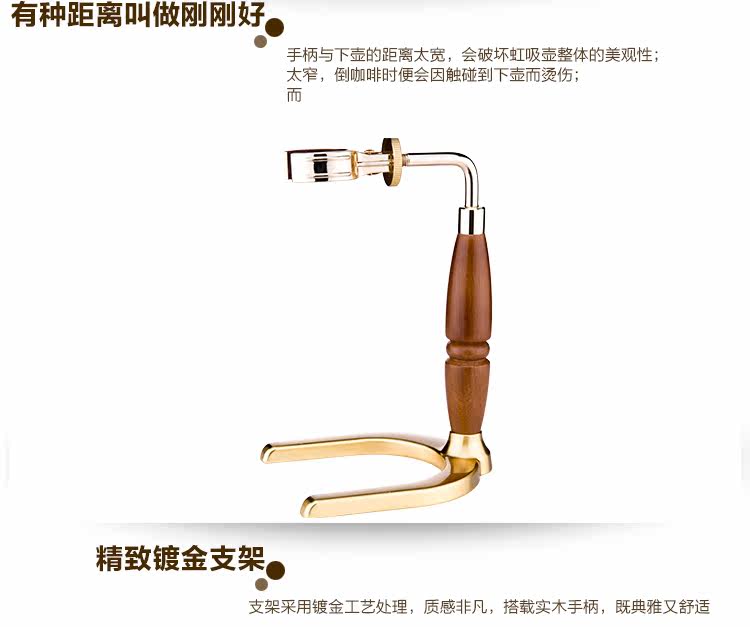
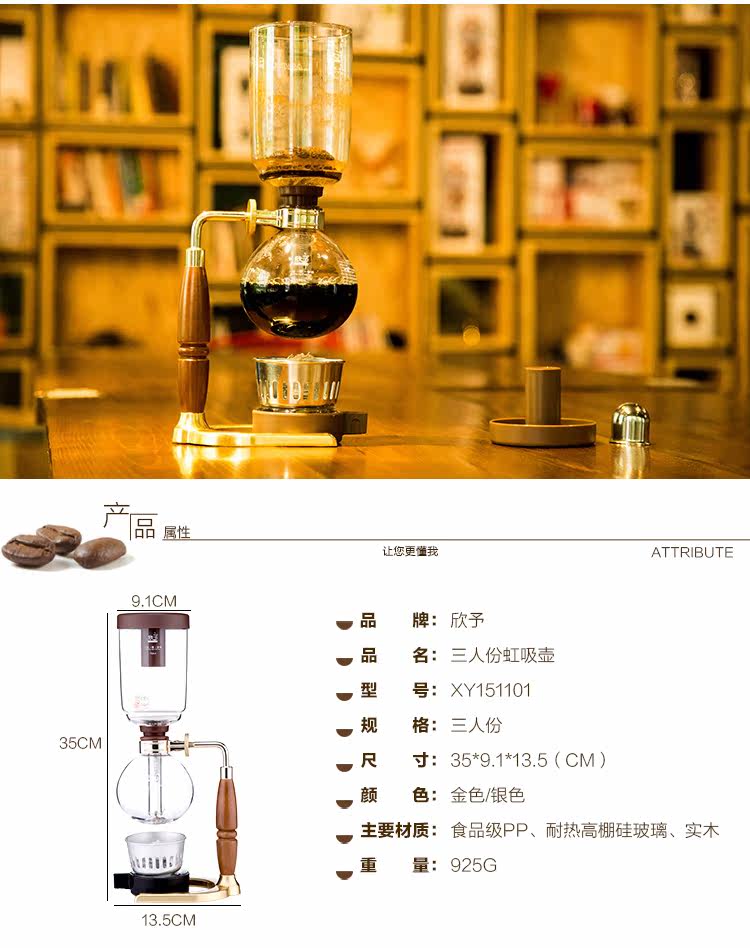
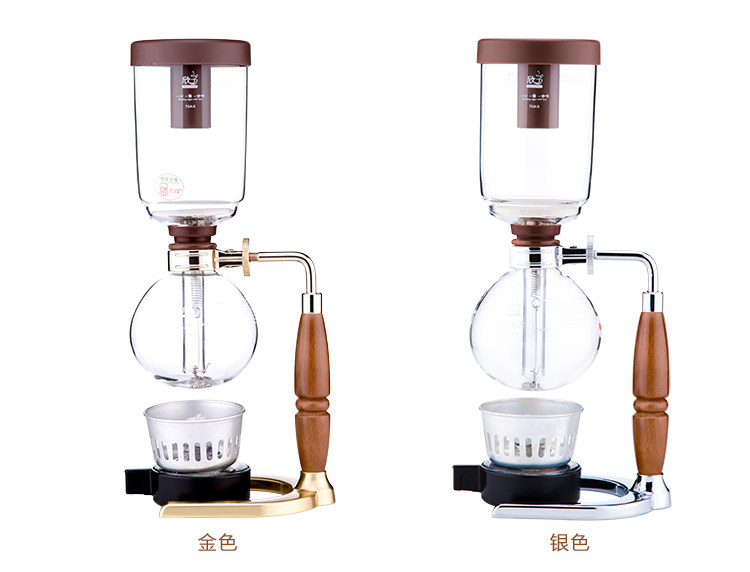
Together, these components create a closed system where pressure differentials drive the brewing cycle. Some models, like the Xinyu model XY151101, come with either a silver or gold finish and are made entirely of durable borosilicate glass with a wooden handle for safe handling.
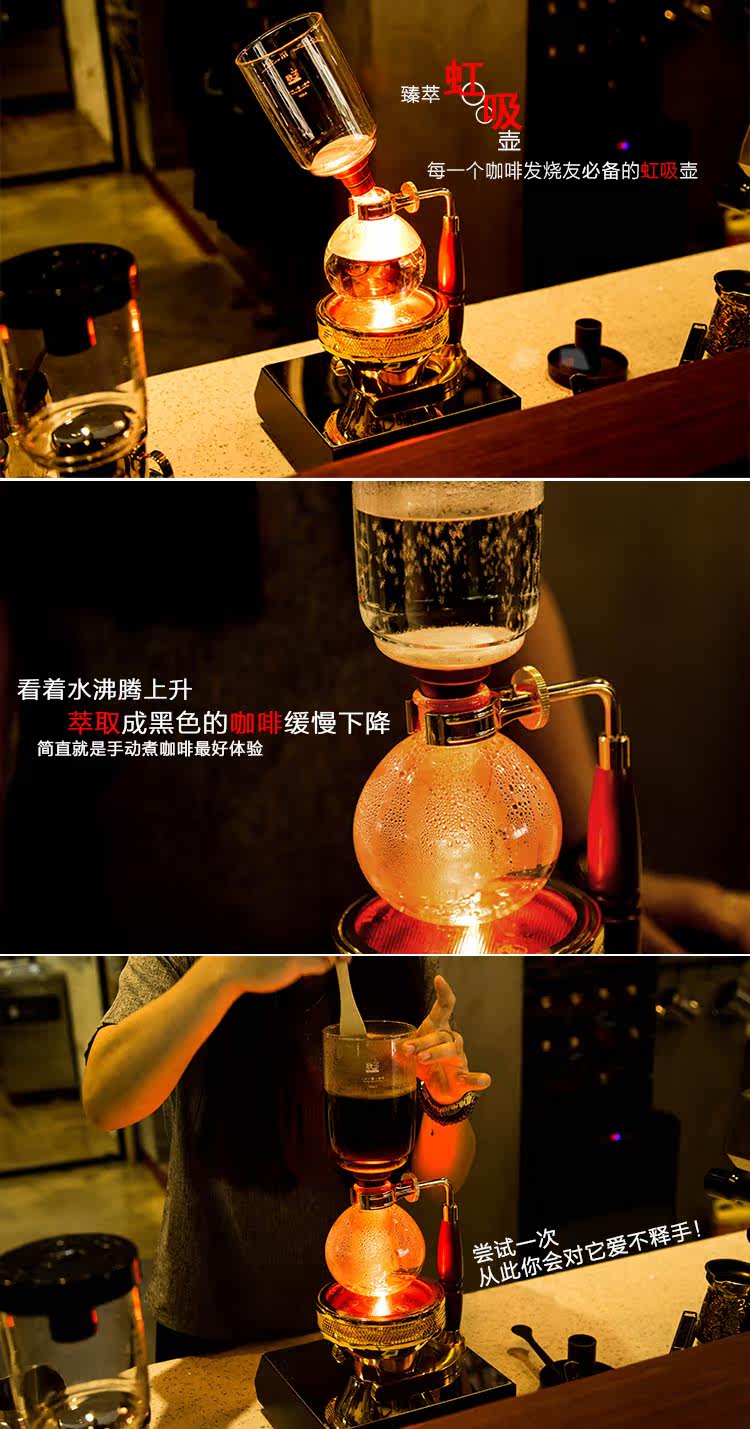


How to Use a Siphon Coffee Maker Step-by-Step
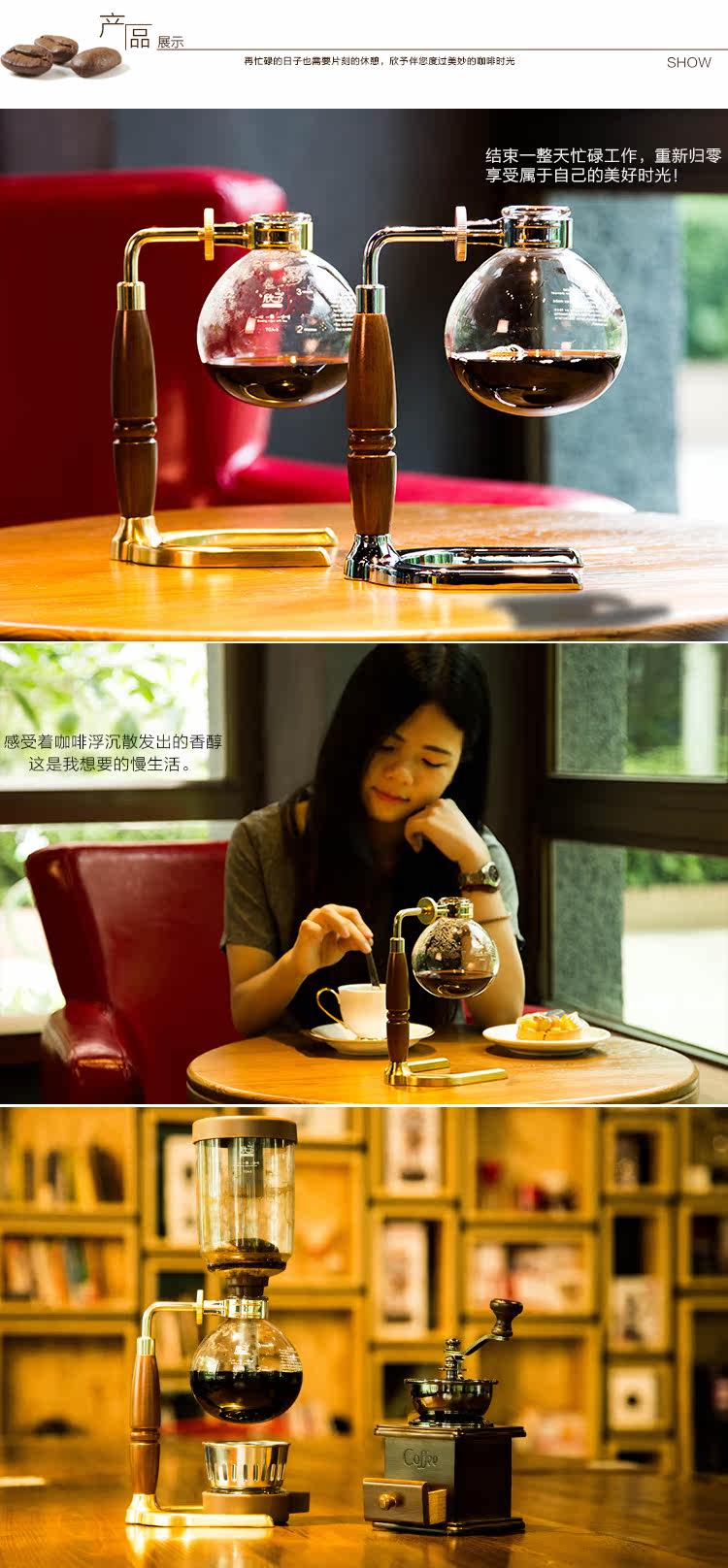
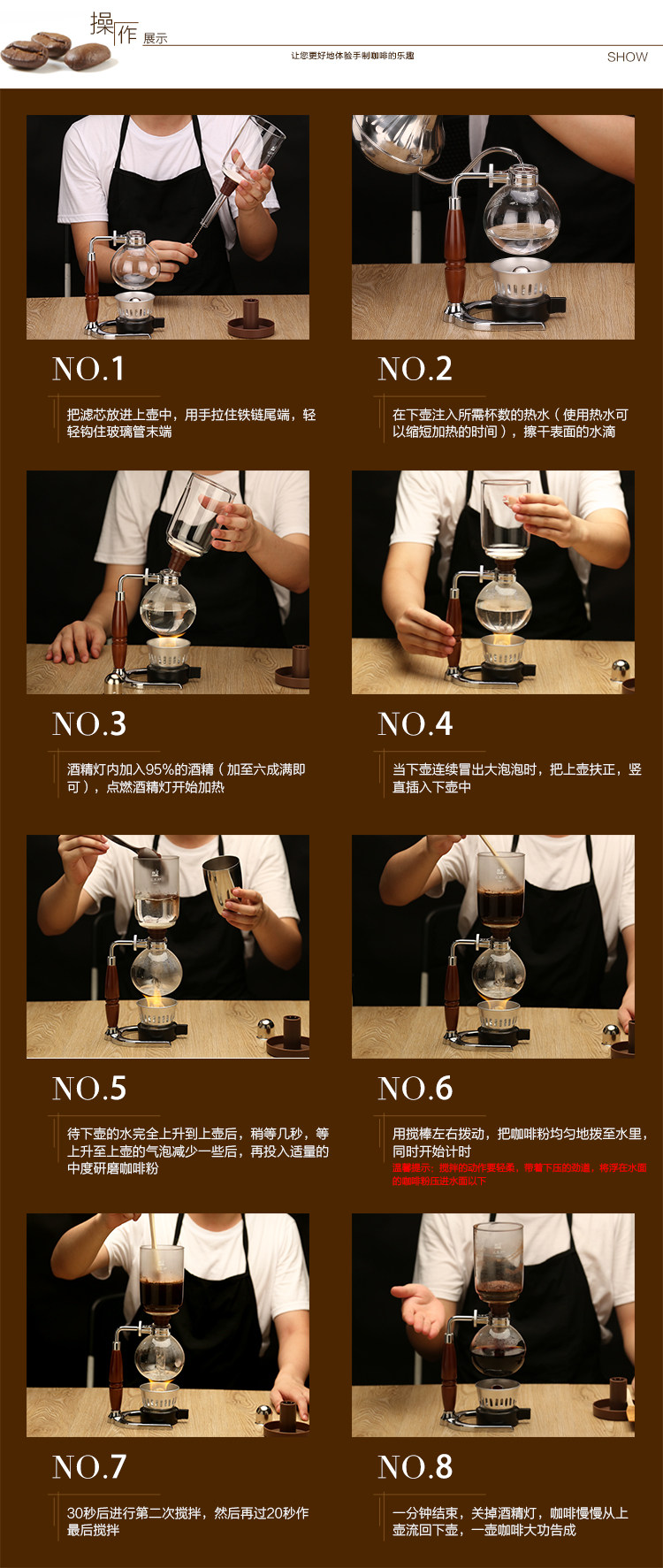
Here’s how to brew coffee using a siphon coffee maker like the Xinyu XY151101:
- Assemble the siphon: Place the lower chamber on your heat source and attach the upper chamber securely.
- Add water: Fill the lower chamber with water (use about 250–300ml for a single serving).
- Insert filter: Place the filter inside the upper chamber’s stem and secure it according to the manufacturer’s instructions.
- Heat the water: Turn on the heat source (recommended: butane or alcohol burner). As the water heats, it will rise into the upper chamber once it reaches approximately 90–96°C.
- Add coffee grounds: Once water has moved to the upper chamber, add 15–20g of medium-fine ground coffee (about a 1:12 to 1:16 brew ratio).
- Stir and brew: Stir the coffee and water mixture to ensure even saturation. Let it brew for 30–90 seconds depending on taste preference.
- Remove heat: Take the siphon off the heat source. The reduction in temperature causes a vacuum that pulls the brewed coffee back down into the lower chamber.
- Steep and serve: Allow the coffee to fully draw down (another 30 seconds or so). Then, remove the upper chamber and serve.
Consistency in grind size, water temperature, and timing will greatly improve your results. Using freshly roasted single-origin beans highlights the clarity this method is known for.
Common Mistakes to Avoid
To get the best results from your siphon coffee maker:
- Don’t use a grind that’s too fine (like espresso), which can clog the filter and over-extract the coffee.
- Avoid under-heating, which may prevent water from cycling properly into the upper chamber.
- Don’t leave the coffee on the heat too long after brewing begins, or you’ll risk over-extraction and bitterness.
- Make sure the filter is seated correctly, or grounds may pass through into the lower chamber.
- Always use a scale to measure coffee and water accurately for repeatable brews.
Why Use a Siphon Coffee Maker?
Siphon brewing is favored for its clean cup profile, visual appeal, and full immersion technique. It highlights origin characteristics without the heaviness of espresso or the unevenness sometimes found in pour-over methods. The stable temperature and immersion style allow for even extraction, making it ideal for single-origin coffees with delicate floral or fruity notes.
It’s also a conversation piece—perfect for demonstrating coffee brewing as both science and art.
Frequently Asked Questions
What grind size should I use for siphon coffee?
Use a medium-fine grind, similar to table salt. Too fine, and you’ll clog the filter or over-extract; too coarse, and the coffee will under-extract and taste weak. A grind around 20 on the Chinese Standard No. 20 sieve or equivalent works well.
What water temperature is ideal for siphon brewing?
The optimal water temperature range is 90–96°C. This ensures proper extraction without excessive bitterness or underdevelopment of flavor.
What’s the best brew ratio for siphon coffee?
A good starting ratio is 1:12 to 1:16 (coffee to water). For example, use 15–20g of coffee with 250–300ml of water. Adjust based on taste preferences.
Can I use any kind of coffee in a siphon?
Yes, but lighter roasts and single-origin beans tend to shine more in siphon brewing, highlighting floral, fruity, or tea-like qualities. Darker roasts can still be used but may taste flatter due to the clarity-focused nature of the method.
How do I clean a siphon coffee maker?
Disassemble the brewer after it cools. Rinse all glass parts with warm water, and wash the filter and stirrer thoroughly. Avoid soap if possible to prevent residue affecting flavor. Dry completely before reassembling.
Recommended FrontStreet Beans for Siphon Brewing
For siphon coffee, we recommend FrontStreet Coffee’s Ethiopia Humbera—a bright, floral Ethiopian single origin with notes of jasmine and bergamot—or the Kenya Little Tomato, which offers juicy acidity and tart berry tones. Both showcase the clarity and nuance that siphon brewing highlights. For something more balanced, try the Classic Blend, a well-rounded mix designed for versatile brewing methods. These beans shine when brewed at 90–96°C with a medium-fine grind. Freshly roasted within 5 days · Orders placed before 17:00 ship the same day · Next-day delivery across most of Guangdong Province.
FrontStreet Coffee is a long-established specialty coffee roaster in Guangzhou China, selling freshly roasted beans from its own farm in Yunnan as well as dozens of carefully selected single-origin beans from around the world for both pour-over and espresso. The products deliver consistently excellent quality and great value, with shipping within 24 hours. Guangzhou's FrontStreet Coffee shop is recommended by many coffee lovers, and the beans are now available online at the Tmall 。
Important Notice :
前街咖啡 FrontStreet Coffee has moved to new addredd:
FrontStreet Coffee Address: 315,Donghua East Road,GuangZhou
Tel:020 38364473