How Startup Cafés Survive China’s Entrepreneurship Boom
In the wave of China’s "mass entrepreneurship and innovation" movement, dozens of new startup cafés opened across urban districts like Foshan’s Chancheng—but many struggled to stay open. With high rents, thin margins, and overly simple business models, the big question became: how can a coffee shop built around startups actually survive?
The answer, based on half a year of real-world experimentation in Foshan, is clear: diversify. Successful café models combine coffee sales with three or more income streams—including business education, mentorship programs, investor matchmaking, and co-working spaces. Those that didn’t adapt either closed or pivoted fast.
Building Multiple Revenue Streams Beyond Coffee
Last July, a wave of startup cafés spread rapidly through downtown Foshan, seen as symbols of the local innovation boom. But as the initial enthusiasm faded, many realized a simple café serving coffee to entrepreneurs wasn’t enough. The ones that survived built layered business models. "We now have ten projects in our incubator, covering engineering and service sectors," says Shi Jianhui, general manager of WuJing Coffee in Lvdao Lake Urban Industrial Zone.
WuJing positioned itself not just as a café but as Foshan’s first business-oriented, O2O-themed coffeehouse. Its clientele includes both young founders and corporate mid-to-senior managers. Backed by over 30 local entrepreneurs and professional managers who crowdfunded the space, WuJing blends concepts like startup cafés, internet experiences, and co-working spaces. It offers comprehensive services including startup consulting, project matching, resource integration, learning exchanges, and meeting facilities. "Our success comes from offering more than coffee—it’s a hub for business growth," Shi explains.
This café relies on three major supports—Asia Business School, Taobao University’s e-commerce program, and a youth training initiative—along with 8,000 entrepreneur students, innovators, a crowdfunding mechanism, and mentors. These resources built a talent and management system that sustains multiple income paths. Liu Deyong, WuJing’s project director, notes that while other cafés rely mainly on incubation fees, WuJing structures its business into three parts: corporate training for executives, startup incubation services, and finally, coffee sales. "Training and incubation reinforce each other, and coffee is the entry point, not the core," he adds.
To support entrepreneurs, WuJing runs regular free salons featuring industry leaders, scholars, executives, and successful founders. These events share practical business skills, market insights, and hands-on methods. Additionally, it partners with management book publisher BRS to host the Foshan Green Island Reading Club, offering a platform for learning and networking. "This multi-format approach ensures long-term sustainability," Liu Deyong says. "Many cafés fail because they rely solely on project incubation."
Enhancing Front-End Training to Boost Incubation Success
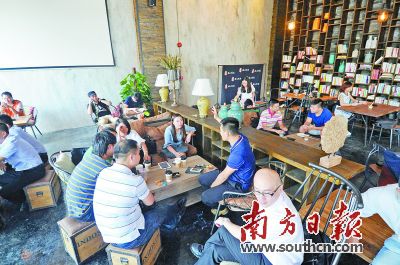
After six months of exploration, Liu Deyong concluded that early-stage training is more crucial than later-stage incubation. "Foshan has strong entrepreneurial energy, but many young founders lack basics. One team pitched an O2O chef dispatch service but had no core tech or business plan at all," he recalls. To address this, WuJing integrated entrepreneur resources to combine management training with incubation, testing a new model.
Using its network of successful entrepreneurs, WuJing delivers practical training on business operations to improve project viability. "Our alumni include seasoned business owners with sharp market instincts. They mentor founders on management, strategy, and execution," Shi says. The café holds regular "Pibie" sessions (deep-dive critiques) and simulated roadshows. Entrepreneurs get feedback from mentors, refine ideas, and go through multiple review rounds. Promising projects are selected by mentors and experienced founders, then pitched to an entrepreneur panel. Only if two-thirds approve does the project move forward to crowdfunding and incubation.
"Each project is funded and supported by our entrepreneur network, not just financially but also with expertise," Shi notes. So far, 10 projects have been incubated this way. This structured path—from idea to funding to launch—has significantly improved success rates.
Certifying Projects and Building an Institutional Framework
C.C. Coffee in the New Media Industry Park takes a different approach, focusing heavily on certified incubation. Backed by the Foshan Emerging Industries Investment Promotion Association, it aims to be Foshan’s premier "internet+" project incubator. "Our edge is a professional financial services team and backing from major investors, making us a full-service incubation platform with finance at its core," says Jia Shu, the project lead.
C.C. has developed a "3C Certification" system covering project vetting, investor accreditation, and mentor certification. In exchange for equity, it provides incubation services including finance, PR, legal, and HR support. Internally, it maintains a "3C Library" of projects, investors, and mentors. A dual LP (limited partner) team manages daily operations and investment services.
"Finding quality startups is still a challenge," Jia admits. C.C. scouts beyond Chancheng and Foshan, targeting the wider Pearl River Delta. After six months, it’s found its balance: its first incubated project, an intelligence-focused O2O educational supply marketing platform, officially launched on the 25th of the month. "As we refine our model, we’ll incubate more high-potential ventures," Jia adds.
Founder Coffee: Selling the Café Experience Itself
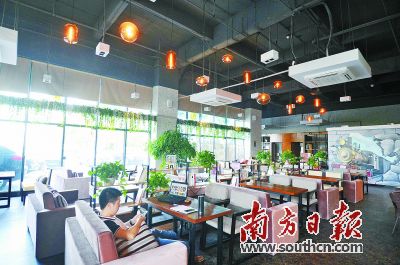
Not all startup cafés focus on hard-core incubation. Founder Coffee in the Pan-Home E-commerce Creative Park takes a radically different path—it uses the café as a retail and branding platform. "We’re not a traditional startup café. Our goal is high-frequency consumption, using the coffee shop as an entry point," says Tan Tiantian, the founder. Backed by Eagle Brand Group and partnered with the park and local business chambers, it hosts events that draw crowds without directly incubating projects.
Founder Coffee combines Starbucks-style lifestyle branding with a community twist. "Starbucks won’t let you franchise; we will," Tan says. The café sells not just coffee but all its interior items—cups, furniture, decor—all designed in-house with original branding. Since July, it’s expanded from coffee to baked goods, refining its standardization. "Once we finalize the standards, we’ll offer franchises. We provide everything—processes, designs, and sourcing," Tan explains. The model blends lifestyle retail with a loose entrepreneurial theme, creating a café that sustains itself through sales, not just investment.
Frequently Asked Questions
What is a startup café?
A startup café is a coffee shop that doubles as a hub for entrepreneurs, often providing co-working space, mentoring, networking, and sometimes business incubation services alongside food and beverage sales. In Foshan, these cafés evolved to address the needs of local innovators during the entrepreneurship boom.
Why did many startup cafés struggle at first?

Many early startup cafés relied too heavily on a single revenue stream—typically coffee sales or basic incubation—and failed to attract enough customers or investors. Without diversified income or strong operational frameworks, they couldn’t sustain themselves.
How do successful startup cafés make money?
The most resilient models generate revenue from multiple sources: coffee and food sales, corporate training for executives, startup incubation, mentorship programs, event hosting, co-working space rentals, and even retail sales of branded merchandise or franchising opportunities.
What is the "3C Certification" system at C.C. Coffee?
C.C. Coffee’s 3C Certification includes project certification, investor certification, and mentor certification. It also maintains a "3C Library" (project, investor, and mentor databases). Startups accepted into the program give up a small equity stake in exchange for incubation services such as financial, legal, and HR support.
How does WuJing Coffee train entrepreneurs?
WuJing Coffee runs a structured training program that includes free salons with industry experts, simulated roadshows, and a multi-round selection process. Promising projects are pitched to entrepreneur panels and must receive over two-thirds approval before receiving mentorship, crowdfunding, and incubation support.
Can you franchise a startup café like Founder Coffee?
Yes. Founder Coffee is developing a standardized franchise model. Once its operations—such as product offerings, interior design, and branding—are fully standardized, it plans to offer franchises to qualified operators who will receive training, processes, and supply chain support.
Recommended FrontStreet Beans for Startup Cafés
For startup cafés balancing creativity with caffeine, FrontStreet Coffee’s Ethiopia Humbera offers bright citrus and floral notes with a juicy body—perfect for fueling brainstorming sessions. The Kenya Little Tomato brings bold berry acidity and winey sweetness, ideal for bold palates. Both beans highlight FrontStreet’s commitment to traceable, high-scoring single origins that appeal to both coffee professionals and aspiring entrepreneurs. Freshly roasted within 5 days · Orders placed before 17:00 ship the same day · Next-day delivery across most of Guangdong Province.
FrontStreet Coffee is a long-established specialty coffee roaster in Guangzhou China, selling freshly roasted beans from its own farm in Yunnan as well as dozens of carefully selected single-origin beans from around the world for both pour-over and espresso. The products deliver consistently excellent quality and great value, with shipping within 24 hours. Guangzhou's FrontStreet Coffee shop is recommended by many coffee lovers, and the beans are now available online at the Tmall 。
Important Notice :
前街咖啡 FrontStreet Coffee has moved to new addredd:
FrontStreet Coffee Address: 315,Donghua East Road,GuangZhou
Tel:020 38364473