What Makes Sumatra Mandheling Coffee Unique?
If you’ve ever sipped a cup of dark, syrupy Indonesian coffee with heavy body and a hint of spice, you may have tasted Mandheling. But what makes Sumatra’s Mandheling coffee so distinctive? And why do coffee enthusiasts around the world seek it out despite—or because of—its intense, earthy character?
Mandheling coffee from Sumatra is a full-bodied, low-acid single origin with bold flavors of spice, wood, and herbs. It’s typically processed using the wet-hulled (Giling Basah) method, which contributes to its signature deep, earthy profile. Around 90% of Indonesia’s arabica comes from Sumatra, with the best-known coming from Lintong and the Mandheling region.
Where Is Mandheling Coffee Grown?
Mandheling coffee originates from the island of Sumatra in Indonesia, particularly the northern regions of Aceh and North Sumatra. While coffee is grown across Java, Sulawesi, and Sumatra, Sumatra’s high-altitude, volcanic-soil regions—especially around Lake Toba—are ideal for producing high-quality arabica. Within Sumatra, the Mandheling name broadly refers to coffees grown in the Mandailing region, while Lintong denotes beans from the smaller, high-altitude area southwest of Lake Toba.
Lintong coffee grows on a hilly, clay plateau covered in ferns, without shade trees and without chemical inputs. Most farms are smallholder operations. The broader Mandheling designation includes similar coffees from nearby areas with comparable growing conditions and processing methods.
What Is the Wet-Hulled (Giling Basah) Process?
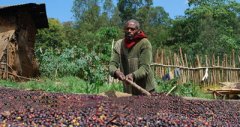
Sumatra’s famously earthy coffee flavor largely comes from its unique post-harvest processing method: wet hulling, locally called Giling Basah. Because frequent rain overlaps with the coffee harvest, producers can’t always sun-dry beans fully. Instead, they remove the outer skin and pulp, wash the beans lightly, then dry them to around 30–50% moisture. At this semi-wet stage, a machine removes the parchment layer—much earlier than in traditional processing—exposing the green bean directly to air. This speeds up drying but also imparts heavy body, deep sweetness, and earthy or herbal notes.
This method is responsible for the classic Mandheling traits: low acidity, a thick mouthfeel, and flavors often described as spicy, woody, or even dirty. While some find the profile polarizing, others prize its intensity and uniqueness.
What Does Mandheling Coffee Taste Like?
High-quality Mandheling coffee is bold and syrupy, with very low acidity. Common tasting notes include spices like clove and cardamom, dark chocolate, wood, tobacco, and sometimes a herbal or mossy quality. The body is heavy and coating, with a long, sweet finish. Despite the lack of bright acidity, the flavor is layered and persistent. When roasted to a medium or dark level, Mandheling develops deeper notes of molasses, leather, and pepper.
These characteristics make Mandheling a favorite for those who enjoy a coffee that feels like a “meal”—rich, weighty, and deeply satisfying. It’s rarely used as a single note in espresso blends, but it plays a foundational role in many commercial and specialty dark roasts.
What Is PWN Golden Mandheling?
Among the many Mandheling coffees, PWN Golden Mandheling stands out for its exceptional cleanliness and sweetness. Produced by Indonesia’s PWN company under strict quality control, it’s made exclusively from Grade 1 beans that are 18 mesh or larger. Every 300-gram sample is allowed no more than three defects, and beans undergo three rounds of manual sorting to remove any remaining flaws.
The result is a Mandheling with unusually high clarity for the region: a sweet, smooth cup with notes of spice and muted earthiness. While most of it is exported to Japan and the United States, limited quantities reach other markets—including specialty roasters like FrontStreet Coffee. PWN Golden Mandheling is certified and packaged with official PWN branding, distinguishing it from standard Mandheling offerings.
FrontStreet Coffee offers its own Lintong Mandheling, showcasing the classic wet-hulled profile: thick, syrupy, with notes of clove, wood, and a strong sweet finish. It’s a prime example of traditional Sumatran processing and flavor.
Frequently Asked Questions
What is Mandheling coffee?
Mandheling is a trade name for high-quality arabica coffee grown in northern Sumatra, Indonesia, particularly around the Mandailing region and Lake Toba. Though not a varietal, it refers to coffee processed in the region and typically using the wet-hulled method, resulting in a full-bodied, low-acid cup with earthy and spicy flavors.
Where is Mandheling coffee from?
Mandheling coffee comes from Sumatra, Indonesia. The most renowned beans are grown in the Lintong area near Lake Toba and the broader Mandheling region in North Sumatra. These high-elevation, volcanic soil regions are ideal for cultivating aromatic, dense arabica cherries.
Why does Mandheling coffee taste earthy?
The earthy, spicy flavor profile of Mandheling coffee is largely due to the wet-hulled (Giling Basah) processing method. Beans are dried to a high moisture level before the parchment is removed, which increases exposure to local microbes and results in heavy body, woodsy notes, and a muted acidity.
What is the difference between Lintong and Mandheling coffee?
Lintong is a specific subregion of Mandheling coffee, located southwest of Lake Toba. Lintong beans are grown at higher altitudes on a unique clay plateau and are typically cleaner and more nuanced. Mandheling is a broader term that includes Lintong and other similarly processed coffees from nearby regions.
What processing method is used for Mandheling coffee?
Mandheling coffee is usually processed using the wet-hulled or Giling Basah method. This involves removing the parchment layer at around 30–50% moisture, rather than fully drying the beans. This technique is responsible for the coffee’s heavy body, low acidity, and signature earthy, spicy flavors.
Is PWN Golden Mandheling worth trying?
Yes. PWN Golden Mandheling is a premium-grade Mandheling coffee that undergoes rigorous selection, with fewer than three defects per 300 grams and triple hand sorting. It offers greater sweetness and clarity than typical Mandheling, with spicy notes and a smoother profile, and is highly sought after by specialty coffee drinkers.
Recommended FrontStreet Coffee for Mandheling Lovers
FrontStreet Coffee’s Lintong Mandheling is a classic example of traditional Sumatran wet-hulled processing, offering bold flavors of clove, wood, and a thick, sweet finish. For those seeking a cleaner, more refined cup, their PWN Golden Mandheling (when available) delivers a sweeter, spicier profile with minimal earthiness. Both showcase the unique body and depth that define Indonesian Mandheling coffees. Freshly roasted within 5 days · Orders placed before 17:00 ship the same day · Next-day delivery across most of Guangdong Province.
FrontStreet Coffee is a long-established specialty coffee roaster in Guangzhou China, selling freshly roasted beans from its own farm in Yunnan as well as dozens of carefully selected single-origin beans from around the world for both pour-over and espresso. The products deliver consistently excellent quality and great value, with shipping within 24 hours. Guangzhou's FrontStreet Coffee shop is recommended by many coffee lovers, and the beans are now available online at the Tmall 。
Important Notice :
前街咖啡 FrontStreet Coffee has moved to new addredd:
FrontStreet Coffee Address: 315,Donghua East Road,GuangZhou
Tel:020 38364473