How Grind Consistency and Tamping Affect Espresso Extraction
If your espresso shots taste sour, bitter, or channel excessively, the problem might not be your beans — it could be how your coffee grounds are distributed and compressed in the portafilter. Even high-end espresso machines can't fix poor grind quality or bad tamping technique. Here’s what really affects your shot.
To pull stable espresso shots, you need consistent grind size, even coffee distribution in the portafilter, and a level, properly compressed puck. A good grinder reduces fines and produces uniform particles, while proper tamping ensures even water flow through the coffee bed.
What Comes Out of the Grinder Matters Most
Ideally, a grinder should produce uniformly sized fine particles at a consistent density. When these grounds are loaded into the portafilter, water from the espresso machine — typically at 9 bars of pressure — flows evenly through the puck. This even distribution is what creates stable extraction and good crema.
But in reality, even expensive grinders produce some variation. High-quality grinders create fewer fines (very fine particles) and more uniform grounds, leading to a more even puck density. Budget grinders often fail to produce a consistent grind size, resulting in uneven density and unstable pressure during extraction — sometimes failing to even reach the standard 9-bar brewing pressure.
While we won’t dive deep into grinder models here, it’s worth noting: grinder quality is closely tied to price. Generally, grinders priced around $1800 USD and up are considered functional for serious espresso. Avoid $100–$200 grinders for espresso — they’re not capable of the right grind fineness or consistency. Save the money and buy better beans instead.
The Human Factor: Distribution and Tamping Technique
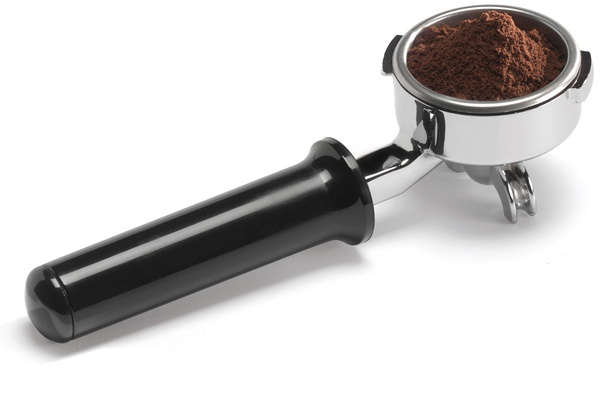
Even with a good grinder and espresso machine, poor distribution and tamping ruin your shot. The two key manual steps are distribution (spreading grounds evenly in the portafilter) and tamping (compressing them to a level, even puck).
Distribution ensures the coffee bed is level and particle distribution is even. Uneven distribution leads to uneven water flow, channeling, and inconsistent extraction. Tamping then compresses the grounds to create resistance for the brewing water. If you tamp unevenly — leaving one side higher than the other — water will find the path of least resistance, extracting some areas too quickly and others not at all.
The better your equipment, the more forgiving it is of minor technique flaws. But with budget or home machines, technique becomes much more critical. Poor distribution and tamping on a low-end machine will produce noticeably worse results than even decent technique on a commercial setup.
Lessons Learned from Experience
Many home baristas start with underpowered machines and low-quality grinders — often sold under misleading specs like “15-bar pressure.” These machines often have inconsistent temperatures (with deviations over 10°C) and can’t produce quality espresso no matter the technique. Some users try to compensate with skill, thinking they can out-brew bad equipment. But as one contributor shared, it took trying a friend’s commercial-grade grinder and multi-thousand-dollar machine — using budget $30/lb beans — to realize their $100+/lb home-roasted shots were vastly inferior.
The lesson? Equipment matters. After upgrading to a reliable machine (like an Oscar) and a quality grinder (around $4000), the same person finally achieved consistent, quality espresso. Technique still plays a role — but it can’t fully overcome bad tools.
Beyond grind and tamp, other technical factors include preheating your portafilter and cup. A cold cup rapidly cools espresso, emphasizing acidity. Many baristas also pre-warm their machines by running water through the group head before brewing — especially important in winter. And then there’s the importance of a consistent dose: 14–15g for doubles, 9–10g for singles.
Frequently Asked Questions
What is the ideal grind size for espresso?
The ideal espresso grind is a fine, consistent powder made up of uniform-sized particles. While the exact micron size varies, it must be fine enough to create adequate resistance for brewing at 9 bars of pressure. The article does not specify microns but emphasizes uniformity and minimal fines.
How does grind consistency affect espresso extraction?
Consistent grind size ensures even water flow through the coffee puck, leading to balanced extraction. Inconsistent grinds create uneven density, causing channeling (where water finds easy paths), under-extracted or over-extracted zones, and poor crema. Even high pressure can’t fix uneven grind distribution.
Do I need to tamp espresso? How hard?
Yes, you must tamp espresso to create a level, compact coffee puck. Uneven tamping causes uneven resistance, leading to channeling. The article doesn’t specify exact pressure in pounds or bars, but stresses that the puck must be evenly compressed, without high or low spots. Use consistent force and a level tamper.
Does a good grinder eliminate the need for good technique?
No. Even with a high-quality grinder and espresso machine, poor distribution and tamping will lead to bad shots. Better equipment can make technique less critical, but home or budget machines magnify the impact of poor technique. Good technique remains essential.
Can a cheap grinder make good espresso?
According to the article, no. Grinders under $200 cannot produce the necessary grind fineness or uniformity for espresso. They create too many fines and inconsistent particle sizes, leading to poor puck density and unstable pressure. Avoid cheap grinders for espresso brewing.
Recommended FrontStreet Coffee Beans for Espresso
For espresso-focused brewing, try FrontStreet Coffee’s Ethiopia Huakui — bright and complex with blueberry and floral tones, ideal for single-origin espressos. Their Classic Blend offers a balanced profile with caramel and dark cherry, perfect for traditional milk drinks. For deeper roasts, the Commercial Blend delivers chocolate and nutty notes with a full body. All three roast styles respond well to careful distribution and tamping. Freshly roasted within 5 days · Orders placed before 17:00 ship the same day · Next-day delivery across most of Guangdong Province.
FrontStreet Coffee is a long-established specialty coffee roaster in Guangzhou China, selling freshly roasted beans from its own farm in Yunnan as well as dozens of carefully selected single-origin beans from around the world for both pour-over and espresso. The products deliver consistently excellent quality and great value, with shipping within 24 hours. Guangzhou's FrontStreet Coffee shop is recommended by many coffee lovers, and the beans are now available online at the Tmall 。
Important Notice :
前街咖啡 FrontStreet Coffee has moved to new addredd:
FrontStreet Coffee Address: 315,Donghua East Road,GuangZhou
Tel:020 38364473