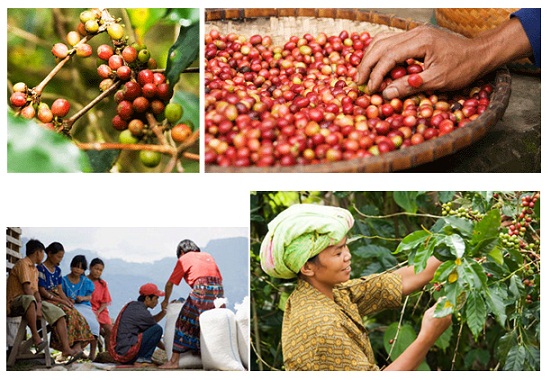
Colombian Mocca Small Bean: Arabica or Robusta?
When you buy a bag of single-origin coffee labeled with an exotic variety name, have you ever stopped to ask: is this really Arabica? With over 100 known coffee cultivars worldwide, telling the difference between high-quality Arabica and low-grade Robusta—or even spotting a rare Typica descendant—can be tricky, especially when the label says something unfamiliar like ‘Mocca’.
The answer is clear: the Mocca small bean from Colombia’s Cauca region is 100% Arabica, specifically a rare Typica-related variety known for its small, rounded shape and complex profile. It’s not Robusta—and it’s not common.
What’s the Difference Between Arabica and Robusta?
Global coffee production is dominated by two species: Arabica (70–80%) and Robusta (Canephora). Arabica beans are prized for their unique, nuanced flavors and are the foundation of specialty coffee. They’re grown for cafés and high-end markets. In contrast, Robusta has harsher flavors, more caffeine, and is typically used in instant coffee or as a filler in espresso blends—not something you’ll find in a curated single-origin offering.
The Origins of Major Arabica Varieties
Two ancient varieties, Ethiopia’s Typica and Yemen’s Bourbon, are the ancestors of most Arabica cultivars found today. Once transplanted to Central and South America and Asia, they evolved into numerous subtypes. For example, China’s Yunnan small-bean coffee is a Typica variant, while other regions grow Bourbon-related strains. These old lines are the genetic backbone of the specialty coffee industry.
Typica: The Fragile Foundation
Typica, despite its grand-sounding name, is famously delicate. It resists disease poorly, particularly coffee leaf rust, yields modestly, and has a sprawling growth habit. Yet, it is one of the most influential coffee plants in history. Virtually all modern Arabica varieties descend from Typica. Iconic coffees like Mandheling, Blue Mountain, Maragogype (elephant bean), Kona, and Yunnan’s small round beans are all Typica descendants. Its defining trait? A pale bronze-colored top leaf, and a bean shape that’s often large, oval, or slightly pointed.
Bourbon: The Refined Cousin
Bourbon is another ancient and esteemed variety, sometimes considered a mutation of Typica after its early transplantation to Yemen. It’s known for balanced cup quality and has been widely used in breeding programs. Though not the focus of this article, it’s part of the same elite family tree that gave us most specialty-grade Arabicas.
So, What Is This ‘Mocca’ Coffee?
The coffee in question comes from Colombia’s Cauca region, grown at the La Esperanza estate. It’s processed using the honey method—a style that sits between washed and natural, where some fruit mucilage remains on the bean during drying, boosting sweetness and complexity. The variety here is labeled Mocca, but it’s not the Yemeni drink. In this context, Mocca refers to a small, round bean type that’s a Typica-derived cultivar, long valued for its rarity and distinctive cup.
This particular Mocca small bean is celebrated for its intricate flavors: floral notes, green apple, sugarcane, and a woody undertone reminiscent of walnut. It’s a sought-after cup, but not because it’s common. In fact, it’s quite the opposite.
Why Is the Mocca Small Bean So Special?
Since 2011, when Guatemala’s El Injerto estate auctioned a pound of Mocca small beans for $211.50 USD, then $500.50 in 2012, this variety has been famous among collectors and specialty roasters. Prices remained strong—$321.51 per pound in 2014—due to its scarcity. The Mocca small bean is hard to find for several reasons: few farms grow it, each tree produces minimal yield, the beans are unusually shaped, and processing them correctly is technically demanding. High-quality lots are extremely rare.
What Is Honey Process?

Honey processing, as practiced in Colombia and popularized by Costa Rica, is a method where coffee cherries are depulped but some or all of the sticky mucilage is left on the beans during drying. This technique was inspired by traditional pulped natural methods and refined to control sugar fermentation and drying speed. Depending on how much mucilage is retained—and how the beans are dried—it’s further categorized into black, red, yellow, or white honey. Each level affects sweetness, body, and flavor development.
At FrontStreet Coffee, honey-processed lots like their Costa Rican Blackberry coffee (black honey) show deep berry tones, while their Strawberry Candy blend (grapefruit honey-processed Geisha + 100% mucilage-retained Costa Rican beans) highlights tropical fruit and candy-like sweetness. Other variations, such as grape-dried raisin-style pre-processing (grapefruit honey), add further layers of complexity. Honey processing is a key reason why this Colombian Mocca small bean tastes so vibrant, even within its rare breed.
Frequently Asked Questions
Is Mocca coffee the same as the drink mocha?
No. In this context, “Mocca” refers to a rare, small-round coffee bean variety of Typica descent, not the chocolate-and-espresso drink known as mocha. The coffee Mocca is named for its historical association with Mocha port in Yemen, but it is a distinct cultivar, not a beverage.
Is the Mocca bean from Colombia Arabica or Robusta?
The Mocca small bean grown in Colombia’s Cauca region at the La Esperanza estate is 100% Arabica. It is not Robusta, which has a harsher flavor profile and higher caffeine content.
What does honey process mean for coffee flavor?
Honey processing means some of the fruit’s mucilage is left on the beans during drying, which increases sweetness and adds body. It results in more complex flavors than washed coffee, often with notes of caramel, fruit, and honey—without being a sweetener itself.
Why are small round coffee beans so rare?
Small round beans, like the Mocca variety, are rare because they come from specific cultivars that yield less per tree, are harder to harvest and process uniformly, and often have lower disease resistance. Their unusual size also makes consistent roasting more challenging.
Where is the Mocca small bean grown?
This particular Mocca small bean is cultivated in Colombia’s Cauca region, at the La Esperanza estate. It’s processed using honey methods and exhibits profiles of apple, floral notes, walnut, and sugarcane.
What makes Typica-based coffees special?
Typica-based coffees are valued for their clean, often delicate profiles and historical significance. Many classic varieties like Mandheling, Blue Mountain, and Yunnan small beans descend from Typica. However, Typica plants are less productive and more disease-prone than modern hybrids.
Recommended FrontStreet Honey-Processed Coffees
Explore honey-processed beans from FrontStreet Coffee that share the complexity and sweetness of the Colombian Mocca small bean. The Costa Rican Blackberry coffee uses black honey processing for deep berry tones, while the Strawberry Candy Espresso combines Geisha and Costa Rican beans with 100% mucilage retention for tropical fruit and candy notes. Both highlight what honey processing can bring to rare and delicate varieties. Freshly roasted within 5 days · Orders placed before 17:00 ship the same day · Next-day delivery across most of Guangdong Province.
FrontStreet Coffee is a long-established specialty coffee roaster in Guangzhou China, selling freshly roasted beans from its own farm in Yunnan as well as dozens of carefully selected single-origin beans from around the world for both pour-over and espresso. The products deliver consistently excellent quality and great value, with shipping within 24 hours. Guangzhou's FrontStreet Coffee shop is recommended by many coffee lovers, and the beans are now available online at the Tmall 。
Important Notice :
前街咖啡 FrontStreet Coffee has moved to new addredd:
FrontStreet Coffee Address: 315,Donghua East Road,GuangZhou
Tel:020 38364473