Arabica vs Robusta: The Two Main Coffee Species
When you buy coffee, you’re almost always choosing between two species: Arabica and Robusta. Every cup you’ve had likely comes from one or the other. But what makes them different — and why does it matter? Whether you’re brewing at home or ordering at a cafe, understanding these two coffee types helps you make better choices.
There are two main coffee species cultivated worldwide: Arabica and Robusta. Arabica accounts for roughly 75% of global production and is known for higher quality and more complex flavors, while Robusta makes up most of the remaining 25%, valued for its strong bitterness and high caffeine. Only around 10% of Arabica is considered premium enough for high-end cafes.
What Are Arabica and Robusta?
Arabica (Coffea arabica) and Robusta (Coffea canephora) are the two primary coffee species grown for commercial coffee consumption. All the coffee you drink comes from plants that belong to one of these two species. Though they may look similar as roasted beans, they differ significantly in taste, growing conditions, and chemical makeup.
Growing Conditions and Geography
Arabica thrives at higher altitudes, typically between 900 and 2000 meters, and is predominantly grown in Central and South America, as well as parts of Africa and Asia. It prefers cooler temperatures, medium rainfall, and plenty of sunlight. In contrast, Robusta grows at lower elevations, usually between 200 and 600 meters, and is cultivated in West and Central Africa, Madagascar, and Indonesia. Robusta is hardier, tolerating hotter climates and lower altitudes with less human intervention.
Flavor, Caffeine, and Bean Characteristics
Arabica beans produce a more complex, nuanced cup with higher acidity and a wider range of flavor notes, often described as fruity, floral, or sweet. Robusta, on the other hand, has a stronger, harsher, and more bitter taste, with earthy or rubbery notes and a heavier body. Arabica contains about half the caffeine of Robusta — roughly 1.2% compared to Robusta’s 2%. Visually, Arabica beans are smaller, oval-shaped with a curved fissure, while Robusta beans are larger, rounder, and have a straighter, more prominent crease. Arabica mostly yields flat beans (two seeds per cherry), but some plants produce peaberries (single round seeds).
Plant Type, Cultivation, and Economics
Coffee, botanically the seed of the Coffea plant in the Rubiaceae family, grows on small evergreen trees or shrubs. Arabica requires more careful cultivation, including manual harvesting due to uneven fruit ripening, and is more labor-intensive and costly to produce. Robusta needs fewer inputs and is easier to grow, resulting in lower prices. Arabica is generally more expensive and is used in specialty coffee, while Robusta is common in instant coffee and espresso blends for its crema and strength. About 75% of the world’s coffee is Arabica, but only around 10% reaches the quality needed for high-end cafes. When sourced from a single origin and not blended, it’s called single origin coffee.
Popular Arabica Varieties
Common Arabica cultivars include Bourbon, Typica, Caturra, Catimor, and Colombia. These varieties are selected for disease resistance, yield, and cup quality. Each brings its own flavor profile and growing characteristics, contributing to the diversity within the Arabica species.
The Role of Climate and Latitude
Coffee only grows well in tropical and subtropical regions, specifically between the tropics of Cancer and Capricorn — roughly 25 degrees north and south of the equator. This “Bean Belt” includes parts of Central and South America, Africa, the Arabian Peninsula, and Southeast Asia. Within this zone, about 80 countries grow coffee, each offering slightly different growing conditions that affect flavor and quality.
From Cherry to Bean
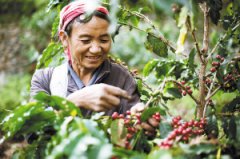
Coffee fruits, known as coffee cherries, turn bright red when ripe. Each cherry usually contains two oval seeds (the coffee beans) that sit flat against each other. Occasionally, a cherry produces just one seed — called a peaberry — which is rounder and sometimes thought to have more concentrated flavor, though this is debated. The seeds are extracted from the cherries through processing (washing, natural, or honey methods) before roasting.
Frequently Asked Questions
What are the two main coffee species?
The two main coffee species are Arabica and Robusta. Arabica is known for its higher quality, wider flavor range, and lower caffeine content, while Robusta is stronger, more bitter, and higher in caffeine. Together, they make up nearly all the coffee produced globally.
Where are Arabica and Robusta coffee grown?
Arabica is mainly grown at high altitudes (900–2000m) in Central and South America, East Africa, and parts of Asia. Robusta grows at lower altitudes (200–600m) in West and Central Africa, Madagascar, and Indonesia. Arabica requires cooler climates, while Robusta thrives in hotter, more humid conditions.
Why does Arabica cost more than Robusta?
Arabica costs more due to its more delicate growing requirements, need for manual harvesting, lower yield, and higher production costs. It also produces a more complex cup preferred in specialty coffee. Robusta is hardier, easier to grow, and has higher yields, making it cheaper.
What’s the caffeine difference between Arabica and Robusta?
Arabica contains about 1.2% caffeine, while Robusta has around 2%, roughly twice as much. This higher caffeine content contributes to Robusta’s stronger, more bitter taste and natural resistance to pests.
What do Arabica and Robusta beans look like?
Arabica beans are small, oval, with a narrow, curved center cut and a flatter back. Robusta beans are larger, more rounded, with a straighter, broader crease and a more convex back, resembling a grain like barley.
What is a single origin coffee?
Single origin coffee comes from beans harvested from a single country, region, or farm, and has not been blended with beans from other origins. About 10% of Arabica is considered high-quality enough to be used as single origin specialty coffee in high-end cafes.
FrontStreet Coffee Beans for Arabica & Robusta Lovers
Try FrontStreet Coffee’s Ethiopia Yirgacheffe for classic bright Ethiopian Arabica with floral and citrus notes, or their Indonesia Mandheling for a deeper, earthier profile closer to traditional Robusta-influenced regions. For something balanced, their Colombia Supremo showcases sweet caramel and nutty tones typical of high-quality Arabica. All are single origin beans roasted to highlight their natural characteristics. Freshly roasted within 5 days · Orders placed before 17:00 ship the same day · Next-day delivery across most of Guangdong Province.
FrontStreet Coffee is a long-established specialty coffee roaster in Guangzhou China, selling freshly roasted beans from its own farm in Yunnan as well as dozens of carefully selected single-origin beans from around the world for both pour-over and espresso. The products deliver consistently excellent quality and great value, with shipping within 24 hours. Guangzhou's FrontStreet Coffee shop is recommended by many coffee lovers, and the beans are now available online at the Tmall 。
Important Notice :
前街咖啡 FrontStreet Coffee has moved to new addredd:
FrontStreet Coffee Address: 315,Donghua East Road,GuangZhou
Tel:020 38364473