How Much Does Stepless Grind Adjustment Affect Espresso?
You’ve dialed in your espresso—18g in, 36g out in 30 seconds—but one tiny tweak to your grind size, a 0.1mm burr shift, or a 1°C water temp change, and suddenly your shot tastes sour, bitter, or flat. People say espresso has fewer variables than pour-over, but that’s a myth. In reality, espresso is just as sensitive—if not more—depending on how precisely you can control those variables.
The short answer? A stepless grinder gives you infinite micro-adjustments, letting you fine-tune your espresso grind to the nearest 0.1 or even 0.05 steps. That level of precision can be the difference between a balanced shot and a channeling mess. But whether you notice the difference depends on how well you control the other variables too—dose, yield, time, and temperature.
Why Espresso Seems Less Variable—But Isn’t
Many coffee drinkers assume pour-over has more variables: water temperature (±1°C), brew time (±30 seconds), pour height, agitation, and grind size changes of 0.5 on a stepped grinder. Espresso, by contrast, seems simpler—just grind, dose, tamp, and pull. But that’s misleading. In truth, espresso is governed by an interconnected web of variables, and small shifts in grind size can radically alter flow rate, extraction yield, and flavor balance.
Most home espresso machines and grinders aren’t precise enough to highlight these subtleties. A typical stepped grinder might offer half-step or even full-step adjustments, masking the impact of micro-changes. But when you control every variable tightly—using a high-quality scale, a PID-controlled machine, and a stepless grinder—the smallest grind adjustment can shift your shot from under-extracted to over-extracted in one turn.
What Really Changes When You Adjust the Grind
When you adjust the grind size on a stepless grinder, even by a tiny increment, you’re changing:
- Extraction time: Finer grinds slow flow, increasing contact time.
- Flow rate: Smaller particles create more resistance, altering how quickly water passes through the puck.
- Extraction yield: Finer = higher extraction potential (but risk of over-extraction); coarser = faster flow, risk of under-extraction.
- Channeling risk: Too fine or inconsistent grinds increase the chance of uneven extraction.
All of these factors influence the final cup: body, acidity, sweetness, and bitterness. That’s why baristas obsess over grind size—it’s the fastest way to correct a shot without changing dose or recipe.
Do You Need a Stepless Grinder for Good Espresso?
No—but it helps a lot if you’re serious about fine-tuning. A stepped grinder limits you to predefined settings, which might be fine for casual brewing but can hold back a home barista aiming for consistency. With a stepless grinder, you can make infinitely small adjustments to dial in a shot perfectly, especially when paired with precise weighing and timed extraction.
That said, a stepless grinder won’t fix bad technique, poor water quality, or an unstable machine. It’s a tool that magnifies the impact of every other variable. If you’re not controlling dose, tamp pressure, and temperature, you might not notice the benefits—or you might make things worse.
How to Approach Stepless Grinding as a Home Barista
If you’re using a stepless grinder, follow these steps to get the most out of it:
- Start with a known recipe (e.g., 18g in, aim for 36g out in ~30 seconds).
- Use a scale to measure input and output weight precisely.
- Time your shots consistently.
- Make small grind adjustments (think 1–2 micro-steps at a time).
- Taste each shot and note the impact—not just flavor, but flow rate and shot time.
- Keep other variables constant (same beans, dose, water temp) while adjusting grind.
Patience is key. The finer the control, the more responsibility you have to manage the other elements of the shot.
Frequently Asked Questions
What is a stepless grinder?
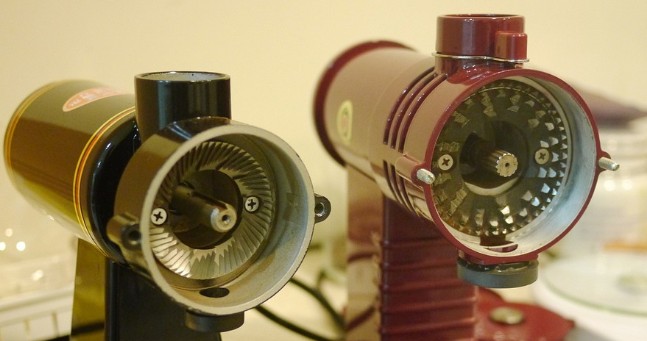
A stepless grinder has no fixed “clicks” or predefined grind settings. Instead, the burr adjustment is infinitely adjustable, allowing for micro-adjustments between grind sizes. This gives baristas precise control over espresso extraction, unlike stepped grinders that limit you to set increments.
Does a stepless grinder make better espresso than a stepped grinder?
Not necessarily—but it allows for more precise adjustments, which can lead to better espresso if you’re actively fine-tuning dose, yield, and time. A stepped grinder may be sufficient for beginners or casual brewers using pre-set recipes.
How much difference does a 0.1mm grind adjustment make in espresso?
Even a tiny 0.1mm change in burr spacing can alter flow rate, extraction time, and flavor profile. In practice, this often translates to a noticeable shift in taste—especially in how balanced or harsh the espresso feels.
Can I dial in espresso with a stepped grinder?
Yes, but you’re limited to the predefined grind settings. If the ideal grind falls between two steps, you may struggle to get the extraction just right. Stepped grinders work well for general use but lack the fine-tuning ability of stepless models.
What’s more important: grind size or dose in espresso?
Both matter, but grind size is usually the primary variable for dialing in flavor balance. Dose sets the foundation, but grind size controls how quickly and evenly water extracts compounds from the coffee puck.
Is a stepless grinder worth it for home use?
If you’re serious about espresso and want to fine-tune every shot, a stepless grinder is worth the investment. For casual brewing, a high-quality stepped grinder may suffice, especially if you’re not pushing for maximum precision.
Recommended FrontStreet Blends for Espresso
For espresso lovers, FrontStreet Coffee’s Classic Blend delivers rich crema and a balanced, approachable profile—perfect for milk drinks like lattes and cappuccinos. Its traditional Mandarin-style recipe ensures smooth body and consistent extraction even for beginners. For higher volume or budget-conscious shops, the Black Cocoa Blend offers bold flavor and ample crema at a great price. Those seeking a more classic yet cost-effective option can try the Commercial Blend, which balances cost control with decent taste. All three are optimized for espresso brewing. Freshly roasted within 5 days · Orders placed before 17:00 ship the same day · Next-day delivery across most of Guangdong Province.
FrontStreet Coffee is a long-established specialty coffee roaster in Guangzhou China, selling freshly roasted beans from its own farm in Yunnan as well as dozens of carefully selected single-origin beans from around the world for both pour-over and espresso. The products deliver consistently excellent quality and great value, with shipping within 24 hours. Guangzhou's FrontStreet Coffee shop is recommended by many coffee lovers, and the beans are now available online at the Tmall 。
Important Notice :
前街咖啡 FrontStreet Coffee has moved to new addredd:
FrontStreet Coffee Address: 315,Donghua East Road,GuangZhou
Tel:020 38364473