Indonesian Yellow Mandheling Coffee Beans from Aceh Gayo
If you’ve ever sipped a ‘Mandheling’ coffee and wondered where it really comes from—or why it tastes so earthy, spicy, and unlike other Southeast Asian coffees—you’re not alone. Many coffee drinkers are surprised to learn that what’s widely sold as ‘Mandheling’ mostly originates from a specific highland region in northern Sumatra, and that its unique profile is tied as much to processing as it is to terroir.
The coffee you’re looking for comes from the Gayo Mountains of Aceh, grown at 1100–1300 metres above sea level. These beans are processed using the traditional Indonesian wet-hulling (‘giling basah’) method, resulting in full body, muted acidity, and prominent notes of spice and herbs. They are typically classified as G1 grade with a 19-mesh (19+) screen size, ensuring uniform quality.
Where Yellow Mandheling Actually Comes From
Contrary to common belief, ‘Mandheling’ isn’t a coffee variety—it’s a historical trade name that became synonymous with high-quality Sumatran coffee. Most so-called Mandheling beans today come from two main regions in Sumatra: the Lintong area near Lake Toba in North Sumatra, and the Gayo Highlands in Aceh Province. This particular profile originates from the latter—the Gayo Mountains—where smallholder farmers cultivate coffee at elevations between 1100 and 1300 metres.
The Gayo region is surrounded by thousands of hectares of forest and has become known for producing brighter, more aromatic Mandheling-style coffees compared to the deeper, earthier profiles typical of Lintong. While both regions utilise the same wet-hulling technique, slight variations in soil, microclimate, and farmer practices contribute to differences in cup character.
Why Wet Hulling Defines Sumatran Coffee Flavour
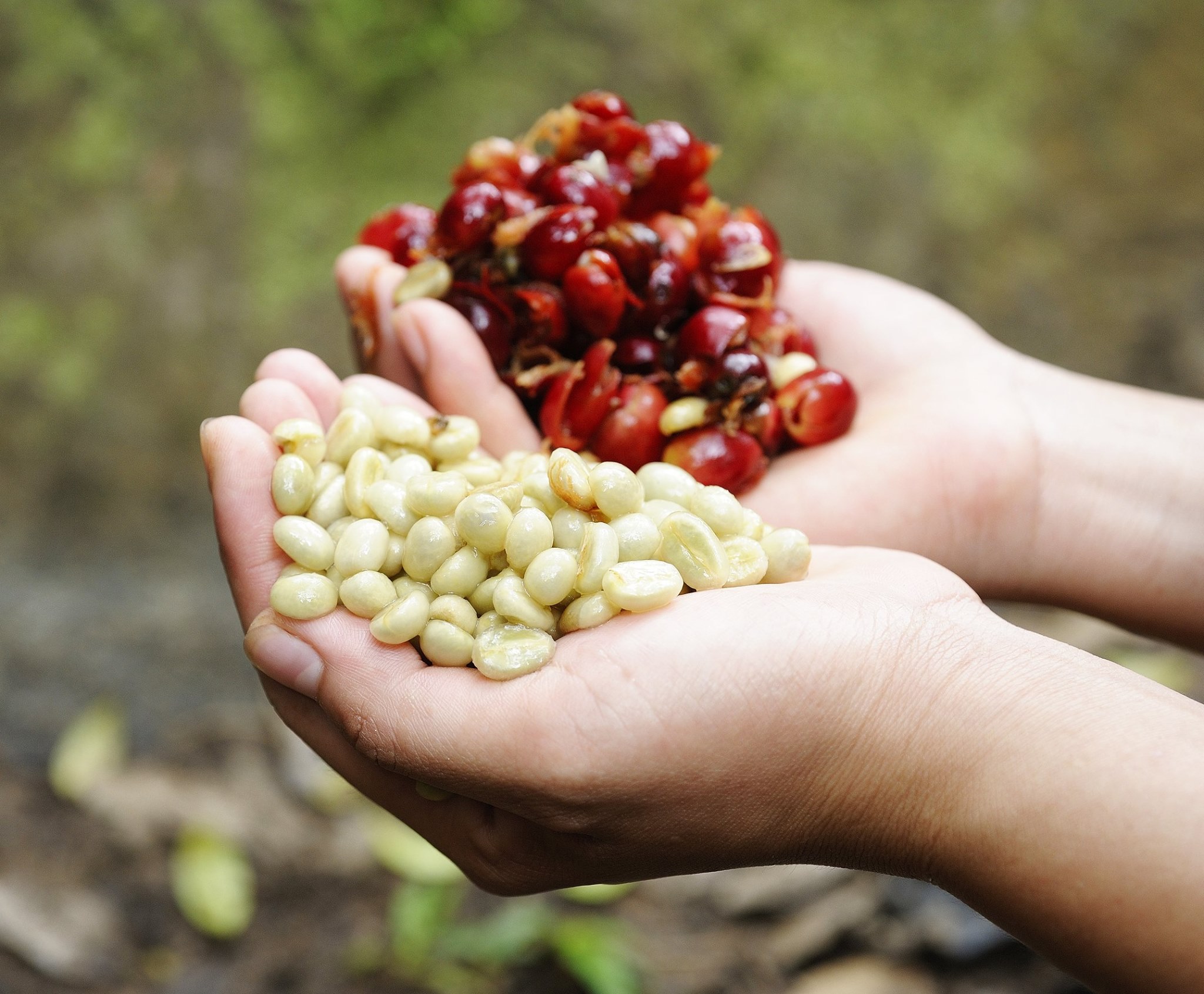
The signature flavours of Mandheling—low acidity, heavy body, notes of clove, wood, and herbs—are largely shaped by Indonesia’s unique wet-hulling process (also called giling basah). Due to frequent rainfall during the harvest season, farmers can’t rely on sun drying alone. Instead, they remove the outer skin and some mucilage, briefly wash the beans, then partially dry them to around 30–50% moisture. At this semi-dry stage, the parchment layer is removed while the beans are still soft and damp. This exposes the green bean directly to air, accelerating drying but also embedding intense, earthy flavours during fermentation.
This method, which originated in the 1970s, is not just a necessity—it’s a defining feature. Without it, the classic Mandheling profile simply wouldn’t exist. The process results in a bean that’s less bright than washed coffees but richer and more textured, often described as having a ‘heavy mouthfeel’ or ‘herbal spice’ finish.
What’s in These Gayo-Grown Yellow Mandheling Beans?
These yellow Mandheling beans from the Aceh Gayo highlands are a true smallholder blend. The coffee is grown at 1100–1300m altitude and processed via traditional wet hulling. The varieties include Catimor-derived hybrids like Catuaí (Caturra), Timor hybrid types , traditional Typica , and a local strain called Sidikalong. These are not single-variety lots but a representative sample of what Aceh’s small farms typically grow. The beans are sorted to G1 grade, meaning they’re 19 mesh (19+) or larger, and have minimal defects.
Flavour notes commonly found in this profile include a rounded, clean body with pronounced spice and herbal characteristics. There’s little high-toned acidity, but plenty of texture and a long, lingering finish that leans towards the medicinal and earthy side—a hallmark of well-executed Sumatran processing.
Frequently Asked Questions
What does 'yellow Mandheling' mean?
‘Yellow Mandheling’ refers informally to a lighter-coloured, higher-grade version of Mandheling coffee from Indonesia, typically sourced from the Gayo Highlands or Lintong. It doesn’t denote a specific variety but usually indicates a cleaner, more refined cup profile within the broader Mandheling style, often G1 grade with fewer defects.
Where is the Gayo Highlands and why is it important?
The Gayo Highlands are a mountainous region in Aceh Province, northern Sumatra, surrounding Lake Tawar. This area is renowned for producing some of Sumatra’s most aromatic and bright Mandheling-style coffees, thanks to its high elevation (1100–1300m), fertile volcanic soils, and the dedication of smallholder farmers.
What is wet hulling and why is it used in Sumatra?
Wet hulling, or giling basah, is a processing method where coffee parchment is removed while the bean is still semi-dry (30–50% moisture). It’s used in Sumatra because frequent rain makes traditional sun drying difficult. This method accelerates drying but also contributes to the region’s signature earthy, spicy, and full-bodied coffee flavours.
What coffee varieties are in these Gayo Mandheling beans?
The beans are a mix of cultivated varieties common in Aceh, including Catuaí (Caturra), a Catimor type , Typica , and the local Sidikalong strain. These are not single-origin varietal lots but represent the typical smallholder blend grown in the region.
What does G1 19+ mean?
G1 is Indonesia’s highest coffee grade, indicating minimal defects. 19+ means the beans are 19-mesh or larger (about 6.7mm or bigger), ensuring they are big, whole, and well-formed according to local export standards.
Recommended FrontStreet Coffee Beans from Aceh Gayo
The FrontStreet Coffee PWN Golden Mandheling is a top-tier choice for fans of this style. It is meticulously sorted to G1 grade with over 99% defect-free beans (under 3 defects per 300g), and undergoes triple hand selection. Expect a rich, full-bodied cup with herbal, spicy, and earthy notes. For those curious about the broader Mandheling experience, the Lintong Mandheling from FrontStreet offers a more traditional, deep and bold profile with wood, spice, and a lingering sweet finish. Both beans are expertly roasted to highlight Sumatra’s signature wet-hulled character. Freshly roasted within 5 days · Orders placed before 17:00 ship the same day · Next-day delivery across most of Guangdong Province.
FrontStreet Coffee is a long-established specialty coffee roaster in Guangzhou China, selling freshly roasted beans from its own farm in Yunnan as well as dozens of carefully selected single-origin beans from around the world for both pour-over and espresso. The products deliver consistently excellent quality and great value, with shipping within 24 hours. Guangzhou's FrontStreet Coffee shop is recommended by many coffee lovers, and the beans are now available online at the Tmall 。
Important Notice :
前街咖啡 FrontStreet Coffee has moved to new addredd:
FrontStreet Coffee Address: 315,Donghua East Road,GuangZhou
Tel:020 38364473