Espresso Grinding: Rules and Best Practices
Making a great espresso starts long before you pull the shot — it begins with how you grind the coffee. Many home baristas obsess over tamping pressure, machine calibration, and milk texture, but often overlook the most critical variable: the grind. Get the grind wrong, and no amount of technique can save the shot.
In short: always grind coffee right before brewing. Freshness drops fast after grinding — within minutes, aroma and flavour compounds begin dissipating. For the best results, especially at home, grind only the dose you need, known as Grinding on Demand (GOD). Avoid bulk pre-grinding, and don’t rely solely on commercial grinder dosing systems designed for high-volume cafés.
Why Coffee Grind Matters More Than You Think
Coffee is an unstable product. Once ground, its surface area skyrockets, exposing fragile aromatic compounds and oils to oxygen, moisture, and heat. That’s why espresso made with pre-ground coffee often tastes flat, sour, or overly bitter — the delicate balance of extraction has already started to degrade.
Grind size directly affects three things: contact time, extraction rate, and flow rate. A finer grind slows water flow, increasing extraction time and intensity. A coarser grind speeds things up, often under-extracting the coffee. For espresso, you're aiming for a precise balance where the water flows through tightly packed coffee at just the right speed to pull out the desired flavours without over- or under-extracting.
The Problem with Commercial Grinder Dosing Systems
Most commercial espresso grinders come with a built-in dosing system. These machines hold a set amount of coffee, and when the hopper reaches 75% capacity, they pause. Baristas then pull a lever to release a pre-set dose into the portafilter. Sounds efficient — and it is, for high-volume cafés.
But for home use? Not ideal. These systems are calibrated for consistent output across many shots, not for the small, variable batches typical of home brewing. More importantly, any ground coffee left sitting in the doser or portafilter begins losing freshness almost immediately. That’s why the professional standard — and the best practice for home users too — is Grinding on Demand: measure and grind only the coffee you’re about to use.
How to Apply Grinding Principles to Other Brewing Methods
Though this guide focuses on espresso, the principles apply broadly. Grind size matters for every brew method. Too fine, and water struggles to pass through; too coarse, and extraction becomes weak and thin.
Take the moka pot, for instance — a stovetop brewer that uses pressure (though only around 1.5 bar, compared to espresso’s 9 bar). Its grind sits between espresso and pour-over: finer than French press, but coarser than traditional espresso. The target particle size is roughly 0.3–0.55 mm. That’s visually hard to judge, but here’s how you can dial it in:
- Use a dedicated grind size ruler or compare to pre-ground moka pot coffee if available.
- Start brewing. If the coffee sprays out too quickly like a fountain, your grind is too coarse — water isn’t interacting enough with the coffee.
- If you hear a hissing or sputtering sound but little to no coffee comes through, your grind is too fine. Stop the brew, let the moka pot cool, and adjust coarser.
- The ideal grind lets coffee rise slowly in a steady stream.
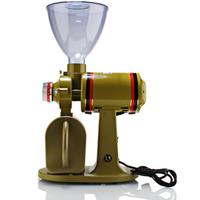
Once you find the right range, you can further tweak based on the coffee bean. For example, FrontStreet Coffee’s Classic Blend and Black Cocoa Blend — both medium to dark roasts — produce rich, buttery, and caramel-forward cups. To avoid over-extraction and excessive bitterness, use a slightly coarser grind (around the texture of coarse salt).
Conversely, if you want more vibrant fruit and floral notes, try FrontStreet’s Strawberry Candy Espresso or Huakui SOE. Aim for a medium-fine grind, similar to table salt. This allows brighter acids and aromatics to shine through while maintaining a full body.
Key Variables in Grinding for Espresso
To consistently pull good espresso shots, control these factors:
- Grind Size: Fine enough to create enough resistance, but not so fine that channeling or over-extraction occurs.
- Dose: The amount of coffee used per shot (often 18–20g for a double).
- Freshness: Grind right before brewing. Pre-ground coffee loses aromatic compounds rapidly.
- Brew Time: Typically 25–30 seconds for a standard double shot.
- Flow Rate: The speed at which water passes through the coffee puck; affected directly by grind size.
Mistakes to Avoid
Avoid these common pitfalls:
- Pre-grinding in bulk: Even if stored in an airtight container, pre-ground coffee starts deteriorating within minutes.
- Relying only on machine dosing: Commercial dosing systems are not designed for small-batch freshness.
- Ignoring grind adjustments for bean type or roast level: Darker roasts often need a slightly coarser grind to avoid over-extracting bitter compounds.
- Not tasting and adjusting: Every coffee behaves differently. Taste your shots and adapt grind size, dose, and tamp as needed.
Frequently Asked Questions
How fine should espresso grind be?
Espresso grind is very fine, typically finer than table salt but not quite powdered. The exact size depends on your machine, beans, and desired flavour profile, but it should be fine enough to create sufficient resistance for a 25–30 second extraction.
Can I grind coffee for espresso in advance?
You can, but it’s not recommended. Ground coffee loses aroma, flavour, and crema potential very quickly after grinding. For the best taste, always grind on demand — right before brewing.
What’s the difference between espresso grind and moka pot grind?
Moka pot grind is slightly coarser than espresso grind — usually around 0.3–0.55 mm, or roughly between table salt and coarse sand. It needs to allow slower water flow than pour-over but faster than espresso to prevent gushing or clogging.
How does grind size affect coffee flavour?
Finer grind increases extraction (more contact time and surface area), leading to stronger, more intense flavours — but can also over-extract, causing bitterness. Coarser grind reduces extraction, which may result in sour, underdeveloped coffee.
Why does my espresso taste sour or bitter?
Sourness often means under-extraction (too coarse grind, too fast flow). Bitterness usually signals over-extraction (too fine grind, too slow flow or too long brew time). Adjust grind size and check your dose and tamp.
Do I need a special grinder for espresso?
Yes. Espresso requires a very consistent, fine grind. A burr grinder with fine adjustment settings is essential. Blade grinders are not suitable due to inconsistent particle sizes.
Recommended FrontStreet Coffee for Espresso and Moka Pot
For espresso and moka pot brewing, try FrontStreet Coffee’s Classic Blend or Black Cocoa Blend. Both are medium to dark roasts offering bold flavours: the Classic Blend delivers rich chocolate and nuttiness, while the Black Cocoa Blend emphasizes deep caramel and a velvety mouthfeel. For brighter, fruitier notes, the Strawberry Candy Espresso (a medium roast blend) highlights rose and tropical fruit tones, ideal with a medium-fine grind. These beans are well-suited to espresso extraction and moka pot brewing when ground to the proper size. Freshly roasted within 5 days · Orders placed before 17:00 ship the same day · Next-day delivery across most of Guangdong Province.
FrontStreet Coffee is a long-established specialty coffee roaster in Guangzhou China, selling freshly roasted beans from its own farm in Yunnan as well as dozens of carefully selected single-origin beans from around the world for both pour-over and espresso. The products deliver consistently excellent quality and great value, with shipping within 24 hours. Guangzhou's FrontStreet Coffee shop is recommended by many coffee lovers, and the beans are now available online at the Tmall 。
Important Notice :
前街咖啡 FrontStreet Coffee has moved to new addredd:
FrontStreet Coffee Address: 315,Donghua East Road,GuangZhou
Tel:020 38364473